Fall is when the West Coast’s biggest dunes finally make sense to hike, and the desert ones stop trying to cook you
Summer is the wrong season for sand, and the West Coast has three great places to prove it. In October, the dunes of Oregon and the California desert are suddenly at their best, with cooler air, long shadows, and a lot fewer reasons to turn back early.
Psst, we made you a West Coast Adventure Map. Nearly 1,900 of our favorite spots, already pinned, ready to load into Google Maps in two clicks: grab it here.
Oregon Dunes: forty miles of sand with a forest on the side
The Oregon Dunes National Recreation Area runs about 40 miles along the coast from Florence to Coos Bay and covers 31,500 acres of the Siuslaw National Forest. The Forest Service calls it one of the largest expanses of temperate coastal sand dunes in the world, and standing on an open ridge with nothing but sand and sky, you believe it.

Fall has a practical perk here. Western snowy plover protections cover the nesting season from March 15 to September 15, so by October that window has closed and the beach side of the dunes is easier to enjoy.
📍 GET THE ULTIMATE PNW MAP 🗺️
Get our curated list of the best adventures, things to do, and places to grab a brew loaded onto your maps with just two clicks!
✅ Waterfalls ✅ Hikes ✅ Viewpoints
✅ Craft breweries ✅ National Parks ✅ 1400+ Pins

For a first taste, try the Umpqua and Eel Dunes Trail near Tenmile. The interpretive loop is 1 mile and rated “more difficult” because the southern half is loose sand, while the beach route is 6 miles round trip across about two miles of open dune marked by blue-banded posts. Bring water, and stay on the posts, because wind erases footprints fast.
Kelso Dunes: the one that booms
Drive south into the Mojave National Preserve and the sand gets strange. Kelso Dunes is one of only seven known dune fields in North America where the sand can boom, a low rumble you feel when sand slides down a steep face.
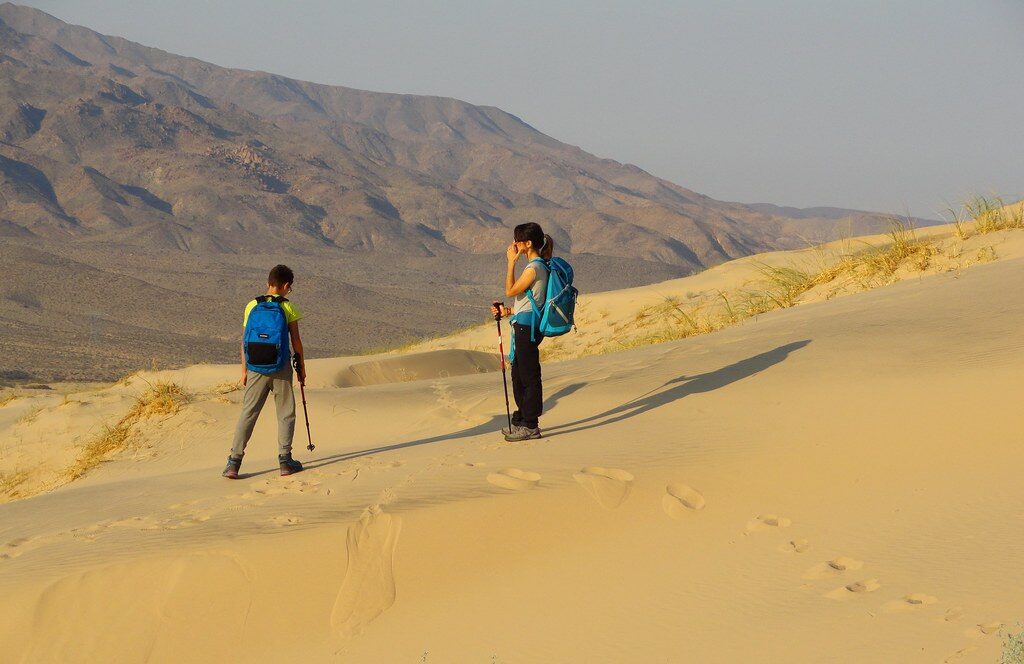
The hike is no stroll: 3 miles round trip with 600 feet of elevation gain, and the National Park Service calls it strenuous, with most people needing 2 to 3 hours. There is no shade and no water at the trailhead, and the road in is bumpy and potholed, so go slowly. The Park Service says to skip summer here, when temperatures can reach 120°F, which is exactly why October is the move.
Mesquite Flat: the easy one with the best shadows
Death Valley’s Mesquite Flat Dunes sit near Stovepipe Wells, and they are the friendliest of the three. The tallest dune is about 100 feet, and the hike to it is 2 miles round trip with 185 feet of climbing, roughly 1.5 hours. There is no official trail, so you pick your own line across crescent, linear, and star-shaped dunes.
Go at sunrise or sunset, when the ripples and dune edges throw dramatic shadows. The park also lists the dunes as a good spot for dark night skies. Watch your step, since kangaroo rats and sidewinder rattlesnakes live in the sand, and leave pets behind because they are not allowed on any park trail.
Which one should you pick?
My vote goes to Kelso for the novelty, because sliding down a dune and hearing it rumble back is a rare trick. Mesquite Flat wins for photographers and anyone with a short day, and the Oregon Dunes win for a trip that also includes a beach and a forest.
Which dune would you climb first, the one that booms or the one that hides a beach at the end? Pick your season, pack more water than feels reasonable, and let the sand do the rest.
Trip tips: grab a rental car to get out here, lock in your hotel before the good rooms are gone, or skip both and book a camper van instead.
Rules and fees change, so always confirm current requirements before you go.