Oregon Is What Happens When You Invest in the Outdoors

Oregon doesn’t just have beautiful nature—it actively invests in keeping it that way. From the jagged coastline to the high desert, this state pours money and policy into making the outdoors accessible, protected, and unforgettable. It’s not just luck that your hike ends in a waterfall and not a strip mall. It’s legislation, long-term planning, and a deep belief that nature is for everyone.
While other states debate whether to protect public land, Oregon quietly proves that doing so pays off—not just for residents, but for millions of visitors every year.
Public Beaches for All (Literally, All of Them)

Oregon is one of the only states where 100% of the coastline is public. Thanks to the landmark Oregon Beach Bill of 1967, every inch of its 362-mile coast is protected and accessible, meaning no private beachfront mansions keeping you out of the view.
This law wasn’t just symbolic. It set the foundation for world-class destinations like Cannon Beach, Cape Perpetua, and Samuel H. Boardman Scenic Corridor to stay open and protected. Compare that to other coastal states where fences, fees, or resort development block beach access—and it’s easy to see why people flock to Oregon for a better, freer coastal experience.
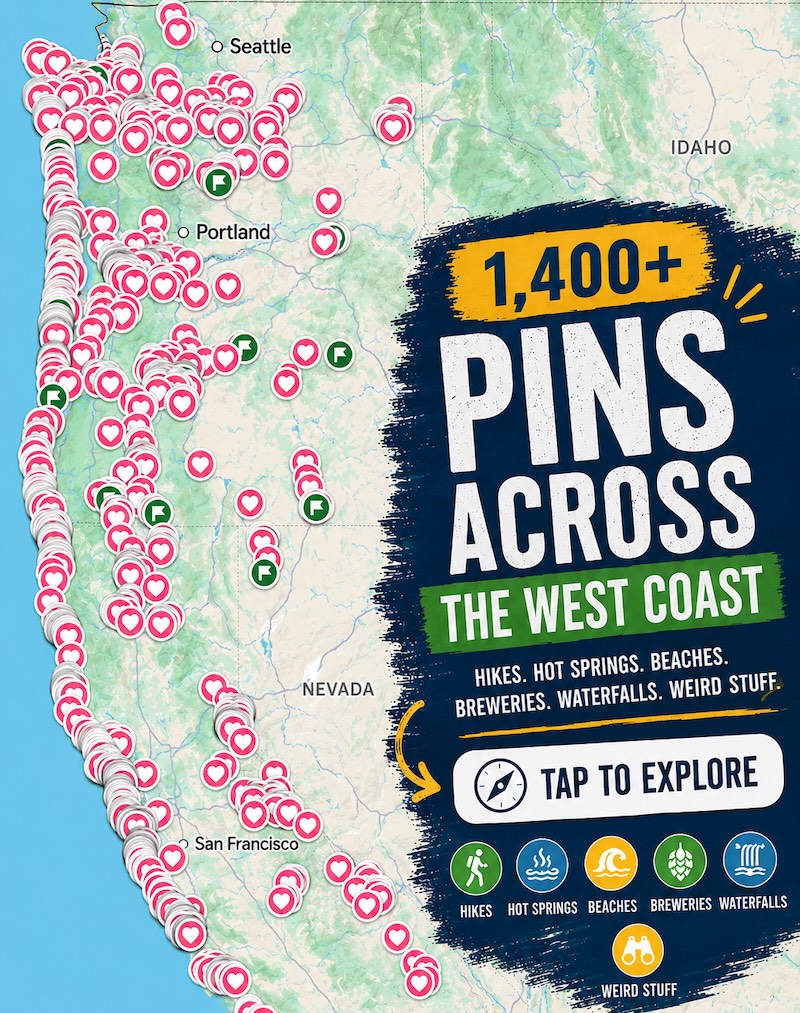
📍 GET THE ULTIMATE PNW MAP 🗺️
Get our curated list of the best adventures, things to do, and places to grab a brew loaded onto your maps with just two clicks!
✅ Waterfalls ✅ Hikes ✅ Viewpoints
✅ Craft breweries ✅ National Parks ✅ 1400+ Pins

Trails, Parks, and Forests You Can Actually Use

Oregon has more than 11,000 miles of hiking trails, and over 50% of the state is covered by forest—a lot of it accessible to the public (source: Oregon Parks and Recreation Department). From easy coastal strolls to challenging alpine treks, the diversity is unmatched. But what makes it truly special is how well these areas are maintained.
The state invests in signage, restoration, trail maintenance, and accessibility—not just for locals, but for the millions of tourists who rely on these systems to explore safely. And Oregon’s commitment to Leave No Trace principles is reflected in public education campaigns and funding. You feel the difference when you hike here.
Outdoor Recreation Is a Budget Line, Not a Slogan

Oregon treats outdoor recreation as an economic driver—because it is. The outdoor industry contributes $15.6 billion annually to Oregon’s economy and supports over 224,000 jobs (source: Oregon Outdoor Recreation Office, 2022).
That means there’s incentive to keep the trails open, the rivers clean, and the mountains accessible. The state even has an official Outdoor Recreation Office to help manage and promote its natural resources. While some states slash park budgets during hard times, Oregon doubles down—and it shows. From gear shops in Bend to surf schools in Newport, the outdoor economy is thriving, and tourists are a big part of that success.
Sustainability Is Baked Into the Experience

It’s no accident that you’ll see compost bins at Oregon campsites or electric charging stations near trailheads. Oregon’s environmental values are woven into the outdoor experience, and those green touches make a big difference for eco-minded travelers.
The state encourages sustainable tourism through grants and planning efforts, and many local businesses have adopted carbon-reduction efforts to align with traveler values. Whether it’s staying at an off-grid cabin or renting an e-bike to cruise Hood River, Oregon makes it easier to travel with a lighter footprint.
MORE ON THE WEST COAST:

READ MORE: The Best of Oregon
READ MORE: The Best of Washington
READ MORE: The Best of California
*GRAB THE BEST WEST COAST ADVENTURE MAP FOR YOUR NEXT TRIP!*