Storm-Watching on the Pacific: 9 Dramatic Spots to Feel Tiny (and Stay Safe)

Winter on the West Coast turns the ocean into theater: booming surf, phantom fog, and sea spray that travels like glitter. From clifftop overlooks to seawalls built for wave-watching, these spots deliver a front-row seat—from a safe distance.
Quick safety 101: sneaker waves are real, logs move like toothpicks, and “just one step closer” is how people get soaked or worse. Read the tide, keep an exit route, stay off slippery rocks, and never turn your back on the ocean.
For extra drama, aim for the king tide windows each winter (dates vary by location and year). California, Oregon, and Washington publish seasonal calendars so you can time those ultra-high tides with incoming swell—aka peak spectacle from high, safe viewpoints.
Kalaloch Lodge & Ruby Beach, Olympic National Park (WA)
Olympic’s south coast does storm shows like few places on earth: roaring wind, house-high surf, and drift logs tumbling like dice. Base yourself at Kalaloch—cabins sit on the bluff line—then hop between the lodge overlooks and Ruby Beach pull-outs when the wind eases.
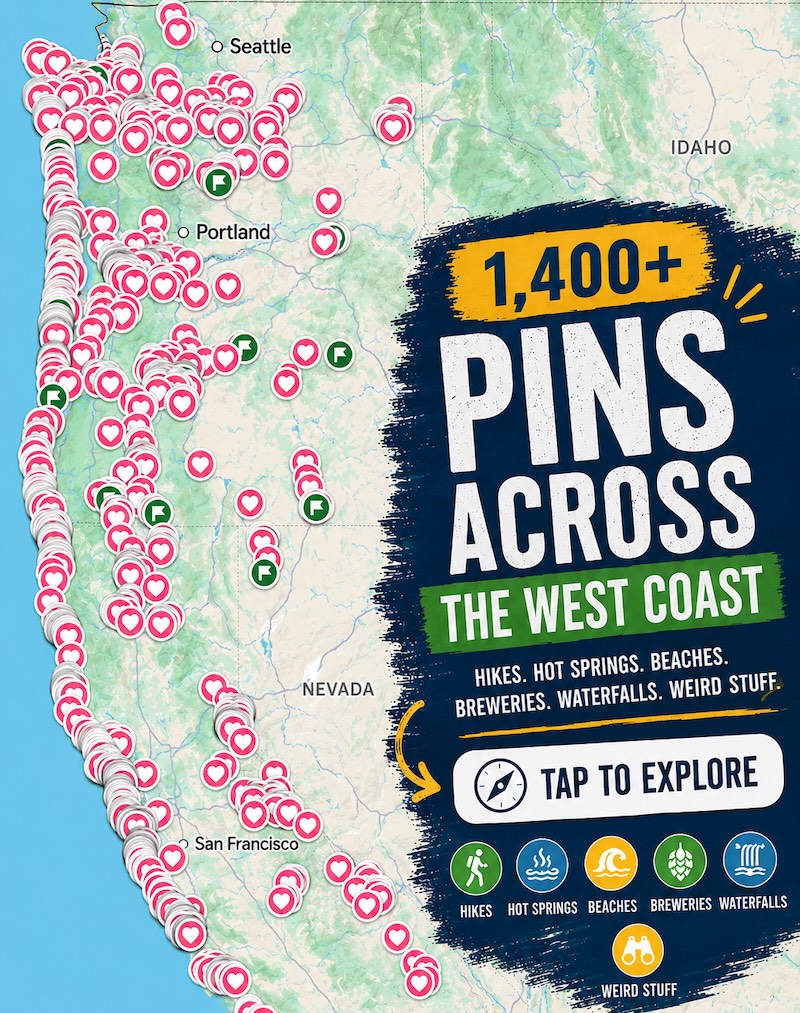
📍 GET THE ULTIMATE PNW MAP 🗺️
Get our curated list of the best adventures, things to do, and places to grab a brew loaded onto your maps with just two clicks!
✅ Waterfalls ✅ Hikes ✅ Viewpoints
✅ Craft breweries ✅ National Parks ✅ 1400+ Pins

Mornings often start gray; breaks in the ceiling can open suddenly, turning the sea steel-blue with white spray plumes. Between pulses, tidepools and sea stacks feel otherworldly, but keep your distance from the waterline and log piles.
Best bet is to plan flexible windows across a couple of days and chase conditions: when the wind cranks, hunker in and watch from inside; when it backs off, pop to Ruby for a safer, wide-open view of the sets hammering the stacks. (Local tip: bring a thermos and a dry change of gloves—everything gets damp.)

Cape Disappointment & North Head Lighthouse (WA)
At the mouth of the Columbia, swell stacks and refracts into explosive surf—perfect for distant viewing from headlands and signed platforms. North Head’s high bluffs and the Lewis & Clark Interpretive Center area offer commanding, camera-steady perches while keeping you above the blast zone.
The park also has cabins and historic vacation homes, so you can hole up nearby and sprint out between squalls. Expect howling wind, salt mist in your eyebrows, and sea spray arcing over the rocks below—plus gulls surfing the turbulence like pros.
It’s all drama, none of the slip-n-slide—if you stay on designated paths and rail-protected overlooks. Bonus: when the sky cracks, sunsets here go molten.
Shore Acres State Park, near Coos Bay (OR)
This is Oregon’s gladiator arena for waves. Long-period swell detonates on sheer basalt cliffs, sending spray towers sky-high—sometimes visible from way down the coast. Shore Acres even has a fully enclosed oceanfront observation building, so you can watch the show without turning into a human rain gauge.
Trails skirt the rim with multiple lookouts; during big systems, you’ll hear the impact before you see it. It’s cinematic, loud, and (from the right vantage) surprisingly civilized: pull up, zip your puffy, and let the Pacific throw haymakers while you sip something hot.
The kicker: migrating gray whales often cruise the same corridor mid-winter, so scan between sets. If the wind goes nuclear, retreat to the glass house and let the windows collect the salt.
Depoe Bay Seawall & Boiler Bay (OR)
Depoe Bay brands itself the smallest navigable harbor—but its seawall delivers one of the coast’s most reliable storm spectacles. When long-period swell meets the town’s rocky frontage, plumes blast through natural blowholes, and the Spouting Horn can fire like a geyser while you stand safely behind the promenade rail.
Between sets, warm up at a cafe, then ping-pong to nearby Boiler Bay and Rocky Creek viewpoints for wider angles on the chaos. October through March is prime theater; add a king tide and you’ll feel the rumble in your sternum.
The move here is patience: watch a full pulse cycle, note the bigger “clean-up” sets, and keep your feet planted. This is the rare storm-spot that rewards people who like a railing between them and the ocean.

Yaquina Head Outstanding Natural Area, Newport (OR)
Perched high above black cobble beaches, Yaquina Head is tailor-made for big-water viewing—safe elevation, panoramic sightlines, and a lighthouse backdrop that makes every wave look operatic. From the main lookouts, you can watch lines of swell wrap the headland and explode against the cliffs below.
Even on calmer days, the head funnels wind; on big days, brace your stance and keep cameras on straps. Trails and platforms help you stay well above sneaker-wave reach while still feeling the plume and thunder.
It’s classic coastal physics on display—and a reminder that the best seat for storms is up. (The site flags hazards like large waves and steep drop-offs; follow the posted guidance and keep kids close.)
Cape Perpetua Overlook (NOT the edges at Thor’s Well), Yachats (OR)
Want maximum drama with minimum risk? Drive to the Cape Perpetua Overlook—the highest viewpoint you can reach by car on the Oregon coast—and watch the Pacific work the basalt bench hundreds of feet below. You’ll see plumes at Cook’s Chasm and the Spouting Horn from a safe, wind-scoured aerie.
Important note: the famous Thor’s Well is mesmerizing—and dangerous up close, especially during storms and high tides. View it from signed, paved areas only, or skip it on big days. Recent fatalities underline why “one step closer” is the wrong move.
Point Reyes Lighthouse & Chimney Rock Overlooks (CA)
Point Reyes is notorious for wind and fog—translation: gale-charged surf and fast-moving squalls that make for epic, moody viewing from high ground. The lighthouse area offers a stomach-dropping vantage, but note that the stairs close when winds exceed ~40 mph; if closed, pop to other high overlooks (like near Chimney Rock) for safer, no-stair drama.
When conditions align, you’ll see whitewater for miles and spray lifting like smoke off the breakers. Bring serious layers, protect your lens from salt, and remember that a “breezy” forecast can feel like a full-body sandblaster on the point. (It’s part of the fun—if you dress for it.)

Mendocino Headlands (CA)
Clifftop trails wrap Mendocino like a balcony over the stage. On storm days, sets hammer the arches and undercut coves, sending shock-waves through the air and salt haze across the wildflower fringe. Pick a signed overlook, tuck behind a cypress windbreak, and watch the coast show off its sculptor.
The town’s compact layout makes it easy to duck in and out between squalls—coffee, back out, new angle, repeat. Wave energy here is no joke; on truly big days, it can sound like distant thunder with each impact.
Bring binoculars: between storm pulses, you can sometimes spot gray whales threading the chop just beyond the break line, a reminder that the ocean’s commute continues, weather be damned.
Trinidad Head & Overlooks (CA)
North of Humboldt Bay, Trinidad Head is a short, steep loop with enormous payoff: a 360-degree platform for watching weather march up the coast. In calmer windows you’ll scan birds, sea lions, and passing whales; in storm cycles, you’ll feel the wind shear in your teeth and watch swells detonate on offshore stacks from a mercifully high perch.
The headland has a history of extreme seas—lighthouse lore includes a legendary wave that surged to terrifying heights—so treat guardrails and signed overlooks as gospel and keep your stance wide. When the sky breaks, the light goes cinematic fast; when it turns, you’ll be glad you stayed upslope.
What to Bring (so you actually enjoy this)
Hard-shell jacket, waterproof pants, beanie, and gloves.
Non-cotton base layers, warm socks, and dry backups in the car.
Grippy shoes (rock + algae = ice rink), headlamp for early/late windows, and a thermos.
If you’re shooting: microfiber cloths, lens hood, and a rain cover. Salt spray is relentless—and souvenirs on your sensor aren’t cute.
Timing Tips (that don’t lock you to one season)
Watch for incoming low-pressure systems + long-period swell in the forecast, then stack your visit near high tide for the biggest plumes and near extreme lows for tidepool drama on calmer days. “King tide” periods amplify everything—use the California, Oregon, and Washington calendars to match dates to your nearest coast. Play it safe, stay high, and let the Pacific do the flexing.