The Best Easy West Coast Fire Lookout Hikes with Ridiculous Views
Old towers, big horizons, short(-ish) approaches. Some of these lookouts are still staffed in summer, some are historic shells, and a few are observation towers in parks that scratch the same itch. Always check seasonal access (roads close, gates lock, and towers can be off-limits during maintenance), and bring layers—ridge wind laughs at forecasts.
Heybrook Lookout (Stevens Pass corridor, WA)
Why it slaps: A classic wooden lookout perched above the Skykomish River valley with Glacier Peak–country peaks stacking the horizon. You’ll hear the wind in the guy wires before you see the tower—pure PNW.
Effort: ~2.2 miles round-trip, ~850 feet gain. Steady, well-graded forest trail; a few roots, nothing dicey.
Tower status: Often open to climb the stairs during staffed hours in summer; cabin itself may be closed. Respect closures/signs.
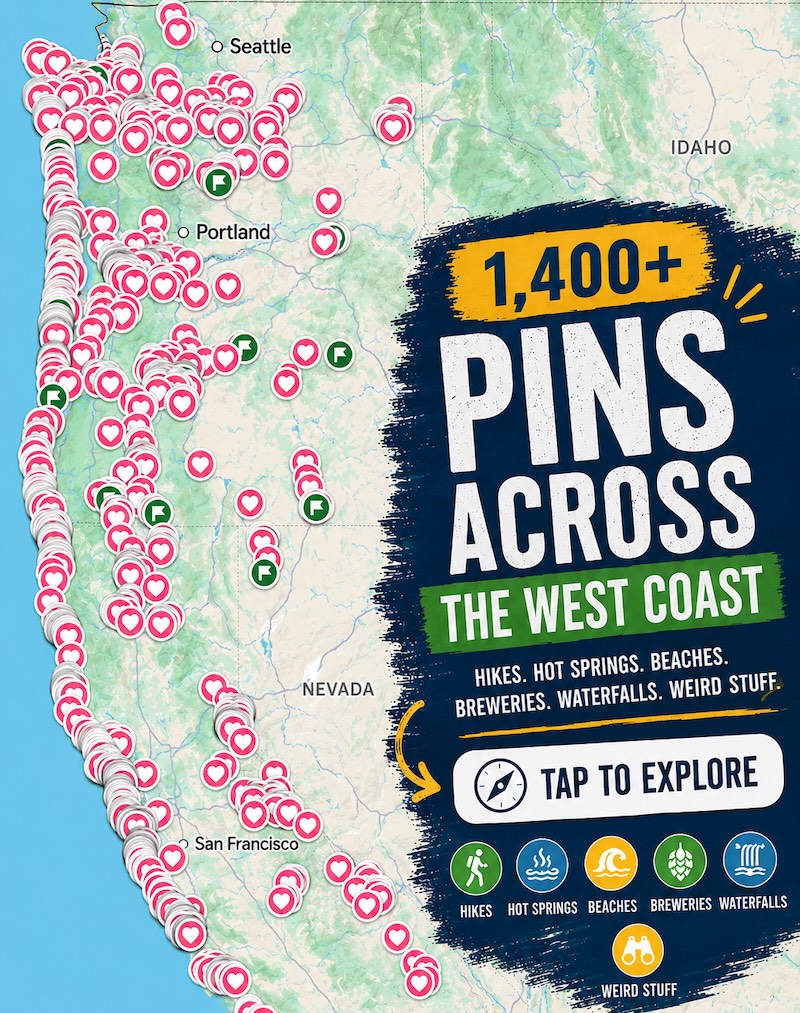
📍 GET THE ULTIMATE PNW MAP 🗺️
Get our curated list of the best adventures, things to do, and places to grab a brew loaded onto your maps with just two clicks!
✅ Waterfalls ✅ Hikes ✅ Viewpoints
✅ Craft breweries ✅ National Parks ✅ 1400+ Pins

Sunrise vs. sunset: Sunrise gives you pink light pouring over the Cascades with quiet trails; sunset can glow, but the shaded descent is dark—bring a headlamp.
Pro tip: After rain, the forest smells like a cedar sauna and the views pop crystal-clear.
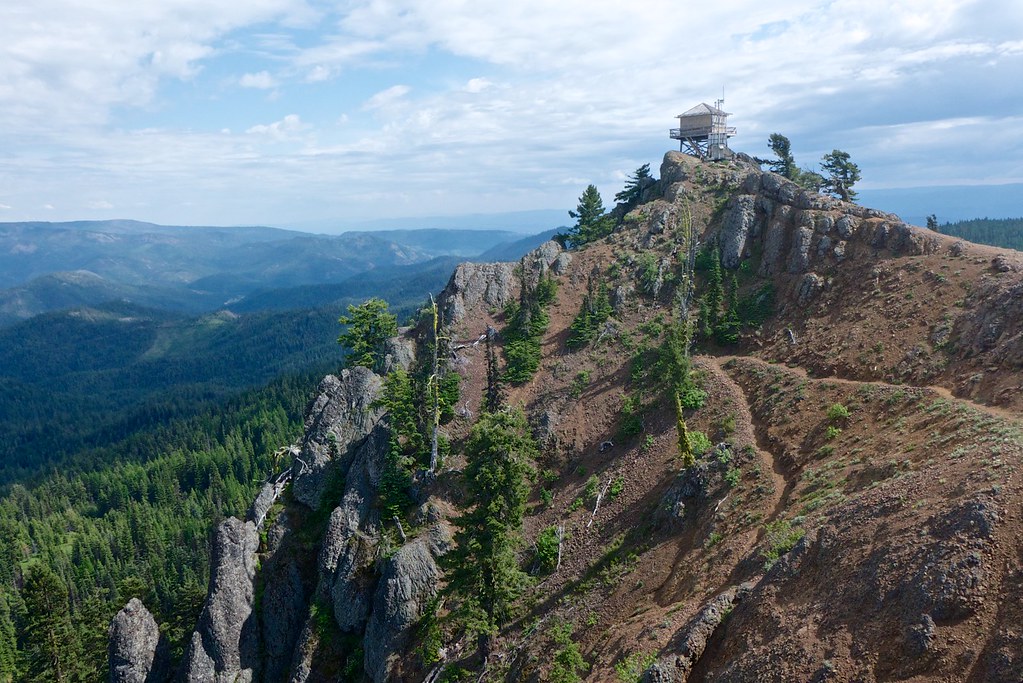
Red Top Lookout (Teanaway highlands, WA)
Why it slaps: A stubby ridge with a perched cupola and huge 360s—Stuart Range, basalt mesas, and the green patchwork of the Teanaway.
Effort: ~1 mile round-trip from the upper road, ~350 feet gain. Short, punchy, and rocky in spots.
Tower status: Historic lookout typically staffed summers; the cab interior may or may not be open—ask the volunteer on duty.
Sunrise vs. sunset: Sunset paints the Stuart Range in alpenglow; sunrise is softer and cooler with elk bugles in early fall.
Pro tip: The area is famous for agate beds—admire, don’t harvest. Late spring wildflowers + early fall larches both hit hard here.
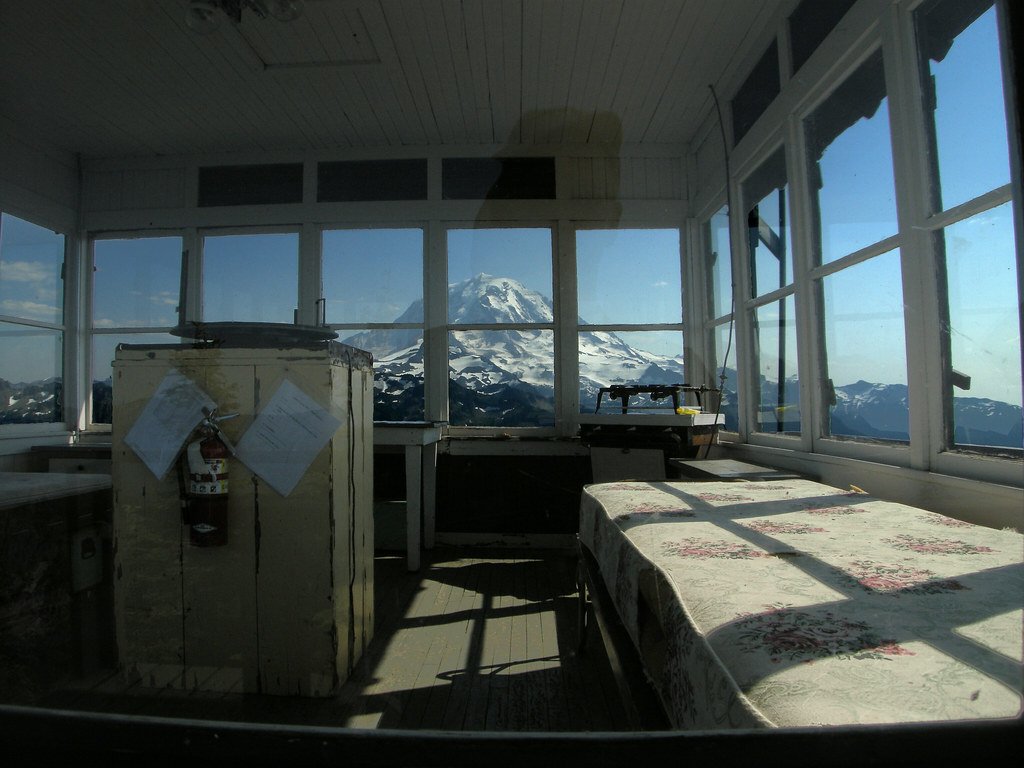
High Rock Lookout (near Mount Rainier, WA)
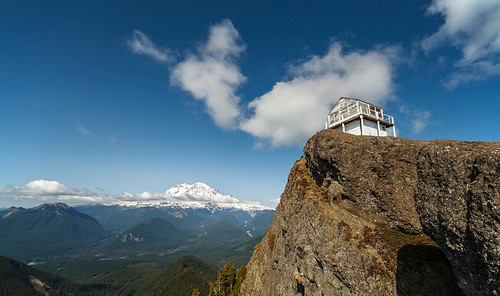
Why it slaps: A cliff-edge eyrie with Mount Rainier filling the windshield of your eyeballs. The lookout sits on a rock fin so dramatic it feels like a helicopter landing pad.
Effort: ~3.2 miles round-trip, ~1,300 feet gain. Short, steep, and a bit exposed at the end—mind footing, especially in wet conditions.
Tower status: Historic structure; cabin may be closed or fragile. Treat it gently; keep to the deck.
Sunrise vs. sunset: Sunrise is the move—first light on Rainier, calm winds, and fewer people. Sunset is gorgeous, but bring a serious headlamp for the steep forest descent.
Pro tip: If clouds wrap Rainier, wait 20 minutes; gaps tear open fast at this edge of the range.
Kelly Butte Lookout (Greenwater backcountry, WA)
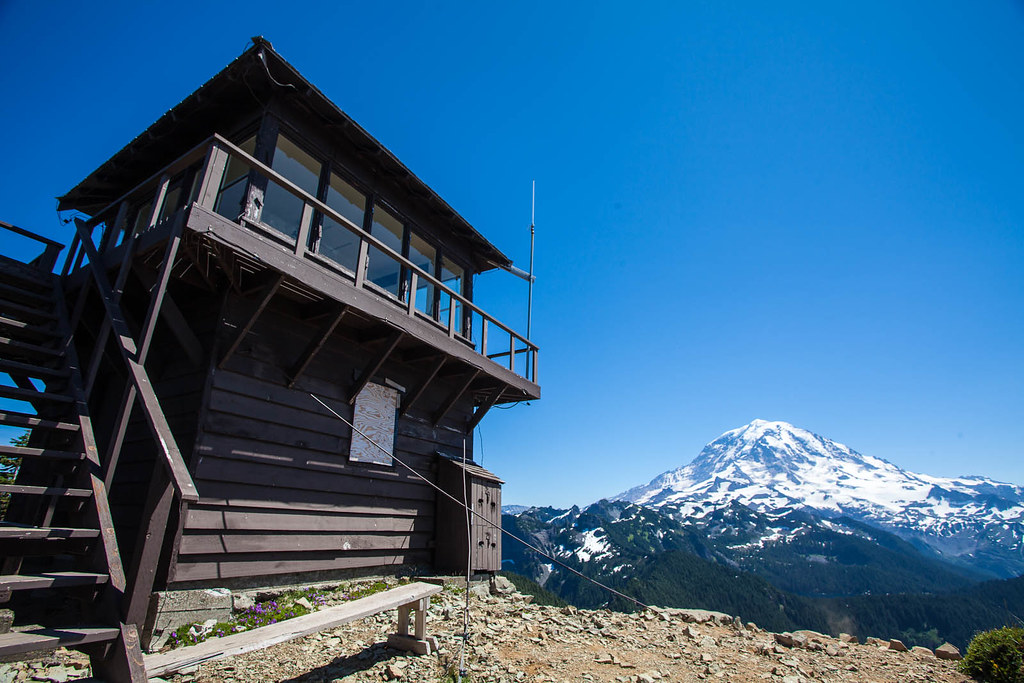
Why it slaps: A storybook cab on a knoll with big Rainier profile and serrated ridges in every direction. The last mile feels like a victory lap.
Effort: ~3.4 miles round-trip, ~900 feet gain. Road to trailhead can be pothole roulette—go slow.
Tower status: Restored historic lookout. Cab access varies (often locked when unstaffed); deck views still wow.
Sunrise vs. sunset: Late-day light layers the ridgelines into watercolor bands; sunrise is cooler but usually less windy.
Pro tip: September–October larches in the neighborhood add extra gold to your skyline.
Mount Fremont Lookout (Mount Rainier NP, WA)
Why it slaps: A stone-and-timber lookout riding a high ridge above Sunrise, with Rainier’s glaciers, alpine meadows, and often a goat or two below.
Effort: ~5.6 miles round-trip, ~1,100 feet gain from Sunrise. Gentle grade; exposure near the end but nothing technical.
Tower status: Historic structure; exterior decks only. Interior typically closed.
Sunrise vs. sunset: Sunset is outrageous—glacier blush + long shadows on the meadows. But your hike back is after dusk—headlamps, always. Sunrise gives calmer winds and crystalline air.
Pro tip: Start early for parking at Sunrise, and carry an extra layer—the breeze up here has opinions.
Tolmie Peak Lookout (Mount Rainier NP, WA)
Why it slaps: A photogenic tower above Eunice Lake—mirror water below, Rainier front and center beyond. It’s the postcard you can actually hike to.
Effort: ~6.5 miles round-trip, ~1,100 feet gain from Mowich Lake. Rolling trail with a final switchback push.
Tower status: Historic lookout; balcony access common, interior usually closed.
Sunrise vs. sunset: Sunrise can glass Eunice Lake for perfect reflections. Sunset lights Rainier on fire—but the walk back is cool and dim; pack lights and a warm top.
Pro tip: Bugs can be rowdy mid-summer; shoulder months are chef’s kiss when roads are still open.
Sierra Buttes Fire Lookout (Gold Lakes Basin, CA)
Why it slaps: A steel staircase bolted to a cliff with a catwalk in the sky—this is one of the Sierra’s most dramatic non-technical viewpoints.
Effort: ~5 miles round-trip, ~1,500 feet gain from Packer Saddle. Steady dirt track, then stairs that will make your knees feel feelings.
Tower status: Historic structure; stairs and catwalk typically open in season. Wind can close access—obey posted warnings.
Sunrise vs. sunset: Both are A+. Sunrise = empty stairs and pastels; sunset = electric gold on lakes, but bring lights for the road walk back.
Pro tip: If you don’t love heights, the last stair section might be plenty spicy—no shame stopping one platform shy.
Mount Tamalpais East Peak Lookout (Marin, CA)
Why it slaps: Sea-of-clouds central. The old stone lookout crowns a loop path where the Bay, bridges, Farallones, and rolling fog line up like a magic trick.
Effort: ~0.7-mile paved loop (Verna Dunshee), minimal gain; optional short spur up rocky steps to the lookout platform.
Tower status: Historic observation building; interior access varies. The viewpoint itself is the star.
Sunrise vs. sunset: Sunset above a fog deck is the signature move—gold light on tidal marshes, violet ocean beyond. Sunrise catches the first glow on city silhouettes.
Pro tip: Summer fog rules here; winter brings crisp, 200-mile views after storms. Bring a wind layer either way.
Mount Diablo Summit Observation Tower (East Bay, CA)
Why it slaps: A summit museum and observation tower you can practically stroll to, with a radar-screen panorama—Sierras on pristine days, Farallones glittering west.
Effort: Short walk from summit parking; or link easy rim paths if you want to earn your snacks.
Tower status: Operates with park hours; interior/museum access varies with staffing and maintenance. Windows and outdoor decks do the work.
Sunrise vs. sunset: Winter sunsets after a cold front = ridiculous clarity and neon clouds. Summer heat haze softens things, but golden hour still glows.
Pro tip: Wind can howl—secure hats and tripods. In wildflower season, build in extra time for roadside color both up and down the mountain.
Black Butte Lookout Site (Sisters, OR)
Why it slaps: An old lookout site on a perfect volcanic cone with symmetrical views—Jefferson to the north, the Three Sisters looming to the west.
Effort: ~4 miles round-trip, ~1,500 feet gain. It’s steady but not technical; dusty in late season.
Tower status: The historic cab is gone; ruins and footings remain. The summit plateau and cabin site are your viewpoints.
Sunrise vs. sunset: Sunset silhouettes the Sisters and paints the Metolius Basin gold; sunrise is cooler, often clearer.
Pro tip: Start early for shade; the upper cone is exposed. In shoulder seasons, microspikes can earn their keep if a cold snap dusts the trail.
Fivemile Butte Lookout (Mt. Hood NF, OR)
Why it slaps: A photogenic tower with front-row seats to Mount Hood, rolling forest, and high-cloud drama—close enough to feel “big mountain,” far enough to feel alone.
Effort: Short walk from the end of a forest road (varies with where you park); minimal gain if gates are open, a bit more if you road-walk.
Tower status: Historic lookout; sometimes staffed in summer and also available as a winter rental (interior access only for renters). Decks/ground area are the public view.
Sunrise vs. sunset: Sunrise lights Hood in sherbet colors; sunset layers the Cascades like an old film strip.
Pro tip: Winter access shifts to snowshoe/ski when roads are snowed in—quiet, magical, and very cold.
Quick Lookout Etiquette & Safety
Treat towers like museums: no carving, no climbing rails, no drone buzz near staffed sites.
Keep kids and dogs close on exposed decks and cliffy approaches.
Pack a headlamp even for “easy” hikes—sunset is sneaky.
Shoulder seasons = snow patches and ice on north slopes; microspikes and a puffy weigh nothing and save days.
And always yield space to staff or volunteers—they’re the reason these places still exist.