The West Coast runs on three separate day-use passes, and none of them cover what you’d assume
There’s no single pass that gets you onto public land across Oregon, Washington, and California. There are three separate systems, built by three agencies that don’t coordinate with each other, and using the wrong one at the wrong trailhead gets you an actual citation — not a warning.
Crossing a state line, or sometimes just a management boundary a few miles down the road, can mean your pass stops working entirely. Worth sorting out before you’re standing at a fee machine wondering why your card won’t process.
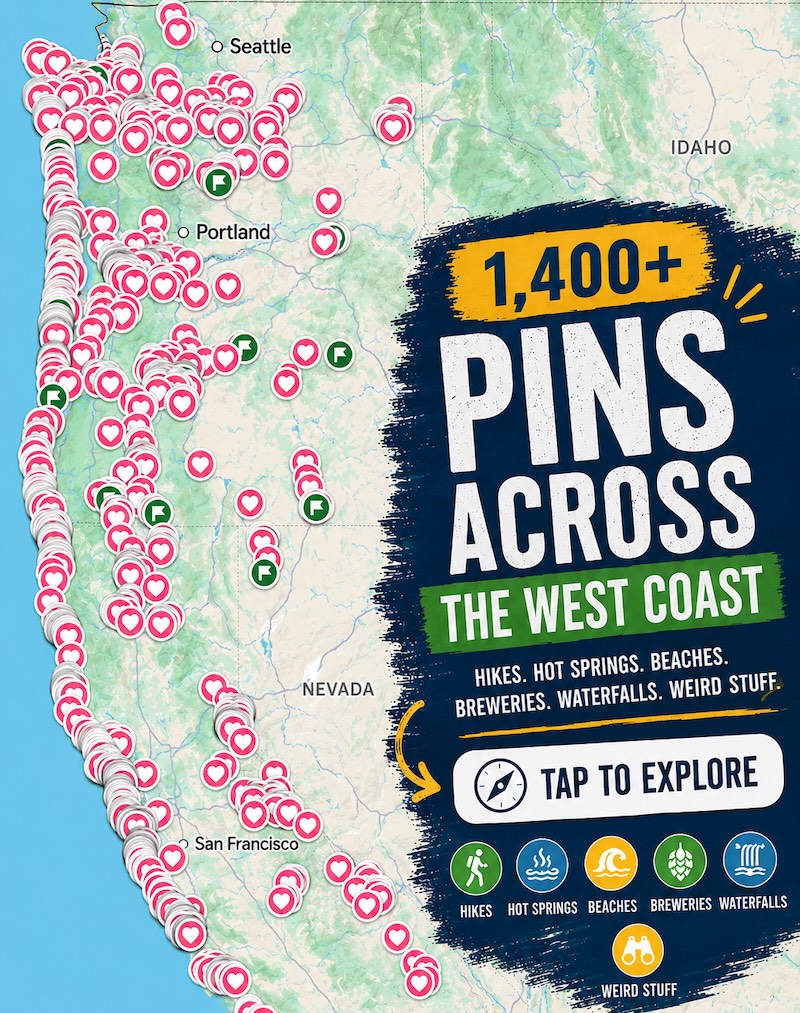
Psst — we made you a West Coast Adventure Map. Nearly 1,900 of our favorite spots, already pinned, ready to load into Google Maps in two clicks — grab it here.
Washington: the Discover Pass, and only the Discover Pass
Washington state parks, plus land run by the Department of Natural Resources and the Department of Fish and Wildlife, all take the same pass — the Discover Pass. It’s $45 for an annual pass or $10 for a single day, and one pass covers everyone riding in your car.
📍 GET THE ULTIMATE PNW MAP 🗺️
Get our curated list of the best adventures, things to do, and places to grab a brew loaded onto your maps with just two clicks!
✅ Waterfalls ✅ Hikes ✅ Viewpoints
✅ Craft breweries ✅ National Parks ✅ 1400+ Pins

It’s also strictly a Washington system. Mount Si, one of the most-hiked trailheads near Seattle, sits on DNR land and requires a Discover Pass — cross into a national forest a few exits down I-90, and that same pass does nothing for you there.
One date worth circling if you’re in Washington later this summer: the state waives the Discover Pass requirement on select days, including Smokey Bear’s birthday on August 9 and National Public Lands Day on September 26. Free parking at every state park, DNR site, and WDFW water access point in the state, no pass required.
If you’re going to be in and out of Washington’s state land more than a couple times this trip, the annual pass pays for itself fast — grab a Discover Pass before you head out.

Oregon and Washington national forests: the Northwest Forest Pass
Once you’re on U.S. Forest Service land — most of what people picture when they think “Cascades trailhead” — the Discover Pass stops working, even in Washington. You need a Northwest Forest Pass instead: $30 for the year, or $5 for a single day.
Why do two trailheads ten minutes apart sometimes need completely different passes? Because the land itself changed hands somewhere along the way — DNR to Forest Service — usually without a sign telling you so.
Tamanawas Falls, a popular short hike on Mount Hood’s east side, is a clean example. It’s Forest Service land through and through, and it takes this pass year-round, never the state one.
This pass is Pacific Northwest-only. Oregon’s own state parks don’t accept it, and California doesn’t have it at all — national forest access there runs on its own, park-specific fees.
Hitting a handful of Forest Service trailheads on an Oregon or Washington trip? Pick up a Northwest Forest Pass and skip the guesswork at the kiosk.
All three states: America the Beautiful covers national parks, and more
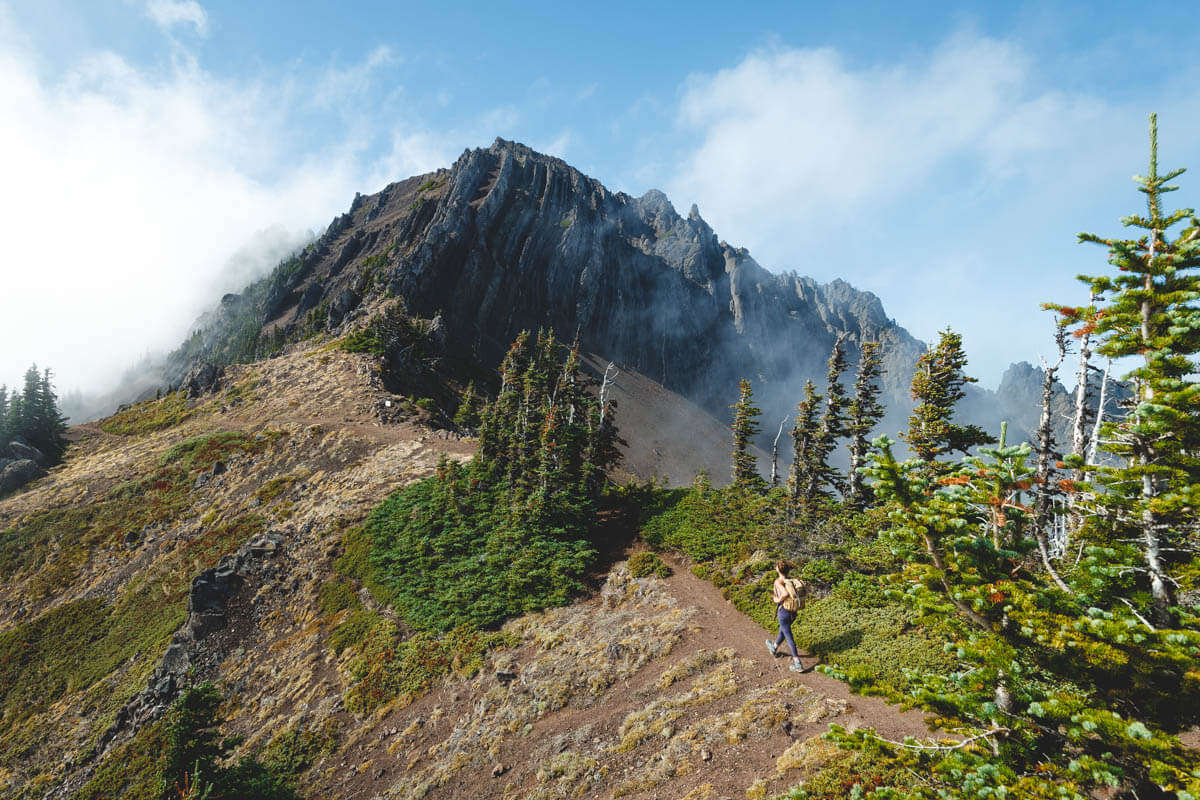
National parks and monuments — Crater Lake, Olympic, Yosemite — run on a separate interagency pass called America the Beautiful, not either system above. As of January 2026, it’s $80 a year for U.S. residents and covers entrance fees at every national park in the country, not just the West Coast ones.
It also works at a lot of Forest Service and BLM day-use fee sites, which means it can double as your Northwest Forest Pass in Oregon and Washington too. Of everything on this list, it’s the one actually worth carrying if your trip touches more than one state.
Olympic National Park‘s entrance fee is the cleanest example. The Discover Pass won’t get you past that gate — only this one will.
One change worth flagging for 2026: Yosemite is now one of 11 national parks charging international visitors a $100 per-person surcharge on top of the standard entrance fee, unless they’re holding the newer nonresident annual pass. Doesn’t touch U.S. residents, but it’s real news if anyone in your car isn’t one.
Grab an America the Beautiful pass if a national park is anywhere on the itinerary — it’s the closest thing to a universal option in this entire system.
California: no unified pass, so budget for it at the gate
This is where it gets messiest. California state parks don’t take the Discover Pass, the Northwest Forest Pass, or America the Beautiful — most charge their own day-use fee right at the entrance, typically $12 to $20 depending on the park.
Salt Point State Park on the Sonoma Coast runs exactly like this: pull up, pay at the kiosk, no pass accepted or required.

If a trip has you hitting a lot of California state parks, the state sells its own $195 annual day-use pass directly through its own system, separate from everything above. Worth pricing out if you’ve got more than a handful of stops planned — not worth it for one or two.
Oregon runs a quieter version of the same idea. Most of its 150-plus state parks are still free, but the ones that do charge run $10 a day for residents ($12 for everyone else) or $60 a year for regulars — and neither the Northwest Forest Pass nor America the Beautiful covers those fees, even though both are federal passes Oregon explicitly doesn’t accept.
Three states, four fee systems once you count Oregon and California separately, and not one of them talks to the other two. File it under “designed by committee,” because it basically was.
Trip tips: grab a rental car to cover ground between all three states, and lock in your hotel before the good rooms are gone.
Rules and fees change — always confirm current requirements before you go.