The West Coast’s sea lions move into an Oregon cave for winter, and two other lookouts keep the show going
Forget the whale watching boat. The loudest wildlife show on the West Coast is a pile of sea lions barking at each other on a rock, and you can watch it from dry land for the price of a parking spot. Better yet, each of the three coastal states has a lookout built for it.
Here’s where to stand in Oregon, California, and Washington, and what each spot asks of you before you go.
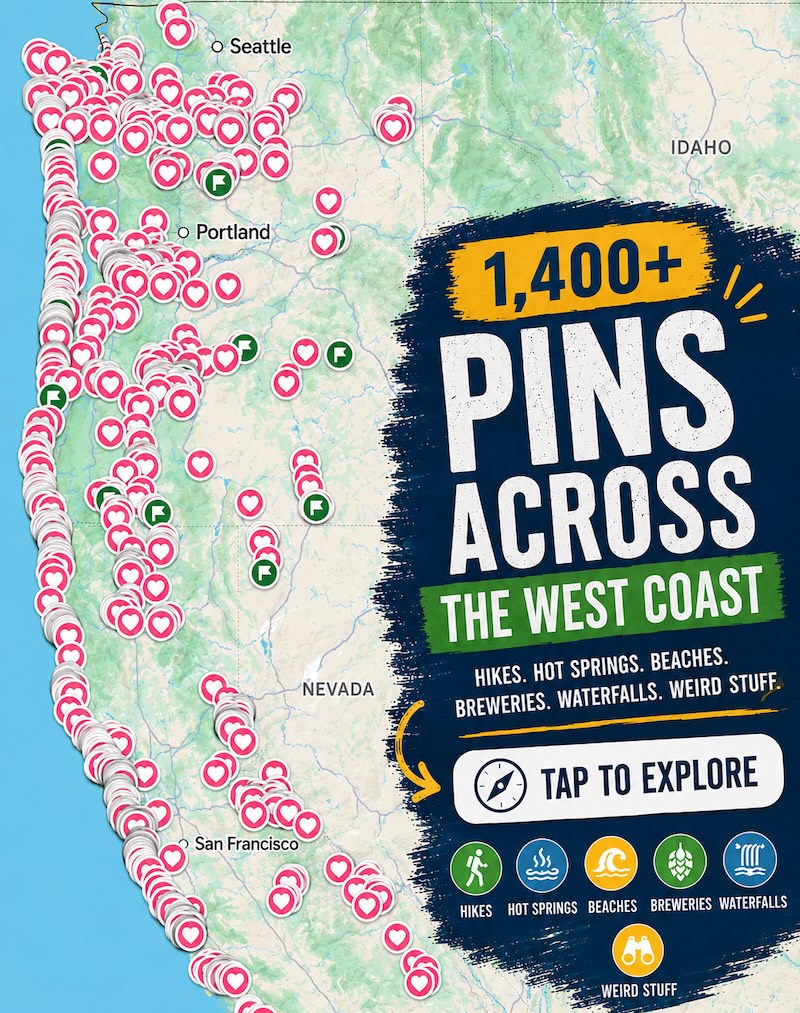
Psst, we made you a West Coast Adventure Map. Nearly 1,900 of our favorite spots, already pinned, ready to load into Google Maps in two clicks: grab it here.
Oregon: Sea Lion Caves, near Florence
This is the one that makes winter a feature. Sea Lion Caves says the sea lions are usually inside the cave in winter and spring, then move out to the rocky ledges just outside in summer. So late fall into winter is when you ride the elevator down to meet them.
📍 GET THE ULTIMATE PNW MAP 🗺️
Get our curated list of the best adventures, things to do, and places to grab a brew loaded onto your maps with just two clicks!
✅ Waterfalls ✅ Hikes ✅ Viewpoints
✅ Craft breweries ✅ National Parks ✅ 1400+ Pins


Admission is $18 for adults, $17 for seniors, and $12 for ages 5 to 12, with kids 4 and under free. Parking is free, and the doors are open 9 a.m. to 4 p.m. daily. It closes at noon the day before Thanksgiving, and it’s shut on Thanksgiving, Christmas Eve, and Christmas Day.
One catch: rough weather can occasionally close cave entry. In storm season, call ahead at 541-547-3111 before you drive the coast for it.
California: Sea Lion Point at Point Lobos
If I had to hand a first-timer one spot, it’s this one. The Sea Lion Point Trail at Point Lobos State Natural Reserve near Carmel is a 0.6-mile loop with less than 20 feet of elevation change, so it’s easy for almost everyone. You’ll probably hear the barking before you see a single animal.
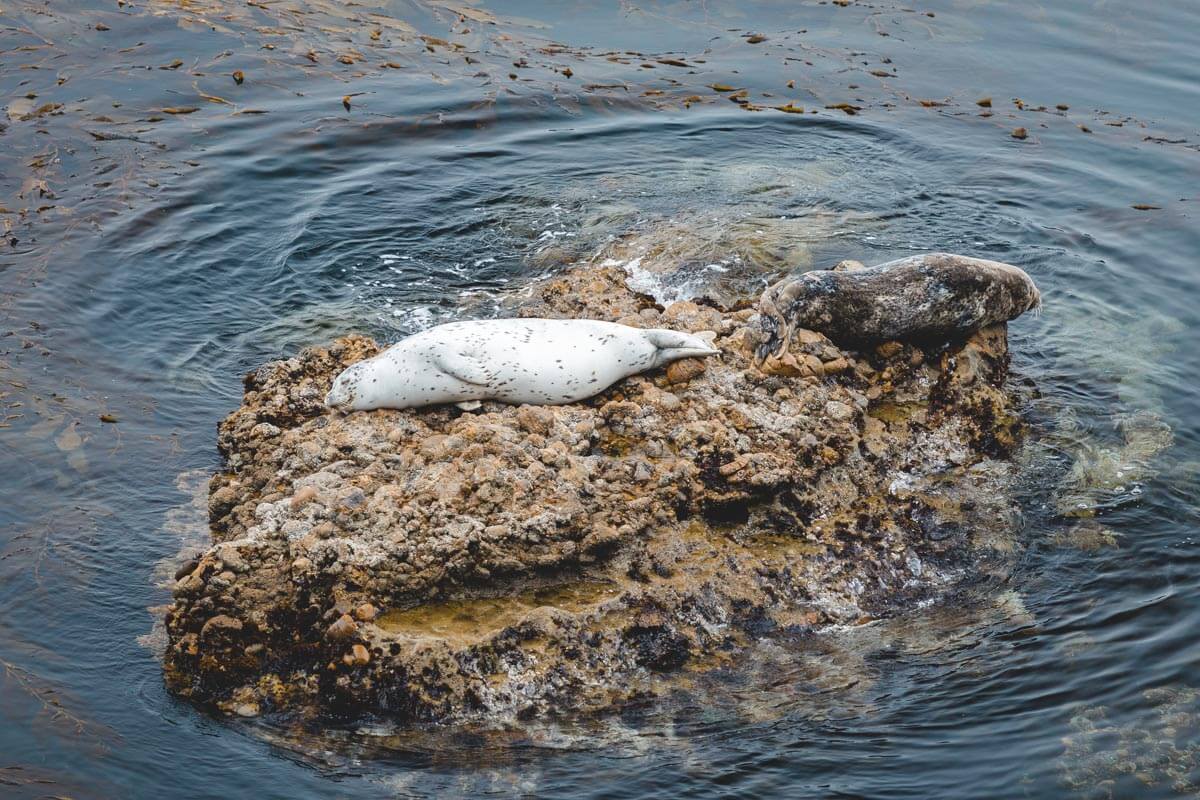
The sea lions huddle on offshore rocks, so bring binoculars or a zoom lens. Harbor seals and sea otters often share the view, which makes the short loop feel a lot bigger than it is.
Entry is $10 per vehicle, and walking in is free. The day-use area is open 8 a.m. to 7 p.m., but nobody gets in after 6:30 p.m. Lots fill fast on weekends, so go early or late in the day, and note that vehicles over 21 feet long can’t enter the reserve.
Washington: Cape Flattery, near Neah Bay
This is the most remote of the three, and the payoff is a different kind of drama. The Cape Flattery trail is 1.5 miles round trip with about 200 feet of elevation gain, ending at the northwesternmost point of the contiguous U.S. Four observation decks look out over the Pacific, the Strait of Juan de Fuca, and Tatoosh Island.

Watch for sea lions on Snake Rock, just east of Tatoosh Island, along with sea otters and the occasional whale. The trail is on Makah land, and you’ll need a Makah recreation permit for parking, sold in Neah Bay and online through the Makah Tribe’s website.
The drive out is long, so treat it as a full-day trip. Is it worth it? If you want the wildest of the three views, absolutely.
How close is too close?
California State Parks asks visitors to stay at least 50 yards (150 feet) from seals and sea lions, and at least 100 yards from whales. Those are good rules for all three states. Sea lions are wild animals, and the cliff edges at these lookouts are no place to back up for a better photo.
Trip tips: grab a rental car to get out here, lock in your hotel before the good rooms are gone, or skip both and book a camper van instead.
Rules and fees change, so always confirm current requirements before you go.
Which sea lion lookout is going on your list first? Tell us in the comments.