Wildflower Playbook: 11 Bloom Loops from Desert Floors to Alpine Bowls

Wildflowers are timing + patience + good trail manners. Desert carpets can flip on after big winter rains; mountains hold color longer into summer. General rule: stay on trail, step on rock/duff not plants, no picking, and skip the fragile biological crust (that black/bumpy desert “soil” is alive). Light is best in early morning or late afternoon; wind is your frenemy—embrace a little blur or hike earlier. Ready to chase color from sand to summits? Let’s go.
Anza-Borrego Desert State Park — Borrego Palm Canyon & Henderson Canyon Wash (CA)
When: Late Feb–March in decent rain years; April for cactus blooms at elevation.
Why it’s great: You can sample both carpet blooms (desert sand verbena, primrose) in the flats and canyon blooms along a classic oasis trail. Do a short out-and-back in Borrego Palm Canyon for brittlebush, chuparosa, and hummingbird traffic; then cruise legal roadside pullouts in Henderson Canyon Wash for big, photogenic swaths.
How to tread lightly: In the flats, the line between “trail” and “plants” can blur—use obvious paths and existing footprints only. Never step on cryptobiotic soil. Bring a wide-brim hat and lots of water; the desert can spike hot even on bloom-perfect mornings.
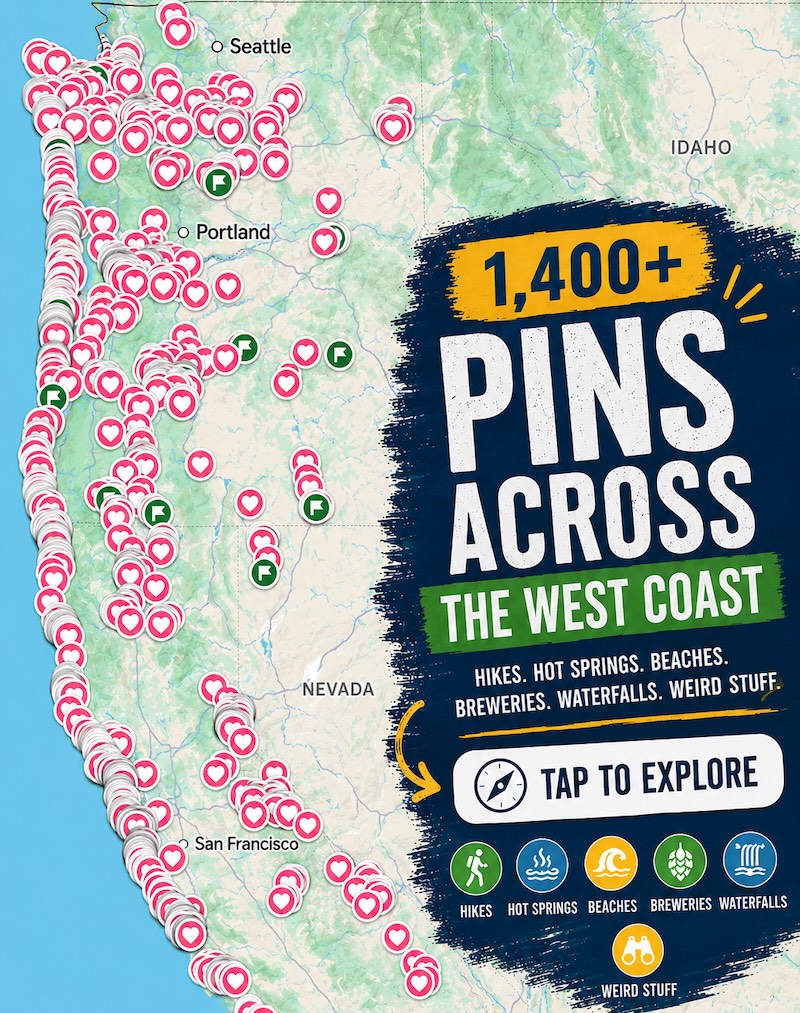
📍 GET THE ULTIMATE PNW MAP 🗺️
Get our curated list of the best adventures, things to do, and places to grab a brew loaded onto your maps with just two clicks!
✅ Waterfalls ✅ Hikes ✅ Viewpoints
✅ Craft breweries ✅ National Parks ✅ 1400+ Pins

Carrizo Plain National Monument — Soda Lake Rim & Caliente Ridge Pullouts (CA)
When: Mid-March to mid-April in good rain years; some color lingers into late April on north aspects.
Why it’s great: If a superbloom pops, this basin becomes a paint spill—goldfields, phacelia, owl’s clover, hillside daisies. Keep it simple with short walks from Soda Lake overlooks or safe Caliente Ridge pullouts for layered, distance-friendly panoramas (great if you’re with kids or limited mobility).
How to tread lightly: Roads are dirt and can be slick—don’t rut them after rain. Photograph slopes from established overlooks rather than side-hilling through flowers. Wind is common; a light jacket saves the vibe and a lens cloth saves your photos.

Santa Rosa Plateau Ecological Reserve — Vernal Pool & South Los Santos Loops (CA)
When: Feb–April, peaking March in typical years.
Why it’s great: Rolling oak savanna and protected vernal pools mean diverse, dependable displays—goldfields, lupine, owl’s clover, and fairy shrimp magic if the pools hold water. The Vernal Pool and adjacent loop trails are gentle, well-marked, and perfect for families.
How to tread lightly: Boardwalks and fences are there to protect sensitive habitat—use them. Mud happens; bring shoes you don’t mind baptizing. Mornings deliver dew-lit blooms and songbirds; afternoons warm up fast.
Table Mountain Ecological Reserve — Phantom Falls Loop (Oroville, CA)
When: March–April.
Why it’s great: A basalt mesa that turns into a wildflower quilt—fiddlehead, lupine, goldfields—with seasonal cascades spilling off lava rims. Do a choose-your-length loop toward Phantom Falls and the lava channels; flowers line the route without forcing off-trail wandering.
How to tread lightly: It’s all about staying on rock and obvious tread—meadows here are fragile and patchy. Expect creek crossings and slick basalt; trekking poles are your friend. Early starts dodge crowds and give you low-angle light across the fields.
Point Reyes — Chimney Rock & Tomales Point (Marin, CA)
When: March–May (coastal blooms run cool and steady).
Why it’s great: Cliff-edge coast daisies, paintbrush, and poppies with blue water beyond. Chimney Rock is a short, contained out-and-back with dense color and seabird drama; Tomales Point offers a longer ridge stroll where tule elk sometimes cameo.
How to tread lightly: Stay well inside rails at cliff edges and give elk huge space. Fog softens color into painterly tones; sun makes petals glow but wind rises—bring a wind layer either way.

Columbia Hills State Park — Crawford Oaks & Dalles Mountain Ranch Loops (WA)
When: April–early May (earlier than the high Cascades).
Why it’s great: Eastern Gorge balsamroot and lupine rolling over open hillsides with river views. The Crawford Oaks loop offers gentle grade and huge sky; Dalles Mountain Ranch adds photogenic old structures framed by yellow hills.
How to tread lightly: These are trail-only zones—wildflowers are ground-huggers and crush easily. It’s rattlesnake habitat; keep eyes on the tread and dogs leashed. Morning light puts petals front-lit; late day backlights the gold for drama.
Silver Falls State Park — Rim & Canyon Segments (OR)
When: April–May.
Why it’s great: A waterfall park that also throws a spring flower party—trillium, fairy bells, and oxalis under big-leaf maples. Stitch a short Rim and Canyon combo for cascades + understory blooms with minimal elevation.
How to tread lightly: Trails can be slick with spray—stay behind rails and skip side paths carved by shoes, not rangers. Overcast days are your friend; the forest floor saturates like a studio set.
Columbia River Gorge (Oregon Side) — Rowena Plateau Nature Trail (OR)
When: April–May.
Why it’s great: A flat-ish loop over basalt benches with widescreen wildflower meadows (balsamroot, lupine) and endless river perspective. It’s the most beginner-friendly way to get classic Gorge bloom photos without a calf blast.
How to tread lightly: Stay on the established loop; social trails multiply fast during bloom—don’t add to the web. It’s exposed—bring brimmed hats and water. Sunrise gives pastel petals; evenings go gold-on-gold.
Carson Pass — Woods Lake to Winnemucca Lake (Tahoe, CA)
When: Late June–July; sometimes into early August depending on snow.
Why it’s great: A moderate alpine loop with jackpot meadows—columbine, lupine, paintbrush—set against granite and late snowfields. From Woods Lake, climb gently past Lake Round Top to Winnemucca and wander flower-lined shore paths.
How to tread lightly: Wet meadows = absolutely no shortcutting—use rocks/logs to cross seeps. Afternoon thunder happens; start early. Mosquitoes peak right as blooms do—long sleeves make you saintly.
Mount Rainier — Naches Peak Loop & Tipsoo Tarn Spokes (WA)
When: Late July–mid-August (can slide earlier/later with snowpack).
Why it’s great: Subalpine fireworks—lupine, valerian, aster—around tarns with Rainier looming. The Naches Peak Loop is a 3.3-mile crowd-pleaser you can do clockwise for constant mountain reveals; tiny spur paths to Tipsoo’s tarns keep it short and sweet if you’re with littles.
How to tread lightly: Boardwalks and armored paths protect soggy turf—stick to them. Sunrise = calm reflections; sunset = alpenglow, but bring headlamps for the mellow walk out.

Mount Baker — Artist Ridge to Huntoon Point (Heather Meadows, WA)
When: August–early September.
Why it’s great: A paved-to-packed alpine ramble with volcano views and heather and paintbrush layering the foreground. Start at Artist Point and wander out across glacially carved benches—choose-your-length with constant payoff.
How to tread lightly: Fragile heather mats don’t bounce back—stay on rock and designated tread for photos. Clouds can move in and out—wait five minutes for your window. Even on warm days, wind at the ridge bites—pack a light shell.
Bloom Etiquette (So the Flowers Come Back Next Year)
Stay on trail and step on rock/duff when you must yield—never on plants.
No picking, no laying in fields, no drone buzzing wildlife or people.
Deserts: avoid cryptobiotic soil; stick to washes or firm tread.
Mountains: keep out of wet meadows—boardwalks and rocks only.
Early/late light is best; midday is for snacks and shade. Hydrate, hat up, and leave it better than you found it.