Only one of the West Coast’s three famous rocks lets you hike to the top, and it’s closed three days a week this winter
Three giant rocks anchor the West Coast postcard: Haystack Rock in Oregon, Beacon Rock in Washington and Morro Rock in California. Only one of them lets a regular visitor hike to the top, and it happens to be the one with a closure schedule this winter.
They all rise straight out of the landscape like someone dropped them there, but the rules for each are wildly different. Here’s how to visit all three, and which days to skip.
Psst, we made you a West Coast Adventure Map. Nearly 1,900 of our favorite spots, already pinned, ready to load into Google Maps in two clicks: grab it here.
Haystack Rock, Oregon: look, don’t climb

Haystack Rock stands 235 feet tall on Cannon Beach, and at low tide you can walk right up to it. The sand leads you to the base, where the tide pools sit at your feet.
📍 GET THE ULTIMATE PNW MAP 🗺️
Get our curated list of the best adventures, things to do, and places to grab a brew loaded onto your maps with just two clicks!
✅ Waterfalls ✅ Hikes ✅ Viewpoints
✅ Craft breweries ✅ National Parks ✅ 1400+ Pins


Climbing above the barnacle line is not allowed, and collecting plants or animals is strictly prohibited. The rock is part of the Oregon Islands National Wildlife Refuge, and birds including tufted puffins nest and roost here, usually raising young between March and September.
My one firm opinion: go in winter anyway. The summer crowds thin out, the beach feels like yours, and a moody gray sky does the rock a lot of favors. Check a tide chart before you head down, and leave the tide pools exactly as you found them.
Beacon Rock, Washington: the only one you can summit
Beacon Rock is an 848-foot basalt column on the Washington side of the Columbia River Gorge, and a trail climbs it. The round trip is about 2 miles with roughly 600 feet of elevation gain, and the path zigzags up the face on 52 switchbacks.
Here’s the catch for this season: Washington State Parks closes the Beacon Rock trail on Tuesdays, Wednesdays and Thursdays from October 1 through the end of May, so crews can replace the trail decking. Plan this one for a Friday through Monday.
Parking inside a Washington state park takes a Discover Pass, which the state lists at $10 for a day or $45 for the year. Is a 2-mile climb with a Columbia River view at the top worth a winter weekend? Absolutely.
Morro Rock, California: the one with the sea otters
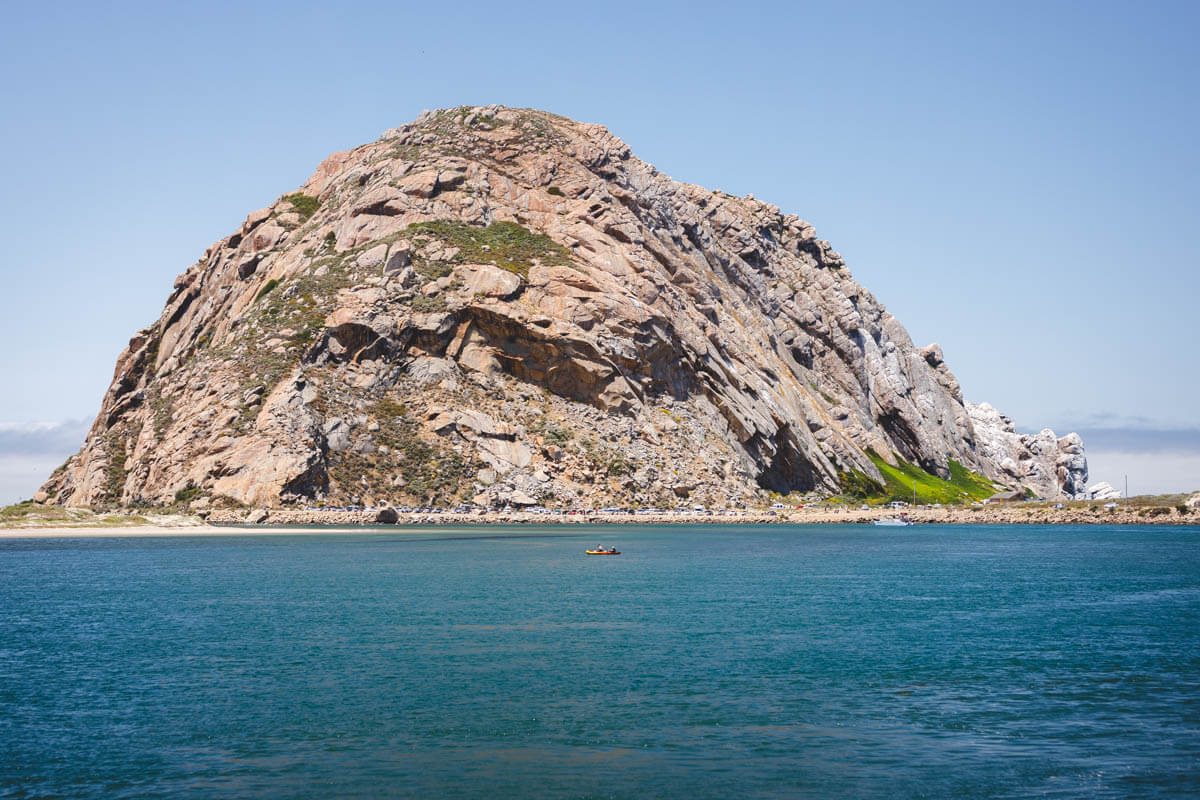
Morro Rock rises about 580 feet at the mouth of Morro Bay, and it’s a volcanic plug, the leftover neck of a volcano that’s roughly 23 million years old. You can drive to its base by heading north on Embarcadero Road.
Climbing is prohibited by law, and the rock is home to nesting peregrine falcons. So the move here is to stay low: walk the base, then get on the water, where sea lions and sea otters are regular sights around the rock.
If you’re staying nearby, our guide to the best things to do in San Luis Obispo covers the rest of the Central Coast. Morro Bay is a short drive from town.
How to string them together
These three sit hundreds of miles apart, so think of them as stops on a long Pacific coast road trip rather than a weekend. Start with Haystack Rock on the Oregon coast, swing east through the Columbia River Gorge for Beacon Rock, then head south to the Central Coast for Morro Rock.
Which one would you pick if you only had a single day? Tell us in the comments.
Trip tips: grab a rental car to get out here, lock in your hotel before the good rooms are gone, or skip both and book a camper van instead.
Rules and fees change, so always confirm current requirements before you go.