Oregon’s free elk-feeding tours book up starting December 1, Washington’s elk got their own national monument, and California’s herd restarted from 10 animals
Forget the safari. The West Coast has three wild elk herds with backstories that are almost as big as the animals, and winter is prime time for two of them.
One herd in Oregon gets breakfast delivered by tractor, and you can ride along. One in Washington convinced a president to protect 615,000 acres. And one in California came back from just 10 animals.
Psst, we made you a West Coast Adventure Map. Nearly 1,900 of our favorite spots, already pinned, ready to load into Google Maps in two clicks: grab it here.
Oregon: Jewell Meadows, where you help feed the herd
Jewell Meadows Wildlife Area sits in the Coast Range off Highway 202, roughly 27 miles southeast of Astoria. From November through April, up to 200 Roosevelt elk graze the open pastures right beside the highway. Four roadside viewing areas let you watch without ever leaving the pavement.
📍 GET THE ULTIMATE PNW MAP 🗺️
Get our curated list of the best adventures, things to do, and places to grab a brew loaded onto your maps with just two clicks!
✅ Waterfalls ✅ Hikes ✅ Viewpoints
✅ Craft breweries ✅ National Parks ✅ 1400+ Pins

The real prize is the feeding tour. From December through February, Oregon Department of Fish and Wildlife staff hitch a hay wagon to a tractor, and you ride out into the meadow while alfalfa gets flung to the herd. Tours are free, run about an hour, start at 9 a.m., and generally go Thursday through Tuesday.
The catch? Reservations open December 1 at 8 a.m., by phone only, at 503-755-2264. There’s a single phone line and the spots go fast, so expect busy signals and keep hitting redial.
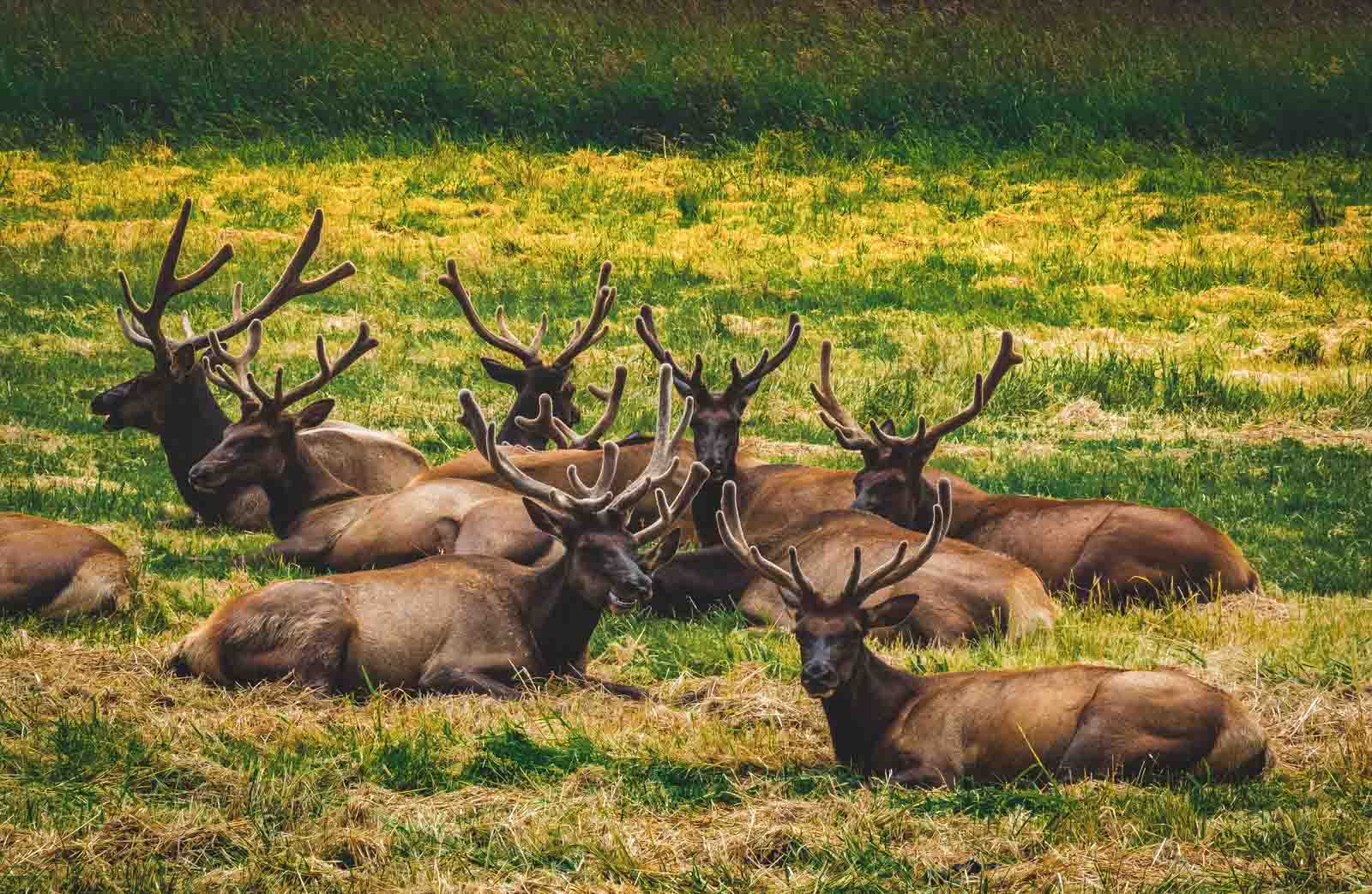
Whether you snag a tour or just pull over at a viewpoint, you’ll need an ODFW wildlife area parking permit on your dash. It’s $10 for the day or $30 for the calendar year. Mornings and late afternoons tend to be the best viewing windows.
Washington: the Hoh, where elk got a national monument first
Roosevelt elk are named for Teddy Roosevelt, and he returned the favor. In 1909, with the herds in steep decline, he set aside Mount Olympus National Monument to protect them. It became Olympic National Park in 1938, and the place came close to being called “Elk National Park.”
Today Olympic is home to the largest fully wild herd of Roosevelt elk in the Pacific Northwest. Bulls can weigh up to 1,100 pounds, which you’ll appreciate the moment one steps out from behind a mossy log.
The Hoh Rain Forest is your best bet. The herds here don’t migrate: cows and calves stick together in groups of around 20 all year, while bulls wander solo or in small bands. Elk are most active early and late in the day, so plan your walk for morning or dusk.
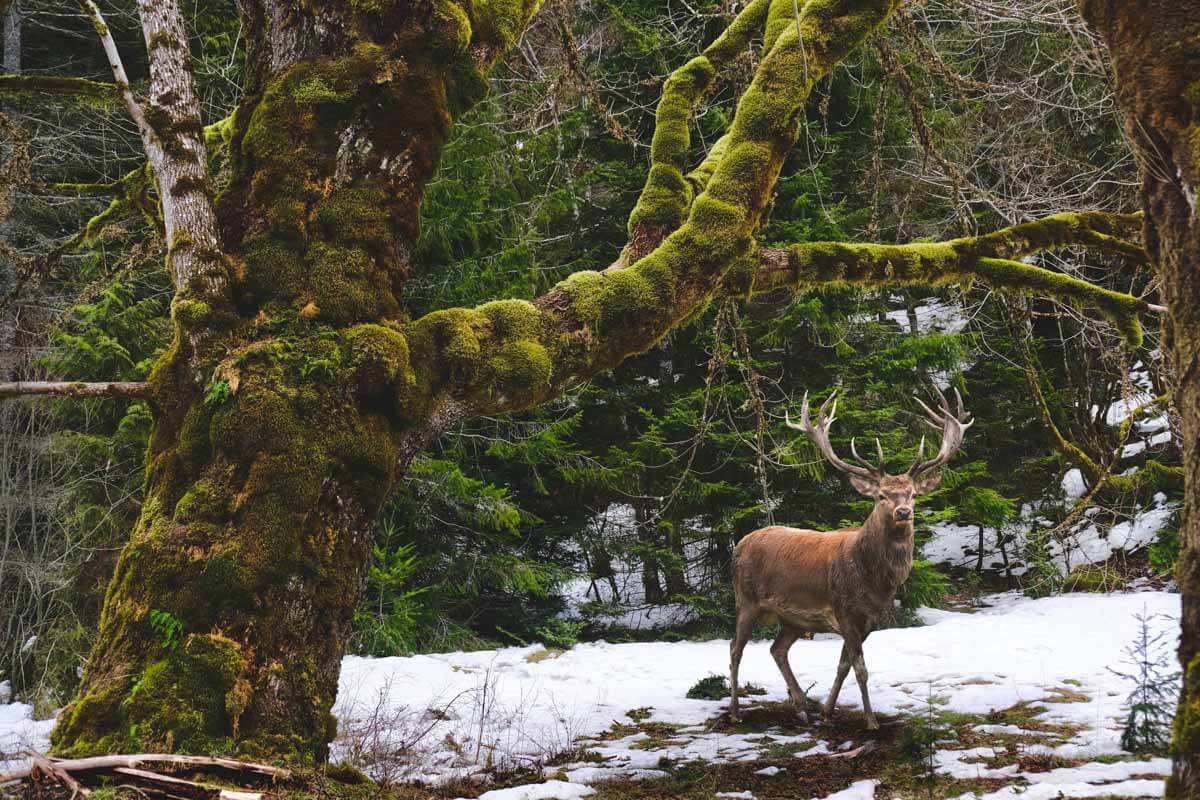
Start with the Hall of Mosses, an easy loop of about 0.8 miles with roughly 100 feet of climbing. In winter the maples are soaked and dripping with moss, and the whole forest glows green even on the grayest day.
Give the elk room. The park asks you to stay at least 100 feet away, about three bus lengths, and an elk that feels crowded may kick or chase you off.
One road gets you in: the Upper Hoh Road, 18 paved miles from Highway 101. Flooding washed it out in December 2024 and kept it closed until May 2026, so call the park’s road and weather line at 360-565-3131 before you drive out after heavy rain. The national park entrance fee applies here, and an annual national parks pass covers it.
California: Tomales Point, where the herd restarted from 10
Tule elk live nowhere else on Earth. As many as 500,000 once roamed California, and by 1870 they were thought to be extinct.
In 1978, the park service moved 10 of them, two bulls and eight cows, onto Tomales Point at the northern tip of Point Reyes National Seashore. By the 2023 census, that herd had grown to at least 315.
For decades, a fence kept those elk on the point. The park service took down a stretch of it in December 2024, so the herd can now roam freely.
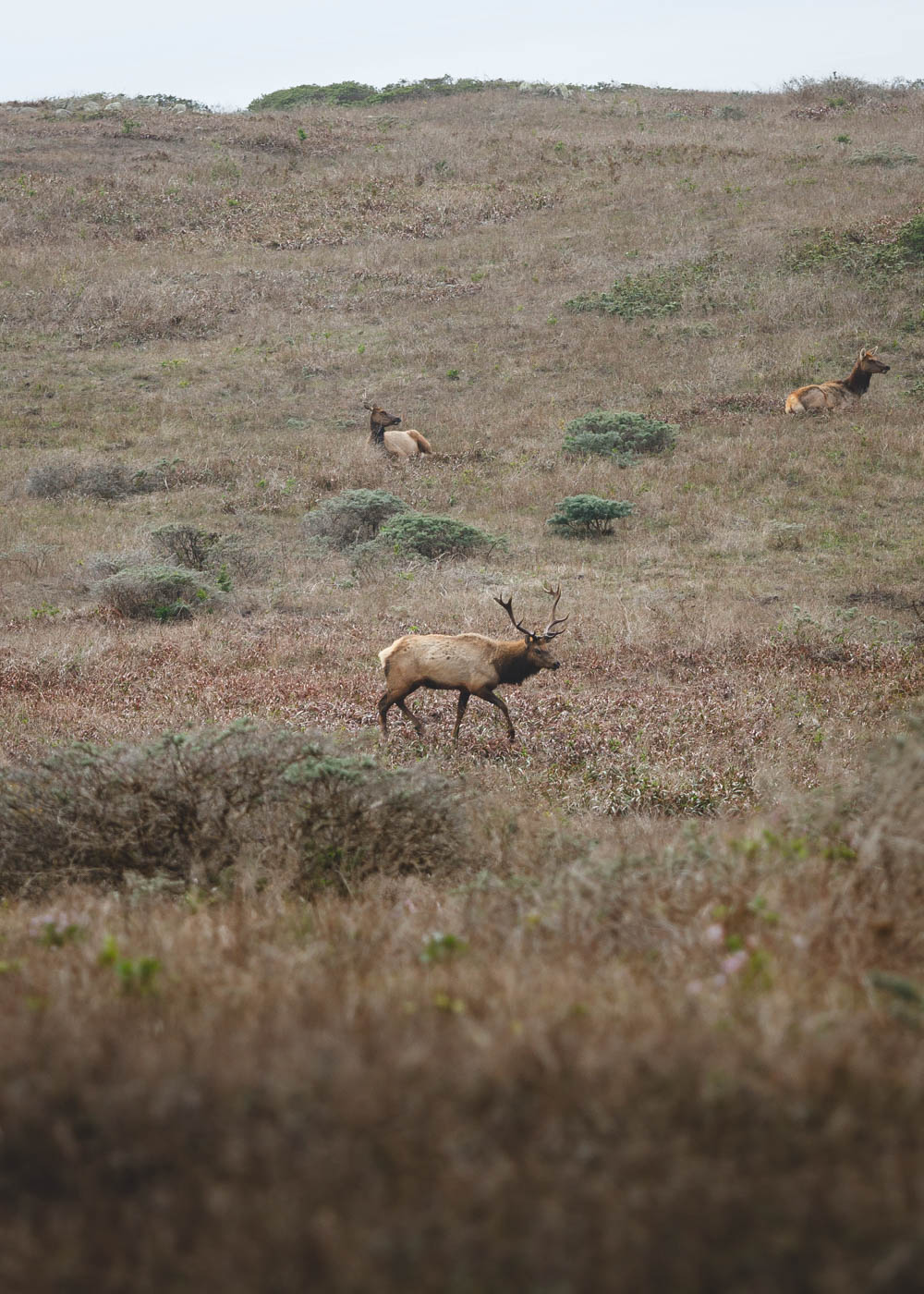
Of the three, this is the most scenic, hands down. The Tomales Point Trail starts at historic Pierce Point Ranch and rides a grassy ridge with the Pacific on one side and Tomales Bay on the other.
You don’t have to go far. Windy Gap is 2 miles round trip, and the first mile is nearly flat. Going all the way to the tip is 9.5 miles round trip with around 1,150 feet of climbing, and the last 1.7 miles are unmaintained, sandy and often overgrown, so wear long pants.
Point Reyes doesn’t charge an entrance fee, but dogs aren’t allowed on Tomales Point. If you’ve got legs left, there are plenty more Point Reyes hikes worth stacking onto the same day.
Which herd should you chase first?
If you can be by a phone at 8 a.m. on December 1, Oregon gets you the closest encounter, and it pairs perfectly with a night in Astoria. Washington is for moody rainforest walks, and it’s easy to build a whole trip around the rest of Olympic National Park.
California is the one for big ocean views and a longer walk. So which herd is going on your winter list first?
Trip tips: grab a rental car to get out here, lock in your hotel before the good rooms are gone, or skip both and book a camper van instead.
Rules and fees change, so always confirm current requirements before you go.