Winter Wildlife Watchlist: Elk, Eagles, Elephant Seals, and Where to Stand
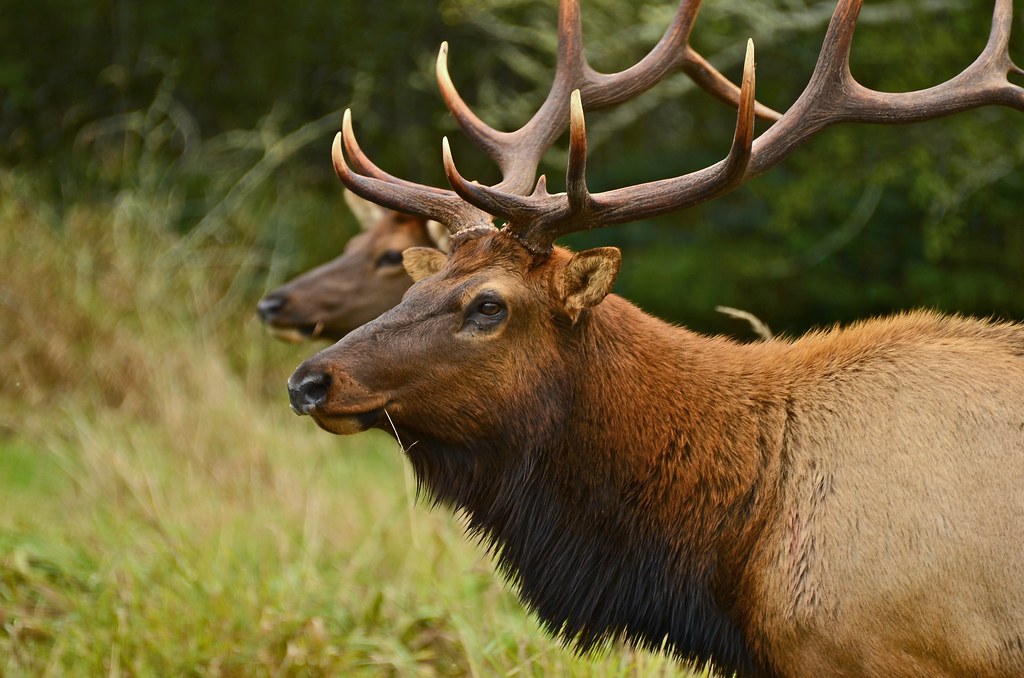
Winter is peak time for some of the West Coast’s biggest wildlife shows—elk herds in misty meadows, eagles stacked in riverside trees, gray whales skimming migration lanes, and elephant seals turning pocket beaches into nurseries. You don’t need to bushwhack; you need patience, a thermos, and the right overlooks. Stand where signs and rails say yes, keep voices low, and give animals the gift of distance.
Año Nuevo State Park Elephant Seals (San Mateo County, CA)
Season window: December–March (pupping/breeding); quieter molting in spring–summer.
Where to stand: Winter uses guided boardwalk routes to signed overlooks above the rookeries. Outside peak season, self-guided platforms keep you well back but perfectly placed.
How not to stress them: Stay silent near mothers and pups; never climb dunes or sit on ropes. If a seal lifts its head, re-positions, or vocalizes at you, you’re too close even from a platform—shift back and give it calm. Wind is a feature; layer up and keep lenses leashed.
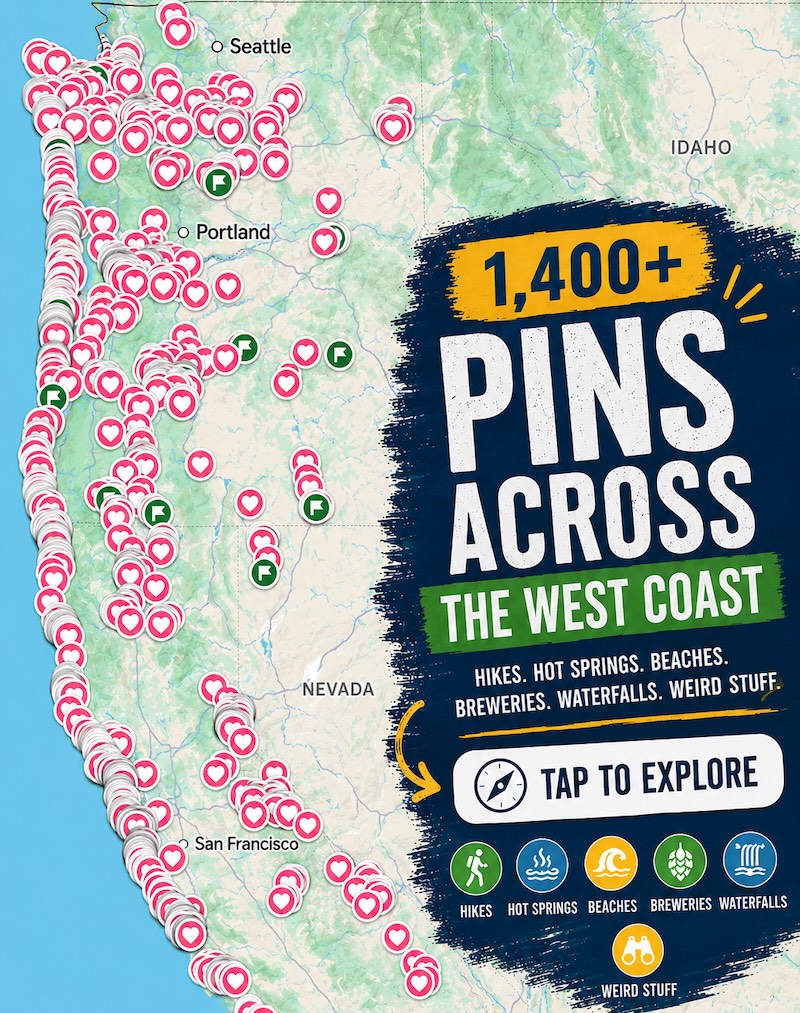
📍 GET THE ULTIMATE PNW MAP 🗺️
Get our curated list of the best adventures, things to do, and places to grab a brew loaded onto your maps with just two clicks!
✅ Waterfalls ✅ Hikes ✅ Viewpoints
✅ Craft breweries ✅ National Parks ✅ 1400+ Pins

Point Reyes Elephant Seals (Chimney Rock & Drakes Beach, Marin, CA)
Season window: December–March for the nursery drama; shoulder months for loafing seals.
Where to stand: Chimney Rock has high overlooks staffed on busy days; Drakes Beach sometimes hosts viewing areas set behind barricades when animals haul out.
How not to stress them: Obey temporary closures to protect pups and watch from above; seals blend with sand—never approach the shoreline for a “closer” angle. Bonus: gray-whale spouts often backfill the scene from the headlands.
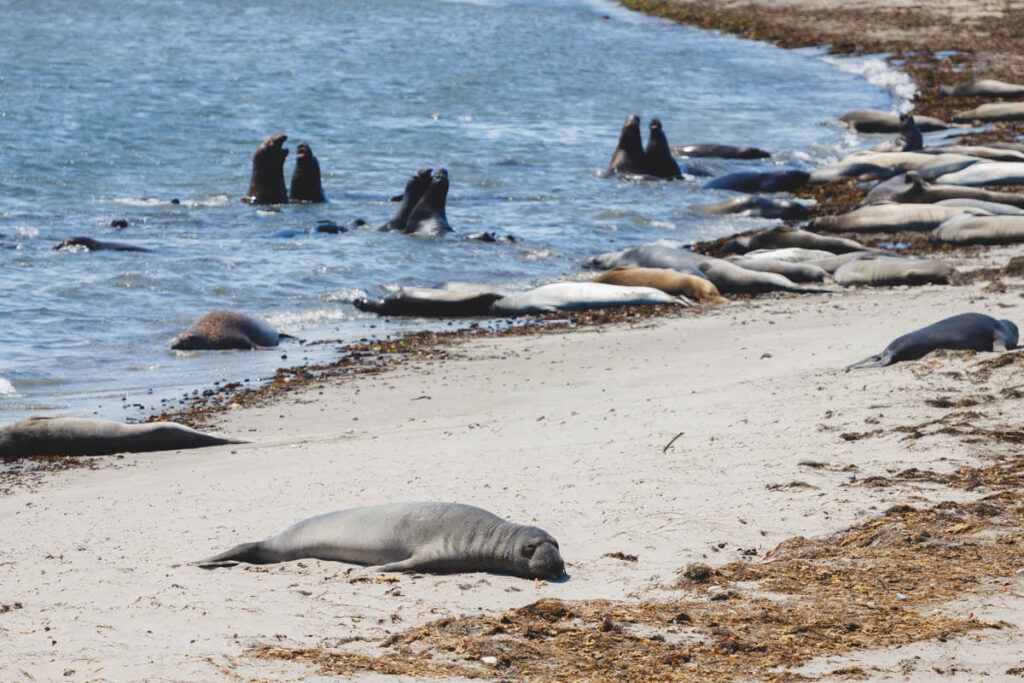
Piedras Blancas Elephant Seal Rookery (San Simeon, CA)
Season window: December–March prime; some seals visible year-round.
Where to stand: Bluff-top boardwalks and railings along the highway pullouts. The angles are excellent—no need to step off trail.
How not to stress them: Keep dogs out of sightlines, avoid loud reactions when males spar, and rotate rail space so everyone gets a view. Winter storms make for spectacular surf—stay landward of the rails and enjoy the show in comfort.
Elk Prairie & Gold Bluffs (Prairie Creek Redwoods, Humboldt County, CA)
Season window: All winter; herds are especially visible at dawn/dusk.
Where to stand: Elk Prairie pullouts along the park road and designated lots near Gold Bluffs Beach. Stay on mowed margins or pavement—never in the meadow.
How not to stress them: Give bulls lots of room (even in winter they can be defensive). If a head turns and ears lock on you, step back to the car or a kiosk area. Fog is common—great mood for photos, but keep a wide buffer so animals don’t “bump” into you through the gray.
Dean Creek Elk Viewing Area (Reedsport, OR)
Season window: Year-round Roosevelt elk; winter herds graze wide in the bottoms.
Where to stand: Roadside turnouts and covered kiosks with interpretive signs—built for exactly this.
How not to stress them: Stay behind railings and never call/whistle for attention. If elk start bunching or moving away as a group, you’re crowding; return to the kiosk and watch them relax back into grazing. Bring a spotting scope for birds working the sloughs.
Skagit & Nooksack River Bald Eagles (Whatcom/Skagit Counties, WA)
Season window: Roughly December–January, centered on salmon carcass availability.
Where to stand: Signed pullouts along the North Fork Nooksack and Skagit River viewpoints; some parks set up viewing platforms and turnout zones.
How not to stress them: Stay off gravel bars and keep drones grounded—flushing eagles wastes precious winter calories. Use car-as-blind etiquette: watch from the shoulder with windows down and engine off. Overcast days make that white head pop; bring gloves for long glass.

Klamath Basin National Wildlife Refuges (CA/OR)
Season window: Peak raptors and waterfowl in mid-winter; famous eagle counts in cold snaps.
Where to stand: Auto tour routes, photo blinds, and railed overlooks—it’s literally designed for car-based wildlife viewing.
How not to stress them: Stay in the vehicle at close distances; step out only at signed stops. Long lenses mean you never need to “inch closer.” Dawn lifts skeins of geese into pink light; late afternoon stacks silhouettes against the basin’s big sky.
Sacramento National Wildlife Refuge Auto Tour (Willows, CA)
Season window: November–February for snow geese, white-fronted geese, pintails, and raptors.
Where to stand: Auto loop with numbered stops and a viewing platform near the end. Windows-down viewing keeps birds calm and you warm.
How not to stress them: Keep speed slow, voices low, and remain in your lane—sudden door slams flush flocks. If a marsh hawk is hunting near the road, give it the right-of-way and let behavior unfold naturally. Golden-hour light here is ridiculous—plan your lap accordingly.
Gray Whales from Land: Point Vicente & Palos Verdes (LA County, CA)
Season window: Southbound migration roughly December–January; northbound (with calves) March–April.
Where to stand: Point Vicente bluff-top paths and the signed overlooks around the lighthouse area; farther along the peninsula, additional pullouts face clean migration lanes.
How not to stress them: You’re on cliffs—perfect. Stay well behind railings and keep dogs calm; whales don’t hear you, but your neighbors do. Scan low and steady for the “blow…back arch…tail” rhythm; wind can carry sound of spouts on still mornings. Bring a wind layer; the point is a venturi.
Watch-Without-Impact Playbook (Clip This)
Pullouts/platforms only. If there’s a fence or rope, it’s a hard boundary.
Use binoculars/long lenses; never approach wildlife or nest/pupping areas.
Keep dogs leashed and quiet; give other viewers space and rotate prime rail spots.
Engines off, voices low, no drones—winter calories matter for animals.
If you’re unsure, ask a ranger/volunteer… then step back another few feet and savor the show.