Oregon’s Silver Falls lets you walk behind four waterfalls this winter, Snoqualmie roars after the rain, and Burney Falls never slows down
Waterfalls are at their best when the weather is at its worst. Rain fills the creeks, the summer crowds thin out, and the roar gets a lot louder.
Three spots make the case: an Oregon park where you can walk behind the water, a Washington icon that swells after heavy rain, and a Northern California waterfall that runs the same in every season.
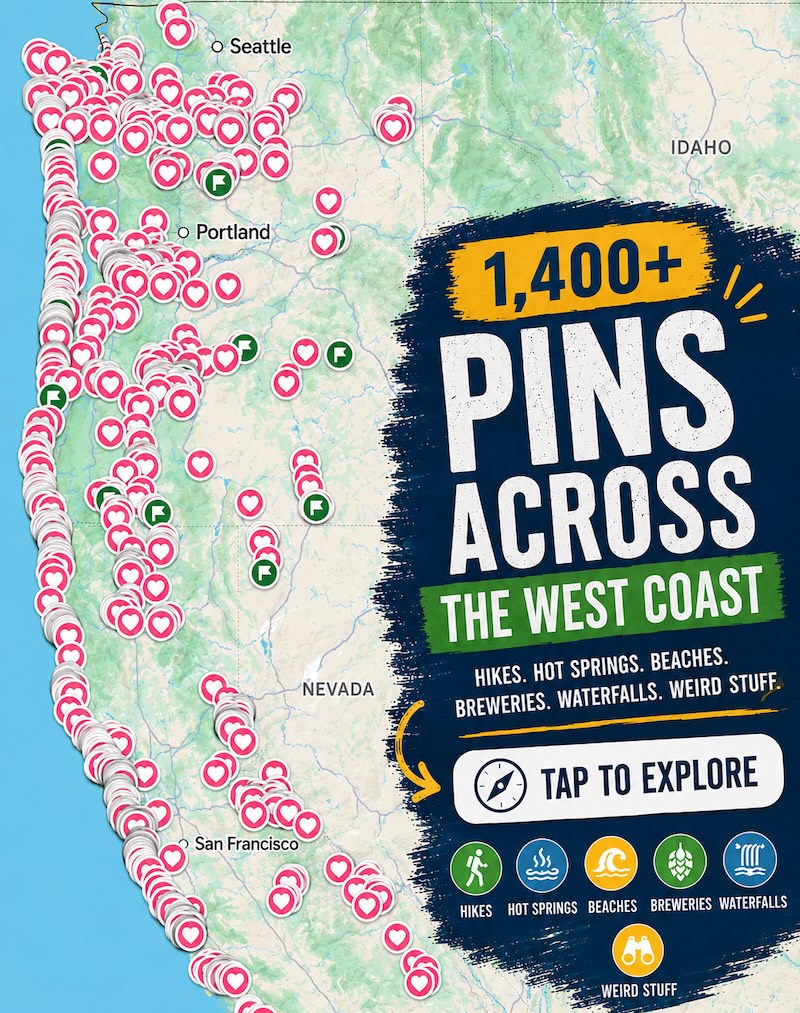
Psst, we made you a West Coast Adventure Map. Nearly 1,900 of our favorite spots, already pinned, ready to load into Google Maps in two clicks: grab it here.
Silver Falls, Oregon: walk behind four waterfalls
Silver Falls State Park sits roughly 25 miles east of Salem and holds the Trail of Ten Falls, a 7.2-mile loop past ten waterfalls. Four of them have trails that run right behind the falling water: South Falls, Lower South Falls, Middle North Falls and North Falls.
📍 GET THE ULTIMATE PNW MAP 🗺️
Get our curated list of the best adventures, things to do, and places to grab a brew loaded onto your maps with just two clicks!
✅ Waterfalls ✅ Hikes ✅ Viewpoints
✅ Craft breweries ✅ National Parks ✅ 1400+ Pins


South Falls is the headliner at 177 feet, and the path ducks behind it so you can stand in the rock alcove and watch the water drop past. Short on time? The South Falls loop is about a mile with roughly 200 feet of climbing.
Want two walk-behinds without the full 7.2 miles? The 2.6-mile Maple Ridge loop picks up South Falls and Lower South Falls.
Winter storms have closed trails here before, so check the Oregon State Parks page for current conditions. Watch for ice on shady stretches, and leave the dog at home, since the canyon trail doesn’t allow them.
Parking is $10 for Oregon vehicles and $12 for out-of-state visitors. Walking or biking in skips the fee.
Snoqualmie Falls, Washington: the roar peaks with the rain
Snoqualmie Falls is listed at 268 feet, more than 100 feet taller than Niagara, and it’s about 40 minutes from Seattle. Most visitors show up in spring and summer, which means winter is the quieter way to see it.

Part of the river is diverted for hydropower, so the falls don’t always run at full volume. Heavy rain in early winter is when the river swells and the falls look their biggest.
The upper viewing deck is free, and the free parking lot across the road connects to it by a pedestrian bridge. The lower lot costs $7. The lower viewpoint means a steep trail, so skip it on icy days.
Burney Falls, California: the same flow in every season
McArthur-Burney Falls Memorial State Park sits between Mount Shasta and Lassen Peak, and its centerpiece drops 129 feet. About 100 million gallons of water pour over it every day, and most of that wells up from springs in the rock face.

Springs feed it, not snowmelt, so the flow stays steady all year. That makes it a reliable winter stop when other falls are guessing.
The Falls Loop is about a mile, and the steps near the base can be slick from mist. Day use is $10 per vehicle, and the park is open year-round. A day-use reservation pilot ran from May 15 to September 27, so check the park’s page before you go, and see our full Burney Falls guide for the details.
If you only pick one, make it Silver Falls. Standing behind 177 feet of water in the off-season is hard to beat.
Trip tips: grab a rental car to get out here, lock in your hotel before the good rooms are gone, or skip both and book a camper van instead.
Which one is going on your winter list? Tell us in the comments.
Rules and fees change, so always confirm current requirements before you go.