The best beginner kayaking on the West Coast sits a few hundred yards from water that can hit 9 knots
Water strong enough to swallow a small boat isn’t usually where you’d send a first-time kayaker. But at three spots on the West Coast, that exact kind of water is standing guard a few hundred yards from some of the calmest paddling around — protecting it instead of threatening it.
Here’s where that pattern plays out for real: a bridge in Washington that most people only ever look down from, a horseshoe-shaped cove in Oregon, and a California bay a volcanic rock has been sheltering for millennia.
Psst — we made you a West Coast Adventure Map. Nearly 1,900 of our favorite spots, already pinned, ready to load into Google Maps in two clicks — grab it here.
Deception Pass, Washington
George Vancouver’s crew got fooled here in 1792. Lieutenant Joseph Whidbey sailed through what looked like a bay and found a channel splitting one island in two instead — Vancouver felt deceived enough to name it exactly that, and gave Whidbey his own island as a sort of consolation prize.
📍 GET THE ULTIMATE PNW MAP 🗺️
Get our curated list of the best adventures, things to do, and places to grab a brew loaded onto your maps with just two clicks!
✅ Waterfalls ✅ Hikes ✅ Viewpoints
✅ Craft breweries ✅ National Parks ✅ 1400+ Pins

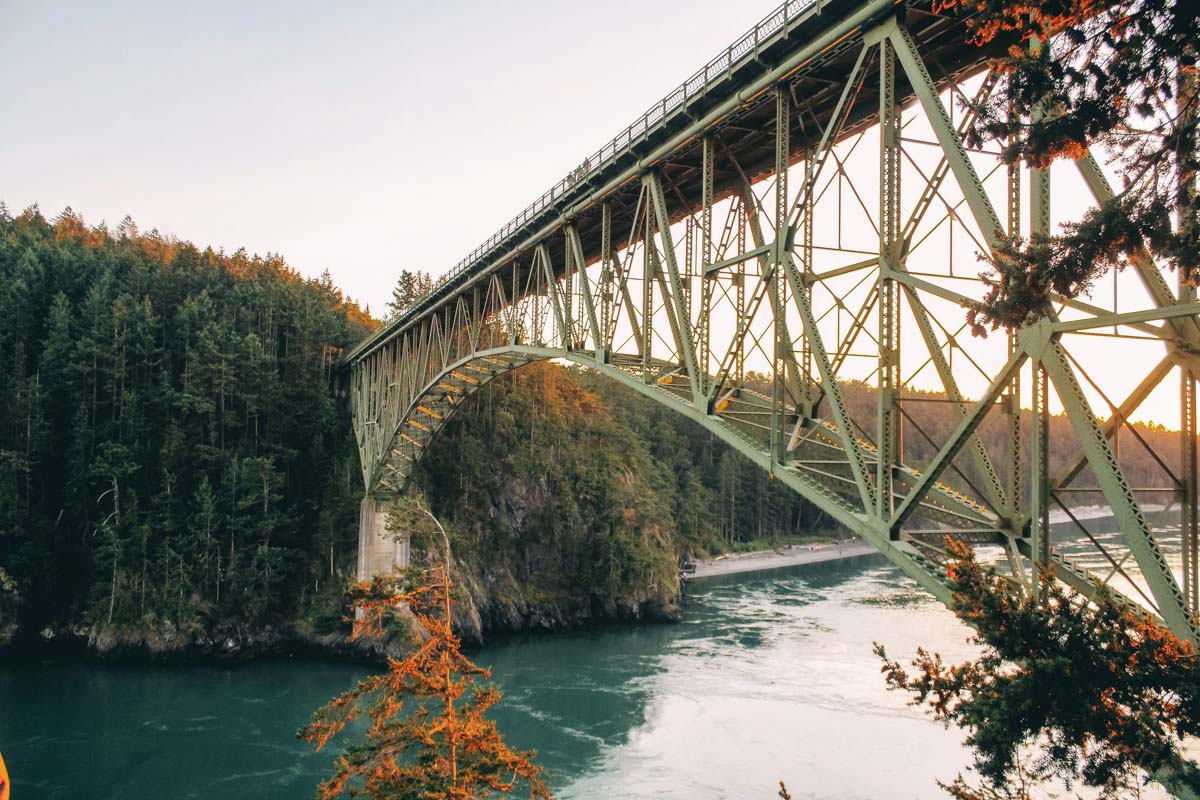
The bridge connecting Whidbey and Fidalgo islands didn’t show up until 1935, a Public Works Administration project dedicated that July with about 700 cars rolling across on day one. Lean over the rail today and you’re looking at water that can rip through at more than 9 knots, strong enough that even experienced paddlers plan around a slack window that only lasts 15 to 20 minutes.

None of that rules out kayaking here, though. Bowman Bay, on the Fidalgo side, is the beginner launch of choice when the tide’s flooding; Cornet Bay on the Whidbey side works when it’s ebbing — either way, staying inside the bay instead of chasing the pass itself is the move if you’re newer to a paddle.
A Discover Pass covers parking anywhere in the state park, $10 for the day or $45 for the year if you think you’ll be back — and if you’re turning it into a weekend, Whidbey Island rooms book up fast come summer.
Sunset Bay, Oregon
Sunset Bay does the opposite of Deception Pass without even trying. Sandstone bluffs curl around this horseshoe cove on Oregon’s south coast and block enough swell that it’s one of the only stretches of this coastline calm enough to swim in, let alone paddle.
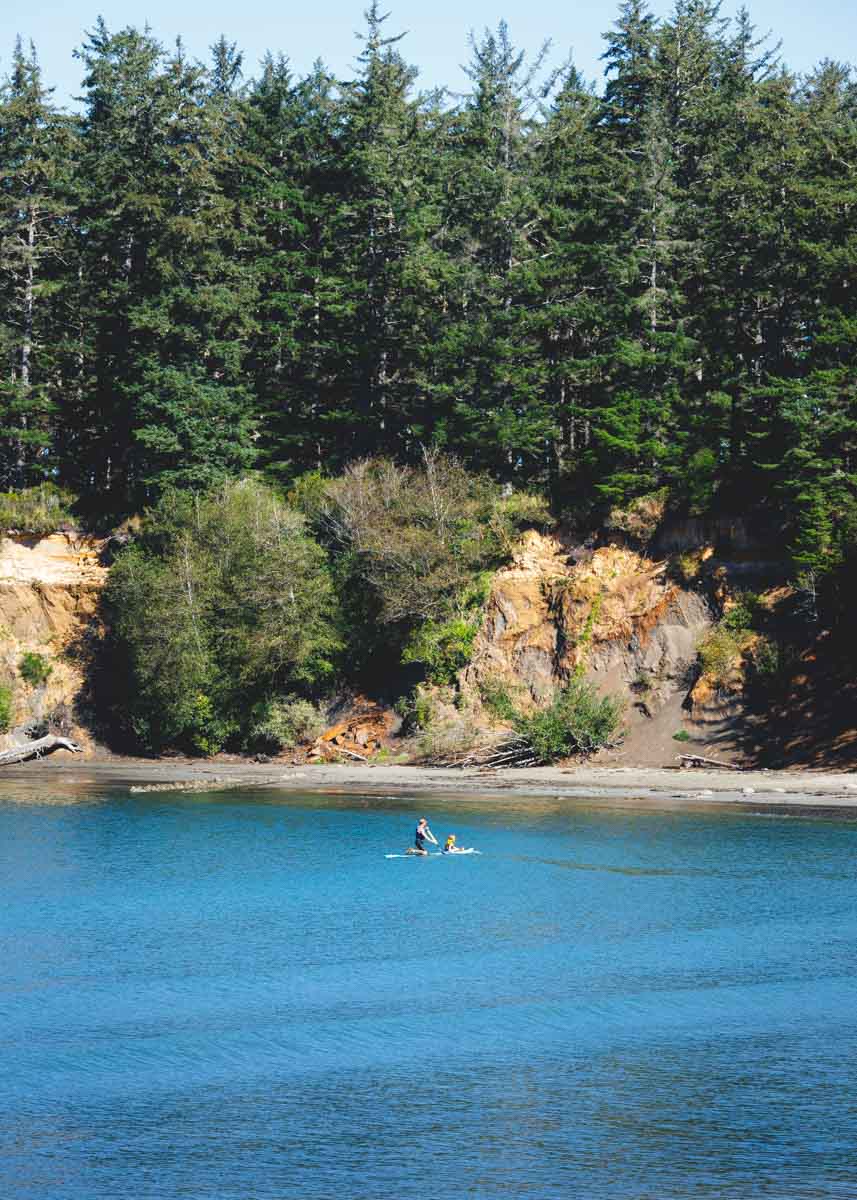
The park rents kayaks and paddleboards right on site, and circling the cove is a genuinely different angle on a coastline that’s usually too rough to get this close to. Parking now runs $10 a day for Oregon residents and $12 for everyone else, since the state started charging here in October 2025 — the same permit covers Shore Acres and Cape Arago a few minutes up the road.
Want more current under you instead of less? Outfitters run guided sea kayak tours out of Port Orford, about 45 minutes south, for the days you’d rather work for it. If you’re basing out of the area, Oregon coast hotels near Coos Bay put you close to all three parks.
Morro Bay, California
Morro Rock has been doing Sunset Bay’s job on the California coast a lot longer. This 576-foot volcanic plug, plus the sandspit next to it, walls off Morro Bay’s back estuary from the open Pacific and turns it into one of the calmest kayak trips on the state’s central coast.
A Kayak Shack rents singles, doubles, and paddleboards right at the state park marina, with single kayaks running around $18 an hour. It’s also a Sea Otter Savvy certified operator, which matters here — otters haul out in the estuary year-round, and the shop briefs paddlers on keeping a respectful distance before anyone pushes off.
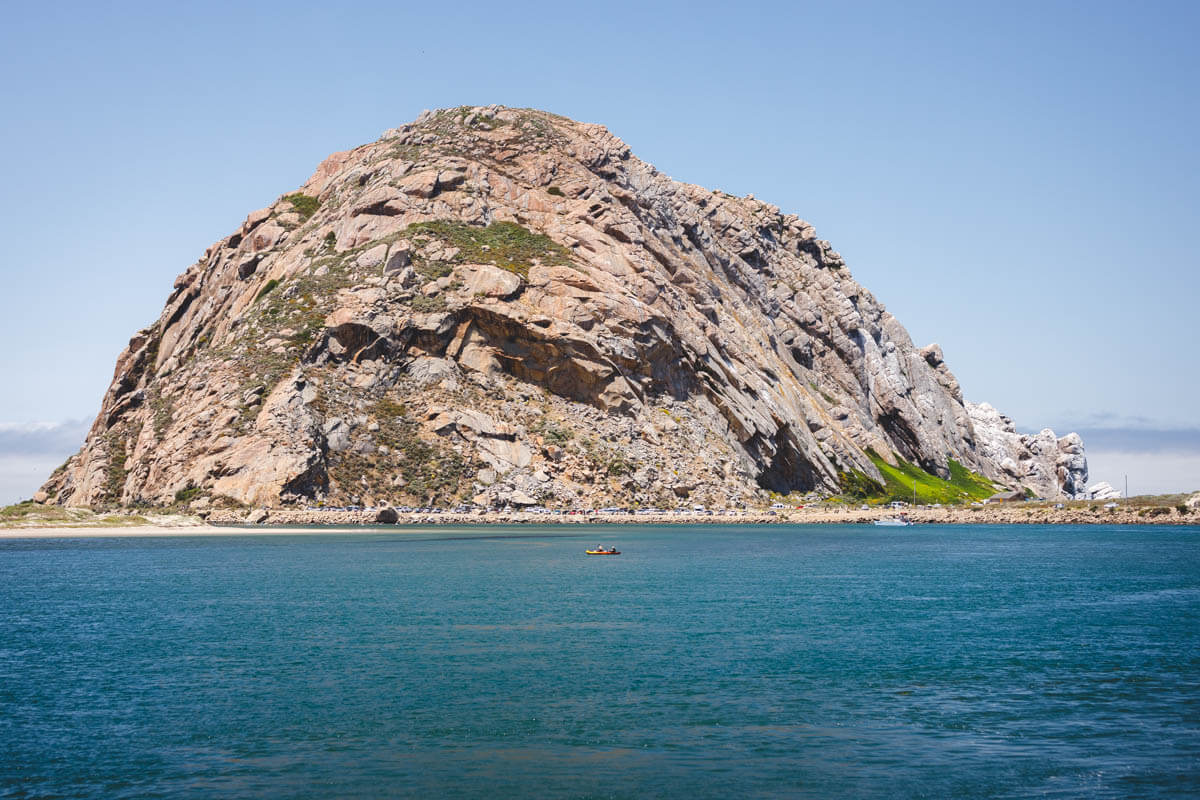
Paddle into the Morro Bay State Marine Reserve and the otters aren’t the only company — shorebirds and harbor seals work the same water, all inside a bay calm enough for someone who’s never held a paddle. Our friends at californiaisforadventure’s San Luis Obispo guide cover the rest of the town, Morro Rock hike included.
Three different states, three completely different reasons the water lays down instead of fighting back — a bridge, a bluff, and a volcanic rock, each one still doing the exact job it’s been doing for centuries. Washington’s Whidbey and Fidalgo Islands guide and Oregon’s southern coast guide both have plenty more worth exploring once you’re off the water.
Which one are you paddling first?
Trip tips: grab a rental car to get out here, lock in your hotel before the good rooms are gone, or skip both and book a camper van instead.
Rules and fees change — always confirm current requirements before you go.