Three West Coast spots where bad weather is the whole point, and storm season starts in about a month
DRAFT SUMMARY (delete before publishing): Title: Three West Coast spots where bad weather is the whole point, and storm season starts in about a month | ~640 words | Category: MSN (confirmed) | States: Oregon, Washington, California | [[VERIFY]] count: 0 | No images inserted (PNW library photos had no visible caption/credit to preserve; nothing relevant found on sister sites checked).
Scheduling flag: Seasonal — confirm still current before publishing (storm-watching season runs roughly November–March; best published late Oct/early Nov).
Most people check the coastal forecast to dodge the rain. From November on, the better move is to check it to find the rain. The West Coast’s big winter storms put on a show that no sunny August can match, and three spots in three states are built for watching it.
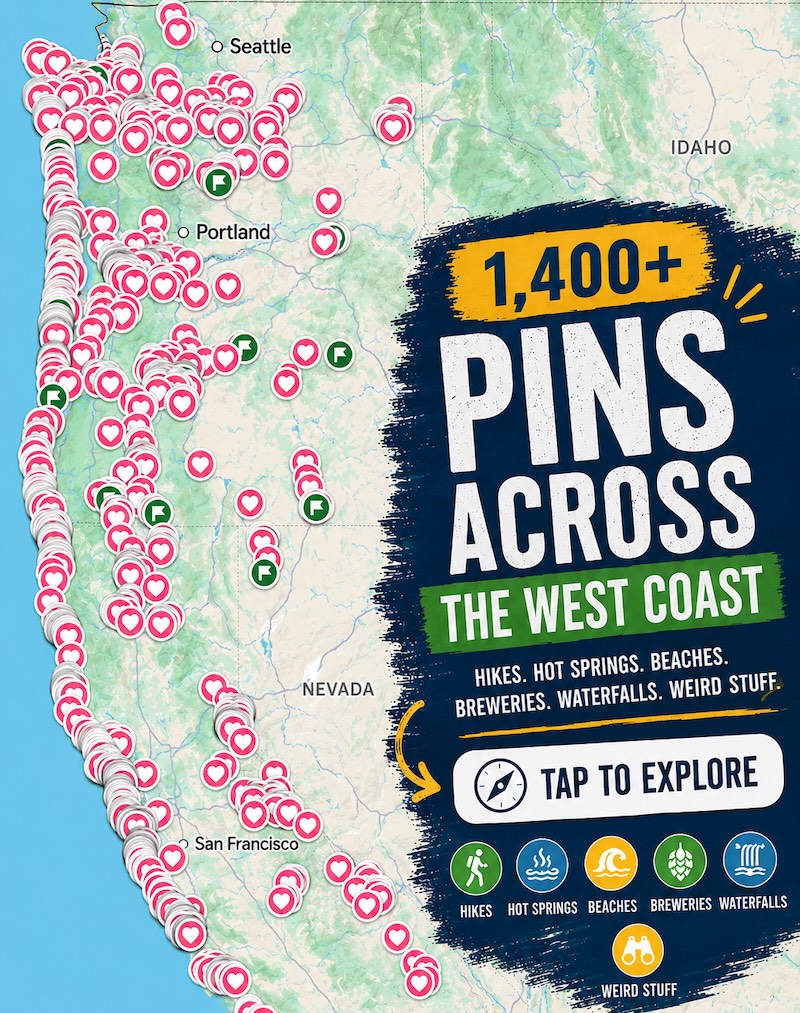
Psst — we made you a West Coast Adventure Map. Nearly 1,900 of our favorite spots, already pinned, ready to load into Google Maps in two clicks — grab it here.
📍 GET THE ULTIMATE PNW MAP 🗺️
Get our curated list of the best adventures, things to do, and places to grab a brew loaded onto your maps with just two clicks!
✅ Waterfalls ✅ Hikes ✅ Viewpoints
✅ Craft breweries ✅ National Parks ✅ 1400+ Pins

Oregon: Shore Acres, near Coos Bay
Shore Acres State Park sits on a sandstone headland about 13 miles southwest of Coos Bay, and when a big winter swell hits, the spray climbs over 100 feet into the air. Storm season here runs roughly November through March.
There’s an enclosed observation shelter built on the site of the old Simpson mansion, so you can watch the show without getting soaked. Day-use parking runs around $10, and nearby Sunset Bay and Cape Arago are close enough to string into the same afternoon.
Washington: Cape Disappointment, on the Long Beach Peninsula
The Columbia River meets the Pacific here, and that collision has earned this corner of the coast a reputation for rough water. Waves pound the shore at Waikiki Beach, and the Lewis and Clark Interpretive Center gives you a sheltered place to take it all in. Washington’s storm-watching season is usually described as November through February.
One catch: North Head Lighthouse tours are closed October 1 through April 30, so you’ll be admiring it from the outside this time of year. If you want more of the history behind the park’s two lighthouses, we wrote about Cape Disappointment’s lighthouse story over on our Washington blog.
Prefer a tower to a shoreline? Westport’s marina observation tower gives you 360-degree views of the harbor and ocean, with a lot more distance between you and the water.

California: the Sonoma Coast near Bodega Bay
California’s version is quieter and, honestly, cozier. Bluff-top lodges around Bodega Bay and north of Jenner look straight out over Bodega Head and the open Pacific, and one resort sits on bluffs roughly 100 feet from the crashing surf.
Here’s my one firm opinion: the best storm watching happens from behind a window with a fireplace and a hot drink. Winter storms here run from now through about mid-March, so you have a long window to pick a rainy weekend and book it.
How to watch without becoming the story
Never turn your back on the ocean, because large waves can show up without warning. Stay off logs, jetties, and wet rocks, park well back from the waterline, and keep to established viewpoints above the surf.
Before you go, check the National Weather Service forecast and NOAA tide predictions, and follow any posted warnings or barricades. Oregon’s King Tides Project is also worth a look if you want to time a visit around the highest tides.
Trip tips: grab a rental car to get out here, and book a room with an ocean view before the good ones are gone.
Which would you pick: the roaring Oregon cliffs, the wild Columbia River mouth, or a fireplace in Sonoma? Tell us where you’d ride out a storm.
Rules and fees change — always confirm current requirements before you go.