Tidepool Heaven on The West Coast: 11 Best Beaches

When the ocean inhales, the coast reveals its secret cities—anemones with neon lashes, hermit crabs in borrowed real estate, purple urchin fortresses, and, if you’re lucky, sea stars flexing like gymnasts.
Plan around minus tides (the really low lows) and aim to arrive ~1 hour before low tide so you’re exploring as the water drops, not racing it back in. Bring grippy shoes and a real headlamp if you’re out at dawn. And always keep one eye on the ocean—sneaker waves don’t care about your bucket list.
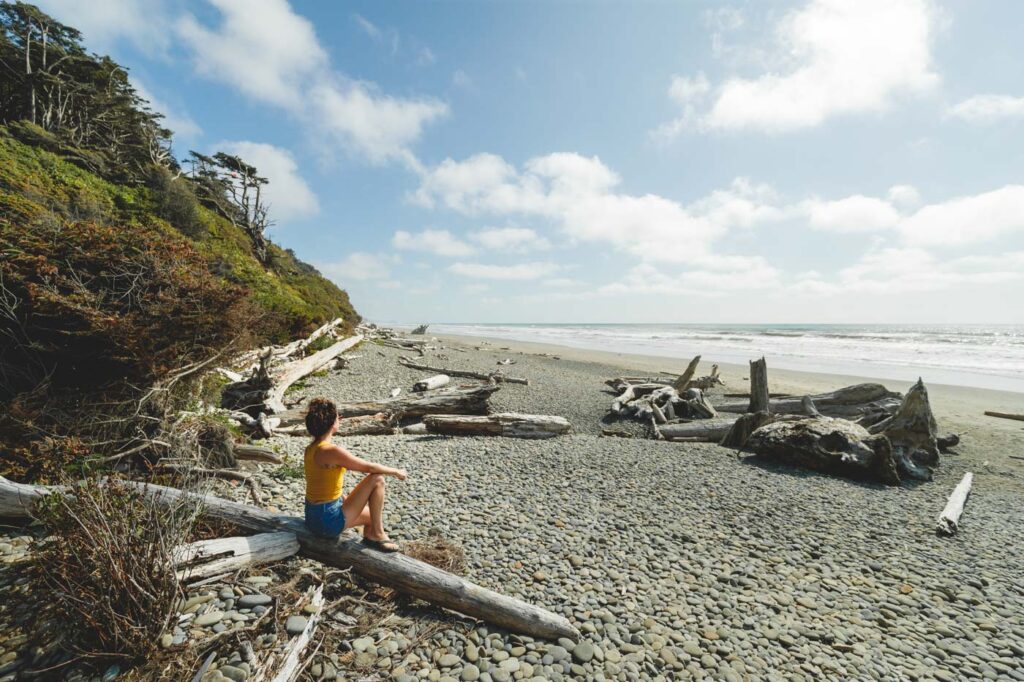
Kalaloch’s Beach 4 & Mora’s Hole-in-the-Wall (Olympic NP, WA)
Olympic’s tidepools look hand-carved: honeycomb rock, emerald anemones, and surge channels that breathe with the swell. For a classic lineup, hit Beach 4 near Kalaloch (broad benches, easy picking) and Hole-in-the-Wall at Rialto (a natural arch with pockets of life tucked all around).
Minus tide here exposes massive real estate—just watch your turnaround time so you’re not threading wet boulders at the arch. Park-posted guidance is simple: step softly, don’t pry or pick, and let the sea animals stay put. Want color? Go slow. Once your eyes adjust, you’ll spot ochre sea stars and chitons hiding in plain sight.
📍 GET THE ULTIMATE PNW MAP 🗺️
Get our curated list of the best adventures, things to do, and places to grab a brew loaded onto your maps with just two clicks!
✅ Waterfalls ✅ Hikes ✅ Viewpoints
✅ Craft breweries ✅ National Parks ✅ 1400+ Pins

Quick logistics: the Kalaloch Information Station often posts current tide charts; trails are short but can be slick after rain. If swell is big, stick to high benches and let the lower shelf go this round.
Salt Creek Recreation Area — Tongue Point (Port Angeles, WA)
Tongue Point is a marine-life jackpot that juts into the Strait, creating tidepool labyrinths with views all the way to Vancouver Island. On a good minus tide you’ll find urchins, nudibranchs, limpets, and entire gardens of anemones set into basalt like jewels.
Facilities matter for families: Salt Creek has year-round parking and restrooms (some amenities winterize), plus well-signed access—so you can focus on the pools, not the logistics. The Washington Department of Fish & Wildlife calls Tongue Point one of the state’s standout habitats, which is your hint to move like a whisper: step on bare rock, not on living mussel/barnacle mats, and resist the urge to flip rocks.
If wind cranks, tuck behind boulders and keep gear low; gusts can turn a calm shelf into a salt-spray confetti storm in minutes.
Haystack Rock Marine Garden (Cannon Beach, OR)
The headliner of Oregon tidepooling bursts to life at low tide—green anemones, sculpin darting like shadows, and ochre stars clinging to basalt. Do not climb above the barnacle line: the rock is a protected Wilderness Sanctuary overseen by USFWS, and local naturalists will happily (and kindly) call you in. (Gold star if you ask them questions—they’re fountains of intertidal lore.)
Timing tips: minus tides are best; arrive early and follow the tidepool etiquette posted on-site (walk, don’t run; step on bare rock; hands off wildlife). Spring brings bonus bird drama—tufted puffins nest on the rock—so keep dogs leashed and your zoom lens ready. The town’s flat beach access makes this a low-stress, high-reward stop even with kids in tow.

Yaquina Head ONA — Cobble Beach (Newport, OR)
Black cobbles. Whitewater haze. Lighthouse backdrop. Cobble Beach gives you the drama and the biology: urchins, sea stars, hermit crabs, and tidepool micro-worlds that look painted. The Bureau of Land Management flat-out tells visitors to check local tide tables—minus tides unlock the good stuff—and to mind posted safety notes about waves and steep slopes.
Start at the overlook to scout where folks are congregating; then pick your line down and work slowly back and forth across the cobble. Pro move: pause and watch; movement often reveals more than poking around ever will. Facilities, staff, and signage make this one of Oregon’s most beginner-friendly tidepool lessons—just keep your stance wide, those cobbles roll.
Harris Beach State Park (Brookings, OR)
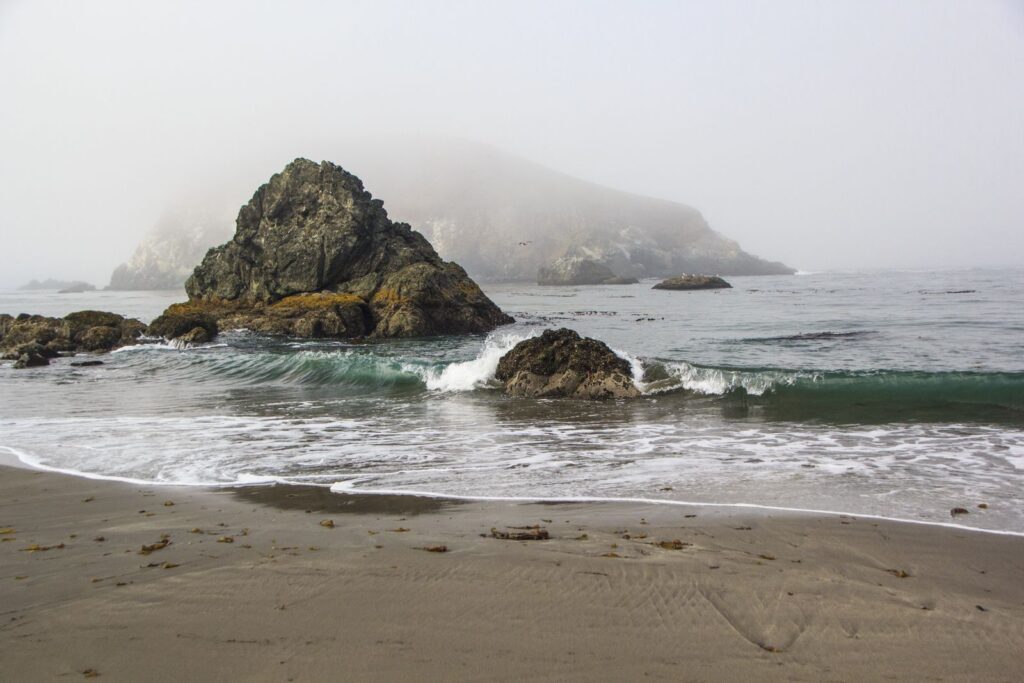
Down on the south coast, Harris Beach is stacked with marine gardens and sea stacks that hold back the swell just enough to make safe viewing windows on minus tides. Work the rocky pockets near the day-use area and campground access—this is an easy roll-up with big payoff.
The park is part of a cluster of protected areas, which means look, don’t collect, and definitely don’t pry animals off the rock. When the tide turns, the channels refill fast; make sure your route back doesn’t strand you on an island of barnacles. Between pools, scan the offshore stacks for cormorants and harbor seals—the wildlife show doesn’t stop at the waterline.
Fitzgerald Marine Reserve (Moss Beach, CA)
If California had a Tidepool 101 campus, it would be Fitzgerald. The intertidal shelf sprawls wide at minus tide, revealing anemone alleys, bat stars, decorator crabs, and forests of surfgrass. Local docents and clear signage set the tone: no collecting, no rock-flipping, and please plan around negative lows for the best (and safest) view.
What to love: easy parking, short access trail, and abundant educational panels so you can teach your group on the fly. What to remember: these benches are living neighborhoods—step on bare rock, use one hand for balance, and leave shells where you found them (someone lives there). The reserve updates tide info and advisories regularly—worth a peek before you roll.
Natural Bridges State Beach (Santa Cruz, CA)
Beyond the iconic arch, Natural Bridges hides a superb tidepool terrace in a marine protected area. On crisp minus tides, you’ll meet hermit crabs hustling, purple urchins tucked like amethyst, and sea stars hugging ledges. California State Parks flags this as prime intertidal habitat—arrive early, and give yourself time for the slow look.
Etiquette is firm but friendly: no collecting, no rock-flipping, and keep small hands out of anemones (they’re not party favors). If a winter swell is marching in, stick to higher benches and read the set rhythm before stepping down. Bonus seasonality: monarch butterflies winter in the eucalyptus grove just inland—file that for a double-feature day.
Weston Beach, Point Lobos (Carmel, CA)
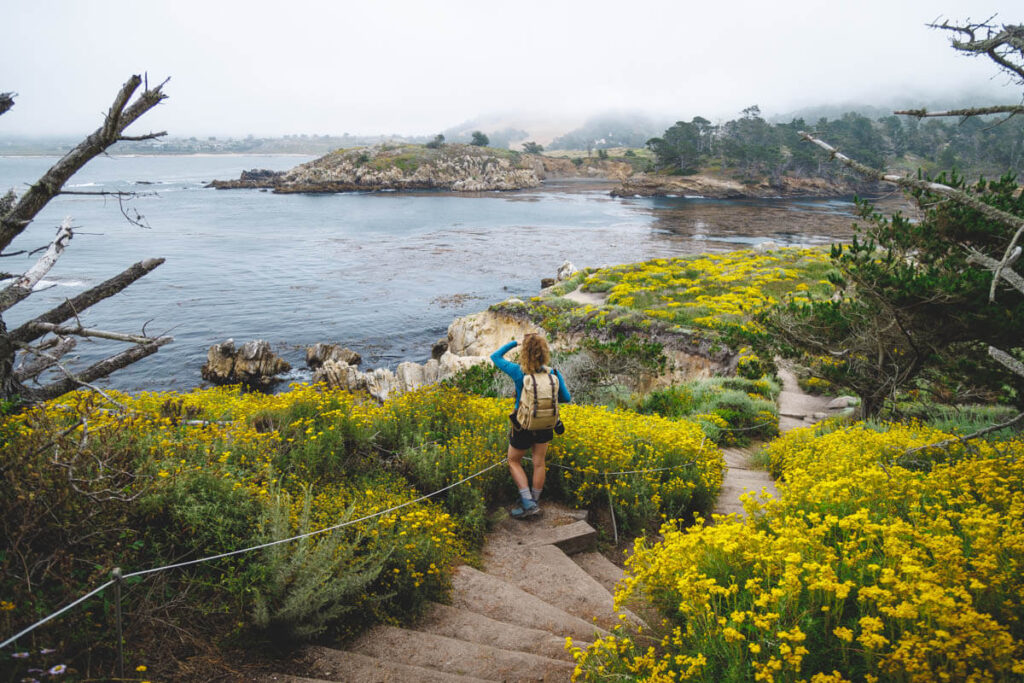
Weston Beach is Point Lobos’ tidepool jewel: a rounded cove with layered geology and pools that feel like display cases. Interpretive materials focus on what lives where—a teachable walk for kids and adults—plus safety reminders about wave energy and keeping off wet, green algae zones.
This is a lowest-of-the-low tide kind of place; skim a tide table and aim for the big negatives to see the lower intertidal zone open up. Expect ranger presence, adaptive management (they’ll limit access if it’s getting loved too hard), and breathtaking light when the sky goes silver. Treat the cove as a privilege—move gently and leave zero trace.
Cabrillo National Monument Tidepools (Point Loma, San Diego, CA)
San Diego’s best-protected rocky intertidal is textbook—interpretive signs, rangers, and a stair-stepped shelf that lights up on winter minus tides. The park itself says the best windows often align in late fall and winter when low tides happen during visiting hours. Translation: daydream all summer, then pounce when the charts line up.
Park and stroll the short road/trail to the shelf; scan for big “set” patterns before committing to lower benches, and keep kids close when swell is up. Newer trail connections make it easier to reach the pools without walking the narrow road shoulder—though the descent is still steep and winds can be a thing.
Crystal Cove State Park (Newport/Laguna, CA)
Three miles of coves. Multiple tidepool access points. Crystal Cove is ideal for first-timers and mixed groups, with docents and clear “rules of the pools.” The park recommends targeting negative low tides (or ≤1.5 ft) and arriving about an hour before the low so you can explore as more habitat opens up.
Wear grippy shoes—the rocks are slick—and step only on bare surfaces. Don’t handle wildlife or turn rocks; what looks like a souvenir is someone’s entire life support system. If swell is pushing, pick higher benches and enjoy the view—there’s plenty to see without playing tag with the surge.

Gerstle Cove, Salt Point State Park (Sonoma Coast, CA)
A classic North Coast marine reserve, Gerstle Cove feels wild and ancient—tidepools inset among sculpted sandstone, mussel beds, and ribbons of sea palm. It’s protected as part of California’s MPA network, which means strict look-don’t-touch rules and a good chance of spotting intact communities doing their thing.
Minus tides let you peek into purple urchin cities and micro-forests of coralline algae. Watch footing (those sandstone ribs can be ankle-tricky) and keep a conservative buffer from incoming sets. If fog pulls back, the whole cove glows. On big-swell days, stay high and let the lower benches wait for a tamer window.
How to Time It (Minus-Tide Cliff Notes)
Use tide tables to target negative lows; the biggest minus tides typically cluster around the new and full moon. Many West Coast sites see their lowest daytime tides in winter months—handy for photographers and families that don’t want pre-dawn alarms. Arrive early, leave before the water pins you, and keep a safety line to higher ground.
What Not to Touch (and Why)
No collecting. Don’t pry sea stars/urchins/anemones off rock (that’s eviction). Don’t flip rocks—creatures underneath desiccate or become food. Walk on bare rock, not living carpets of mussels/barnacles/algae. And never turn your back on the ocean. State parks and local programs post tidepool etiquette—follow it and you’ll see more.
Sea Stars: A Quick Comeback Note
The West Coast’s iconic sunflower sea star crashed after the 2013–2014 wasting-disease outbreak; NOAA has proposed it for ESA “threatened” status while recovery plans ramp up. Researchers recently identified a Vibrio bacterium as the likely culprit, a huge step for restoration. Field teams are reporting more sightings in some areas compared with the mid-2010s, but recovery is uneven and slow—so treat every star you spot like a rare win.
—