West Coast Sunrise vs. Sunset: 12 Viewpoints Where the Light Actually Hits

Light is directional drama. On the West Coast, your best photos (and chills) come from being in the right place when the sun lines up with cliffs, peaks, or water. General rule: sunrise = calm air and pastel reflections; sunset = glow and silhouettes. Fog is a wildcard; have a backup angle ready 5–15 minutes away. Bring a wind layer, a lens cloth, and a headlamp if you’re chasing the bookends of the day.
Marin Headlands — Battery Spencer & Hawk Hill (SF Bay, CA)
Best: Sunrise for the Golden Gate Bridge front-lit, city skyscrapers catching first blush.
Stand: Battery Spencer’s lower corners for clean bridge towers; Hawk Hill for sweeping context and fog rivers.
If fog wins: Drop to Fort Point under the bridge—often below the cloud deck—or swing to Crissy Field for backlit mist.
Notes: Arrive 30–40 minutes pre-sunrise; wind funnels through the Gate—hood up, tripod low.
Mount Tamalpais — East Peak (Marin, CA)
Best: Sunset when marine layer forms a cloud sea; sunrise if it’s a clear, post-storm day.
Stand: Verna Dunshee loop’s north side for layered ridges; rock steps to the lookout for a 360.
If fog wins: Slide to Bon Tempe Lake below the fog for mirror reflections.
Notes: Evenings can be windy; bring a beanie and brace the camera on stone walls.

Point Reyes — Chimney Rock & Lighthouse Overlooks (Marin, CA)
Best: Sunset paints headlands and surf lines gold; winter sunrise can backlight spouts on gray whales.
Stand: Chimney Rock trail’s western benches; lighthouse upper platform for long coastal bands.
If fog wins: Drakes Beach cliffs glow in moody light; shoot textures and foam from safe backshore.
Notes: Give seabirds and seals huge space; winds jump from “breezy” to “whoa” in minutes.
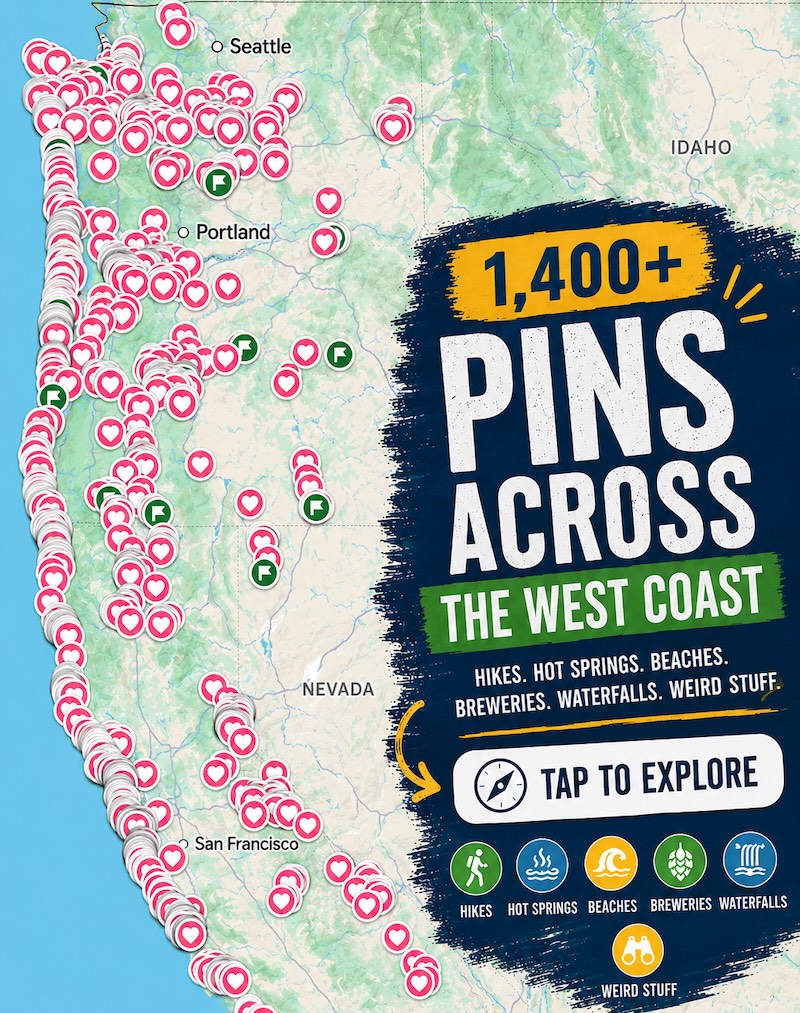
📍 GET THE ULTIMATE PNW MAP 🗺️
Get our curated list of the best adventures, things to do, and places to grab a brew loaded onto your maps with just two clicks!
✅ Waterfalls ✅ Hikes ✅ Viewpoints
✅ Craft breweries ✅ National Parks ✅ 1400+ Pins

Bixby Creek Bridge & Garrapata Bluff (Big Sur, CA)
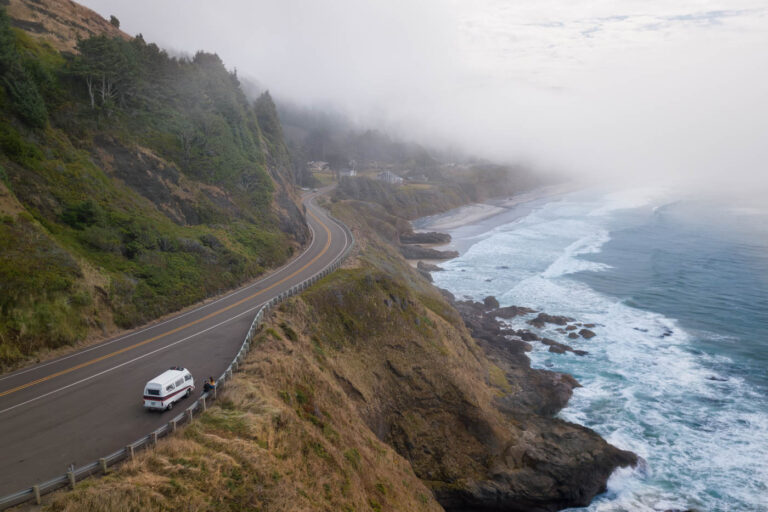
Best: Sunset—the coast faces west and cliffs take fire.
Stand: Northbound pullout just north of Bixby for the classic curve; at Garrapata, use railed bluff pullouts.
If fog wins: Aim south to Hurricane Point—often above the soup—or wait ten; curtains open surprisingly fast.
Notes: Never hop fences; gusts and traffic are real. Blue hour keeps color after the sun drops.
Morro Rock & Harbor Boardwalk (Morro Bay, CA)
Best: Sunrise lights the rock from the east and gives glassy water; sunset silhouettes the dome.
Stand: Harborwalk benches for calm reflections; beach side for long-wave lead-in lines.
If fog wins: Focus on sea otters and working-harbor details—mist = mood.
Notes: Bring a cloth—salt haze loves your lens. Tide determines foreground textures.
Santa Monica Pier & Palisades Bluff (Santa Monica, CA)
Best: Sunset—Ferris wheel glow, warm façades, surfers as foreground.
Stand: End of the pier for horizon gradients; Palisades bluff path for pier-in-frame angles.
If fog wins: Shoot shoreward—palms, neon, and silhouettes; or slide to Santa Monica Canyon for street-light glow.
Notes: Crowds thin right after sunset; linger for blue hour when the wheel pops.

Cannon Beach & Ecola Viewpoints (Oregon Coast)
Best: Sunset on Haystack Rock and sea stacks; sunrise for pastel backlight and empty sand.
Stand: Mid-beach for tide-line reflections; Ecola pullouts for layered headlands.
If fog wins: Embrace silhouettes and negative space; shoot tides and foam abstracts under the cloud dome.
Notes: Watch logs near shorebreak. Low tide = tidal mirrors; high tide = wave drama.
Cape Perpetua Overlook & Cook’s Chasm (Yachats, OR)
Best: Sunset from the overlook—safe, high, and panoramic; stormy sunrise for moody blues and plumes.
Stand: Stone rail at the top; at Cook’s Chasm, stay well back and shoot from platforms only.
If fog wins: Forest pullouts on the drive up deliver mist-through-spruce mood.
Notes: For silky plumes, slow shutter with a railing brace; gusts can be fierce—keep gear leashed.
Deception Pass Bridge Paths (Whidbey–Fidalgo, WA)
Best: Sunset with orange light on trusses and whirlpools below; sunrise for calm water and eagle flybys.
Stand: Landward-side sidewalks mid-span; pullouts on both ends for wider compositions.
If fog wins: Drop to Bowman Bay or West Beach—often clearer at water level.
Notes: Narrow sidewalks; move single-file and keep hats tethered—crosswinds are no joke.
Hurricane Ridge Viewpoints (Olympic NP, WA)
Best: Sunset—alp glow across jagged Olympics; winter sunrise post-storm = crystalline air.
Stand: Main viewpoint or short paved spurs for ridgeline layers.
If fog wins: Drive down 1–2k feet; valleys frequently sit under the cloud ceiling while the ridge clears (or vice versa).
Notes: Temps plummet near dusk—pack a real jacket even in August.
Washington Pass Overlook (North Cascades, WA)
Best: Sunset for Liberty Bell spires glowing; sunrise for first light on Early Winters peaks with fewer people.
Stand: Granite slabs near the rail give clean angles; stay well inside walls.
If fog wins: Scoot east a few miles—drier air often clears the pass.
Notes: Wind funnels the saddle; arrive 30 minutes early and watch light crawl down the walls.

Crater Lake — Watchman Overlook & Rim Pullouts (OR)
Best: Sunset—Wizard Island silhouette and alpenglow belts; sunrise when air is glass-clear after cold fronts.
Stand: Watchman Overlook or any safe rim pullout with open west aspect.
If fog wins: Drop to Rim Village for closer-scale compositions; mist pockets open and close quickly.
Notes: Even in summer, nights are cold. Blue hour often outperforms the sun itself here—stay for it.
Light-Playbook (So You Nail the Moment)
Arrive early: 30–60 minutes before sunrise/sunset to scout safer footing and angles.
Think wind + fog: sunrise is calmer; sunset has color but gusts. Have a Plan B 5–15 minutes away.
Use backlight at sunset for glow through waves, grass, and fog; use front light at sunrise for clean detail and reflections.
Stay behind rails and well back from cliffs and logs; the best shot is the one you take safely—then take again when the light peaks.