Winter storms leave agates on Oregon and Washington beaches from November, but California’s famous Glass Beach won’t let you pocket a single piece
Most people pack up their beach days by September. Beachcombers wait for November, when winter storms strip the sand off the gravel beds and leave the agates sitting on top.
The catch is that the rules on what you can keep change at every state line. Here’s where to hunt in Oregon and Washington, and why California’s famous Glass Beach is look-only.
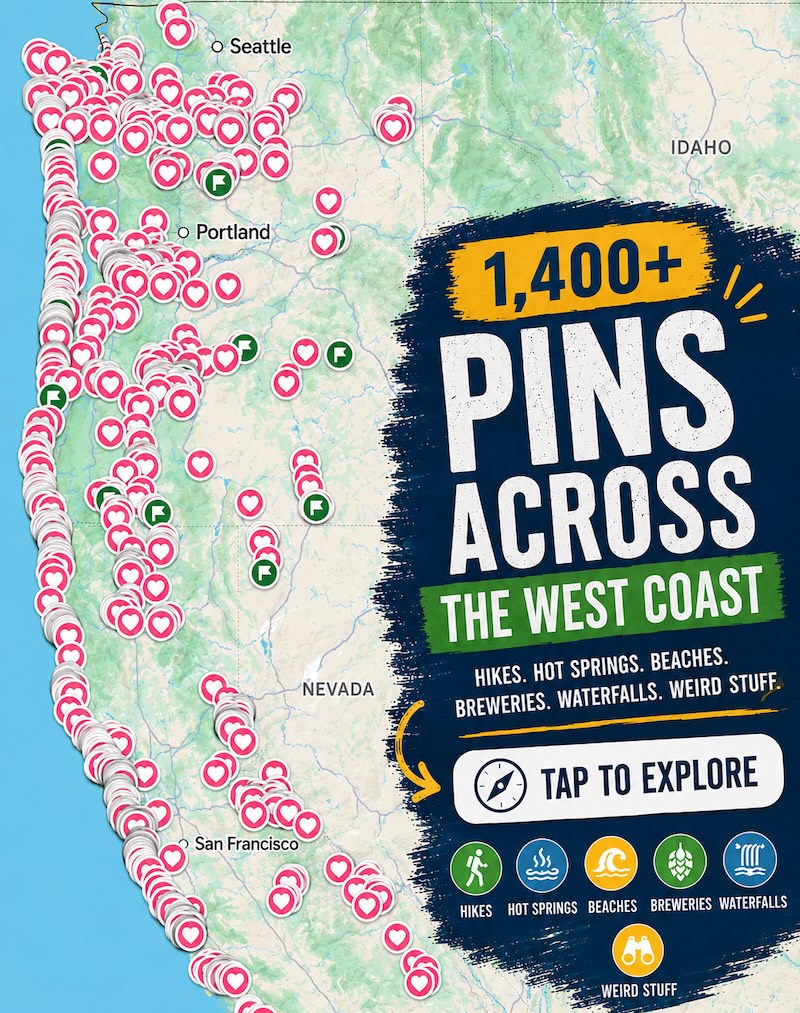
Psst, we made you a West Coast Adventure Map. Nearly 1,900 of our favorite spots, already pinned, ready to load into Google Maps in two clicks: grab it here.
Oregon makes agate season easy, and it lets you keep what you find
Oregon’s coast hides its best stones under summer sand. Travel Oregon’s coast expert puts the best window at November to March, when storms strip that sand away and loosen stones from the cliffs.
📍 GET THE ULTIMATE PNW MAP 🗺️
Get our curated list of the best adventures, things to do, and places to grab a brew loaded onto your maps with just two clicks!
✅ Waterfalls ✅ Hikes ✅ Viewpoints
✅ Craft breweries ✅ National Parks ✅ 1400+ Pins

Look for beaches backed by cliffs and creeks. Hug Point, near its waterfall, is on that list, along with Arcadia Beach near its stream outfalls and Short Sand Beach in Oswald West State Park, where Necarney Creek meets the ocean.

Oceanside is another favorite, reached through a tunnel at low tide. It can be hit or miss, depending on how much sand is covering the gravel.
Hug Point reopened in early September after months of erosion repairs, and the stairway down to the beach is a short-term fix. Check with Oregon State Parks before you drive out.
What Oregon lets you take home
State rules allow small amounts for personal use. For agates and other loose stones, that means up to a one-gallon container per person per day and three gallons per person per year, and everyone needs their own container.
Stick to what’s loose on the surface, and never dig or pry anything out of the cliffs. Parks can restrict collecting in specific spots, so follow any posted signs.
Washington runs on the same calendar
The Coastal Interpretive Center in Ocean Shores says November to March is the best season for agate hunting on Washington’s beaches. Storms wash away the lighter sand and expose the gravel and cobbles underneath.
Work the gravel belts, the high-tide wrack line, and the spots where driftwood traps sediment. Go early or on an overcast day, because wet agates glow brighter than dry ones.
Grays Harbor is a good base. Bottle Beach State Park sits off Highway 105 between Aberdeen and Westport, with a 0.7-mile accessible trail to the beach and a reputation for washed-up sea glass, agates and driftwood. You’ll need a Discover Pass to park, and our guide to Washington coast towns has more places to base yourself.
Washington State Parks rules say never to disturb natural features, so check the posted rules at your beach before you pocket anything. Rockhounding isn’t allowed at national parks, so beaches inside Olympic National Park are look-only.
California’s famous glass beach is look-only
Glass Beach sits at the south end of MacKerricher State Park near Fort Bragg. The park says all natural and cultural features there are protected by law, and no sea glass may be taken.
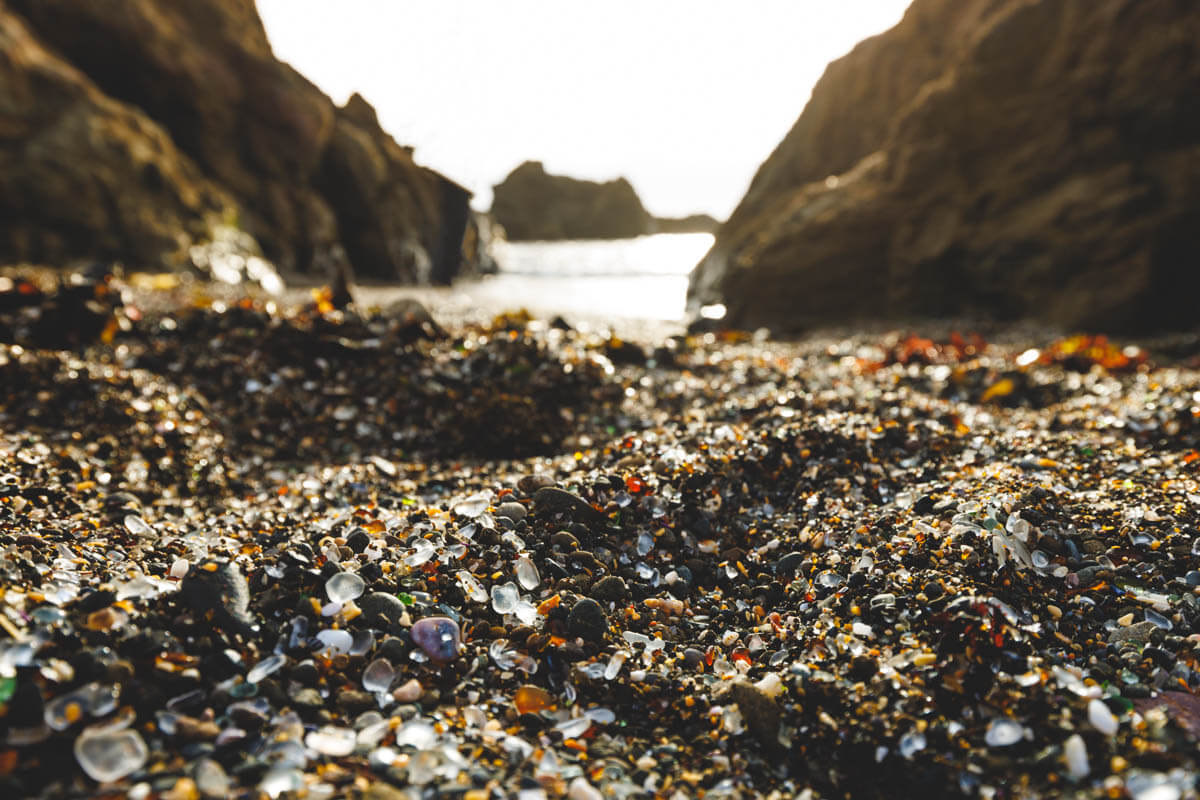
The glass is what’s left of an old dump, tumbled into pebbles by the ocean over decades. Treat it like a free gallery: bring a camera, not a bag.
How to hunt without wasting a trip
Aim for the day after a storm, on a falling low tide. Check tide times with NOAA’s tide predictions before you leave, and stay well back from the surf, because winter swell on these beaches is no joke.
To spot an agate, look for a hard, waxy surface with banding and a bit of translucency, where light glows through the stone. Rounded beach quartz can look similar, so check for those bands before you get excited.
Planning a full coast weekend? Our guide to the best beaches in Oregon is a good place to start.
Trip tips: grab a rental car to get out here, lock in your hotel before the good rooms are gone, or skip both and book a camper van instead.
Rules and fees change, so always confirm current requirements before you go.
Ever found a great agate on a winter beach? Tell us where it turned up.