Crater Lake froze solid once in 1949, Lake Tahoe never has, and Lake Chelan’s far end takes a boat to reach in winter
Ask most people where America’s deepest lake is and they’ll guess one of the Great Lakes. Nope. The top three are all out West, one each in Oregon, California and Washington, and every one of them drops more than 1,400 feet.
That much water does strange things in winter. One gets around 42 feet of snow in an average year and still almost never ices over, one has never frozen at all, and the third hides its wildest stretch at the end of a long boat ride.
Psst, we made you a West Coast Adventure Map. Nearly 1,900 of our favorite spots, already pinned, ready to load into Google Maps in two clicks: grab it here.
Three lakes, three very different kinds of deep
Crater Lake takes the top spot at close to 1,950 feet. Lake Tahoe, which straddles the California-Nevada line, comes in at 1,645 feet, and Lake Chelan rounds out the podium at 1,486.
📍 GET THE ULTIMATE PNW MAP 🗺️
Get our curated list of the best adventures, things to do, and places to grab a brew loaded onto your maps with just two clicks!
✅ Waterfalls ✅ Hikes ✅ Viewpoints
✅ Craft breweries ✅ National Parks ✅ 1400+ Pins

They got that deep in completely different ways. Crater Lake fills the caldera left when Mount Mazama collapsed roughly 7,700 years ago, Tahoe sits in a basin dropped by faulting, and Chelan is a long, skinny trough carved by glaciers.
So how does each one handle winter? Very differently, as it turns out.
Crater Lake, Oregon: it froze over once, in 1949
Crater Lake sits under about 42 feet of snowfall in an average winter, yet the lake itself almost never ices up. The summer heat stored in all that water keeps the surface moving, and the last full freeze on record came in 1949, when it stayed locked up for nearly three months.

In winter, the only way up is the road from Highway 62 to Rim Village, and crews plow it all season. Big storms can still shut it while they dig out, so check the park’s road conditions before you commit to the drive.
The whole park counts as a snow zone, which means chains or traction tires on every vehicle. The winter entrance fee is $20 per car, or show your America the Beautiful Pass and roll right in.
Here’s the honest part: the park says you can see the lake from Rim Village only about half the time in winter and spring. But on a clear day, that impossible blue against fresh white snow is the kind of view that makes the chains worth it.
Lake Tahoe, California: it has never frozen over
Tahoe gets plenty of snow and plenty of freezing nights, but the lake has never frozen over. Its depth keeps the water mixing all winter, so the surface never gets cold enough to ice up before spring starts warming it again.
A few sheltered corners, like Emerald Bay, have grown a skin of ice now and then. The main lake? Deep blue, all winter long.

The easiest winter view comes from above. The Heavenly Gondola climbs 2.4 miles out of Heavenly Village in South Lake Tahoe and stops at an observation deck at 9,123 feet, with the whole lake laid out below you.
You don’t need skis to ride it, because the resort sells sightseeing tickets. Heavenly was aiming to open for the season on November 20, weather permitting, so check the resort’s site for current hours and prices before you go.
Coming back when it’s warmer? The East Shore beaches around Secret Cove are where Tahoe’s water turns that famous see-through turquoise.
Lake Chelan, Washington: no road reaches the far end
Lake Chelan snakes about 50 miles into the North Cascades, and no road reaches its upper end. Stehekin, the tiny community at the head of the lake, is a boat ride, a floatplane hop or a very long hike away.
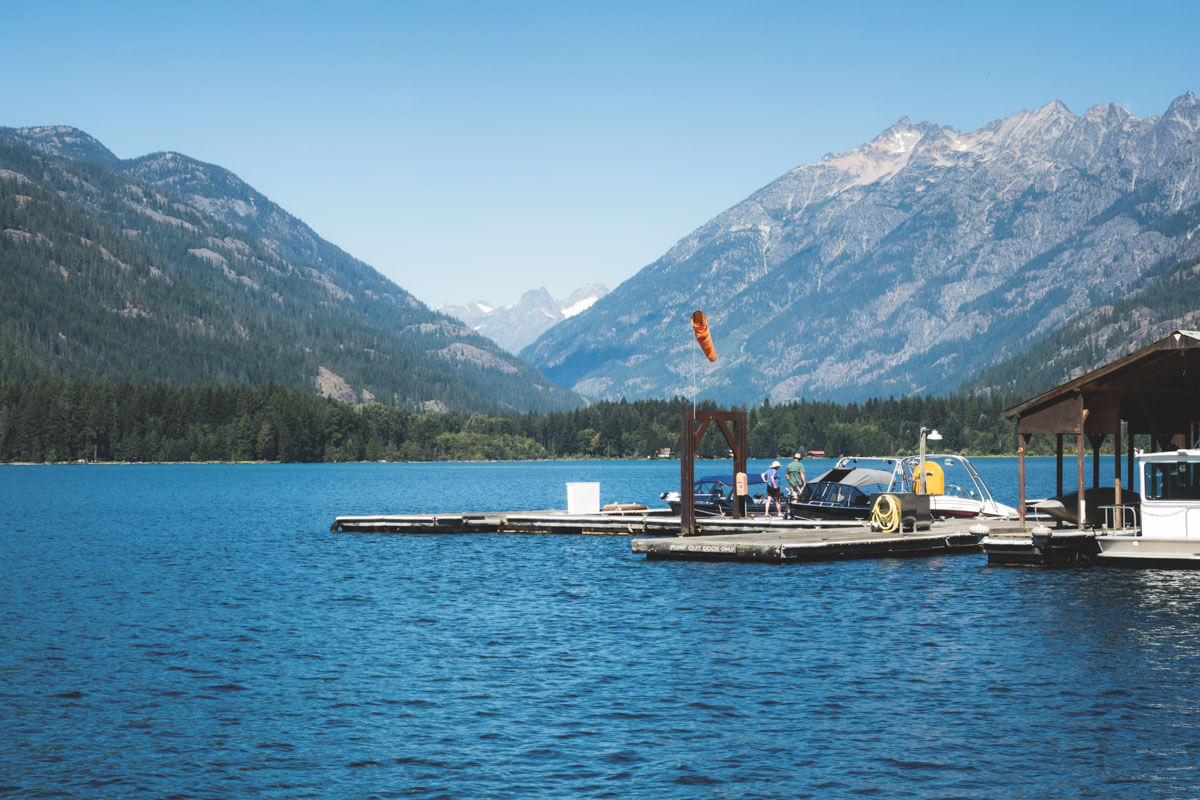
From November 1 to April 30, the Lady Express runs Friday through Monday. It leaves Chelan at 9:30 a.m., pulls into Stehekin around noon, and has you back in town by about 4 p.m., with roughly an hour and a half on the dock in between.
If you only pick one of these three for a winter day trip, make it the boat. You sit, grab a coffee from the onboard snack bar, and watch the cliffs and snowy peaks close in around you as the lake narrows.
Pack a lunch, dress warmer than you think you need to, and book ahead on the boat company’s site. For more of the state’s best water, here’s our roundup of Washington’s most scenic lakes.
How to plan around all three
These three aren’t a single weekend loop. They’re spread across three states, so pick one per trip or build a long winter road trip that strings them together.
Mountain passes can change fast this time of year, so check Oregon’s TripCheck, Caltrans and WSDOT before each leg. And if Crater Lake sold you on Oregon’s lakes, here are more stunning lakes in Oregon to save for spring.
So which one’s calling you this winter: the volcano, the gondola, or the boat?
Trip tips: grab a rental car to get out here, and lock in your hotel before the good rooms are gone.
Rules and fees change, so always confirm current requirements before you go.