The Coast Starlight crosses all three West Coast states in 34 hours, and in winter the direction you ride decides what you see
Here’s a winter travel hack nobody prints on the ticket: if you’re riding Amtrak’s Coast Starlight between Seattle and Los Angeles this season, ride it north.
The train runs daily through Washington, Oregon and California, about 1,377 miles of track. But winter sunsets come early, and the timetable decides whether you see the Pacific and the snowy Oregon Cascades or just your own reflection in the window.
Here’s how the schedule plays out, what you’ll catch out the window, and the one big view that slips by in the dark no matter which way you go.
Psst, we made you a West Coast Adventure Map. Nearly 1,900 of our favorite spots, already pinned, ready to load into Google Maps in two clicks: grab it here.
📍 GET THE ULTIMATE PNW MAP 🗺️
Get our curated list of the best adventures, things to do, and places to grab a brew loaded onto your maps with just two clicks!
✅ Waterfalls ✅ Hikes ✅ Viewpoints
✅ Craft breweries ✅ National Parks ✅ 1400+ Pins

The Coast Starlight by the numbers
Northbound Train 14 leaves Los Angeles Union Station at 9:51 a.m. and pulls into Seattle’s King Street Station at 7:51 p.m. the next day. That’s 34 hours on the current Amtrak timetable.
Southbound Train 11 leaves Seattle at 9:55 a.m. and reaches LA at 9:11 p.m. the following day, about 35 hours and 16 minutes. Either way, you spend one night aboard, with stops in Tacoma, Portland, Eugene, Klamath Falls, Sacramento, the Bay Area, San Luis Obispo and Santa Barbara.
One heads-up: the train doesn’t stop in San Francisco itself. You connect from a Bay Area station like Emeryville or Oakland.
Why northbound wins in winter
Southbound looks great on paper until you check the clock. The train leaves Eugene at 5:15 p.m. and reaches Chemult, on the far side of the Oregon Cascades, at 8:13 p.m., so the whole mountain crossing happens after dark this time of year.
The California coast doesn’t fare much better heading south. You hit San Luis Obispo at 3:37 p.m. and Santa Barbara at 6:19 p.m., and Santa Barbara’s sun sets around 4:50 p.m. in early December. You’ll catch the first stretch of ocean, then watch it fade to black.
Northbound flips both of those. You reach Santa Barbara at 12:15 p.m. and San Luis Obispo at 3:05 p.m., then wake up the next morning for Klamath Falls at 7:43 a.m., Chemult at 8:59 a.m. and Eugene at 12:37 p.m. That’s the coast and the Cascades, both in daylight.
Delays happen, and rain or snow can still hide the view. But if you’re picking a direction, north stacks the odds in your favor.
The coast stretch you can’t drive
Between Santa Barbara and San Luis Obispo, the track hugs the Pacific for long stretches. North of Santa Barbara, it rolls past ranch land and empty shoreline with no highway alongside, so this is a view you simply can’t get from a car.

Heading north, the ocean sits on the left side of the train. Don’t stress about your seat assignment, though, because the Sightseer Lounge (more on that below) solves it.
Since you’re rolling through at lunchtime, it’s easy to split the trip, too. Book it as two legs, hop off in SLO, and work through the best things to do in San Luis Obispo before catching the next day’s train north.
Breakfast with a view in the Oregon Cascades
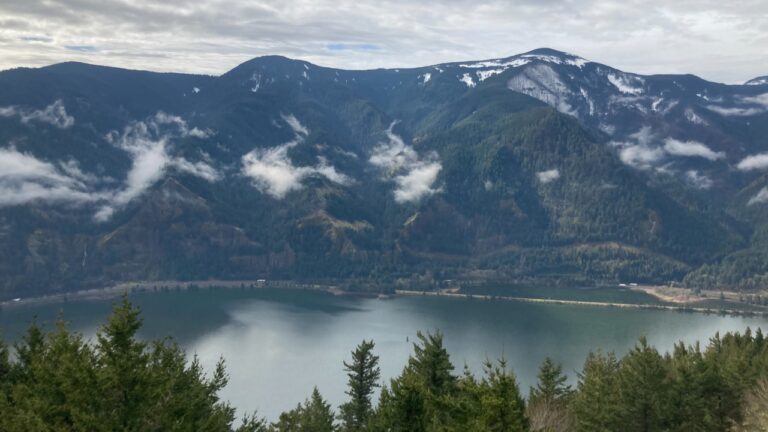
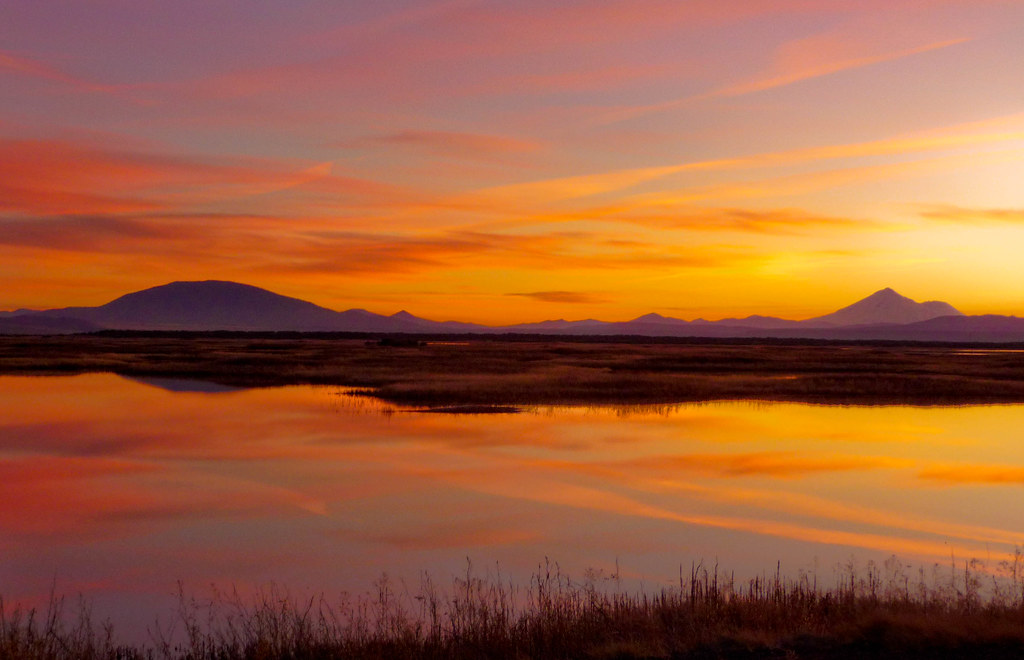
This is the sleeper hit of the route. North of Klamath Falls, the tracks trace the eastern shore of Upper Klamath Lake, the largest freshwater lake in Oregon, right around breakfast time.
From there, the train climbs into the Cascades, passing Odell Lake and ducking through a string of tunnels on the way down to Eugene. This high stretch can be deep in snow in winter, and honestly, that’s when it looks best from a warm train car.
After that comes the Willamette Valley, Portland at 3:56 p.m., and an after-dark finish into Seattle. Not a bad way to spend a day, right?
The catch: Mount Shasta sleeps through it
Mount Shasta is the marquee peak on this route, and in winter you’ll probably miss it either way. Northbound, the train reaches Dunsmuir, the stop just south of the mountain, at 4:58 a.m. Southbound, it rolls through around 12:45 a.m.

Want the full Shasta experience? Give it its own trip and pick one of these Mount Shasta hikes. That mountain deserves more than a sleepy glance at dawn.
Coach gets you a wide reclining seat with an outlet, but no bed and no included meals. A roomette turns two seats into upper and lower berths, and sleeper fares include your meals in the dining car.
Here’s the part that matters most: the Sightseer Lounge, the double-decker car with the wraparound windows, is open to every passenger, whatever ticket you bought. It fills up fast during the coastal hours, so claim a seat early.
Fares swing with the date and how full the train is, so check Amtrak’s Coast Starlight page for current prices. You’re also allowed to bring your own food aboard, which helps a lot if you’re riding coach on a budget.
Not ready for 34 hours? Ride a slice
You don’t have to commit to the whole thing. Northbound from Los Angeles to San Luis Obispo runs 9:51 a.m. to 3:05 p.m., a little over five hours, and covers the famous coastal stretch in full daylight.
Up north, Klamath Falls to Eugene on the northbound train takes just under five hours. That’s Upper Klamath Lake and the whole Cascade crossing, done by lunch.
So which way should you go?
If you’re riding the whole route this winter, go north. You’ll trade a dark pass by Mount Shasta for the Pacific and the snowy Cascades in daylight, and that’s a trade worth making every time.
So be honest: would you spend 34 hours on a train for these views, or are you a ride-a-slice person?
Trip tips: lock in a hotel for the night before you board, and grab a rental car if you’d rather drive part of the route home.
Rules and fees change, so always confirm current requirements before you go.