Washington’s bald eagles peak right after Christmas, and the biggest crowd in the lower 48 waits until mid-February on the Oregon-California line
Most people think of bald eagle season as one big January event. It’s actually two shows, and they peak almost two months apart. Washington’s Skagit River fills up first, then the crowd moves to a stretch of wetlands straddling the Oregon-California line.
Time your trip right and you can watch both, which is the kind of winter plan that beats another weekend of scrolling. Here’s how each one works.
Psst, we made you a West Coast Adventure Map. Nearly 1,900 of our favorite spots, already pinned, ready to load into Google Maps in two clicks: grab it here.
Act one: the Skagit River, late November to late January
Eagles start gathering on Washington’s Skagit River in late November, with some flying in from as far away as Alaska. They come for dead chum salmon, and the numbers peak from Christmas through the second week of January, about two weeks after the salmon spawning peaks.
📍 GET THE ULTIMATE PNW MAP 🗺️
Get our curated list of the best adventures, things to do, and places to grab a brew loaded onto your maps with just two clicks!
✅ Waterfalls ✅ Hikes ✅ Viewpoints
✅ Craft breweries ✅ National Parks ✅ 1400+ Pins

The easy place to start is Howard Miller Steelhead Park in Rockport, home of the Skagit River Bald Eagle Interpretive Center. In past winters it has offered free guided walks on weekends, and the volunteers know exactly which gravel bars and cottonwoods the birds are using that week.
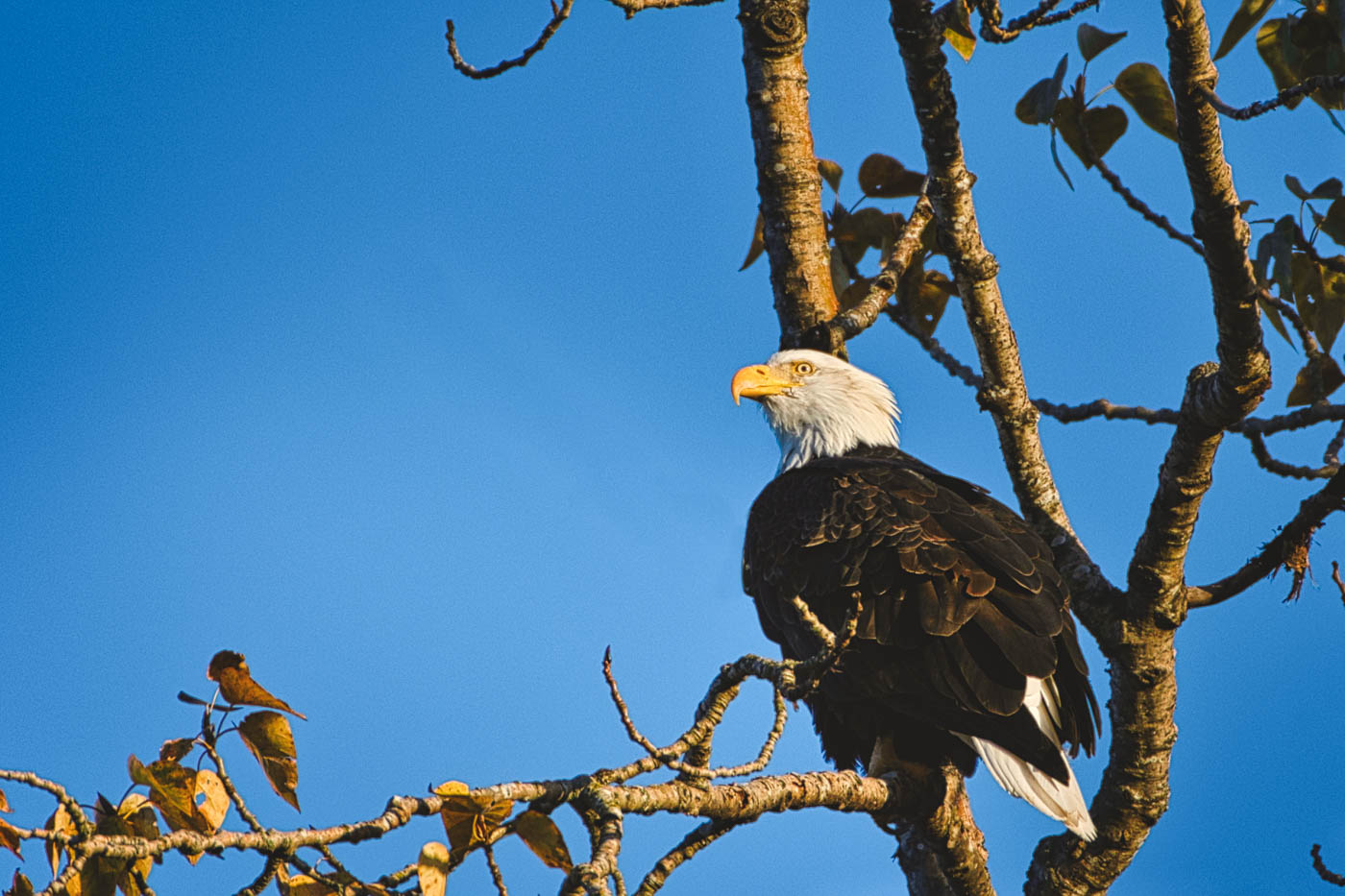
One confident opinion: stay in your car as much as you can. A parked car is the best bird blind you will ever own, and it keeps you off the feeding bars, which wildlife managers ask visitors to avoid, especially in the early morning.
Bring binoculars or a telephoto lens, keep your voice down, and remember that most of the riverfront is private land. Stick to public pullouts and parks.
Act two: the Klamath Basin, December to February
The U.S. Fish and Wildlife Service calls the Klamath Basin refuges home to the largest concentration of bald eagles in the contiguous United States. Eagles winter here from December through February, numbers peak in mid-February, and some years the count tops 1,000 birds.
Most daytime action happens at Tule Lake and Lower Klamath refuges, which sit in northeastern California and southern Oregon. Each has a roughly 10-mile auto tour route, and the refuge itself recommends staying in your vehicle, which gives you better looks and bothers the birds less.
Lower Klamath is free to visit and open daily from sunrise to sunset. The visitor center in Tulelake is open Tuesday through Saturday, so plan your stop there around a weekday, not a Sunday.
Bear Valley Refuge, a major night roost that has held as many as 300 eagles in a single night, is closed to public entry. Don’t plan on it. The sunrise and sunset flights between the roost and the lakes are the show you can actually watch from the road.
How to see both without losing your mind
If you only have one weekend, pick the Skagit for the week between Christmas and mid-January, and save the Klamath Basin for February. They are about as far apart as two West Coast wildlife trips can get, so treat them as two separate adventures.
Want a Washington backup plan? Our sister site has a full guide to where to stand on the Skagit. Heading to the Klamath side? Lava Beds National Monument is close enough to pair with Tule Lake, and this lava tube guide covers what to do underground.
Which act are you catching first? Tell us in the comments and we’ll see you out there with the binoculars.
Trip tips: grab a rental car to get out here, and book a room before the good ones are gone.
Rules and fees change, so always confirm current requirements before you go.