A wilderness near Mount Hood is named after huckleberries. You still can’t pick one there.
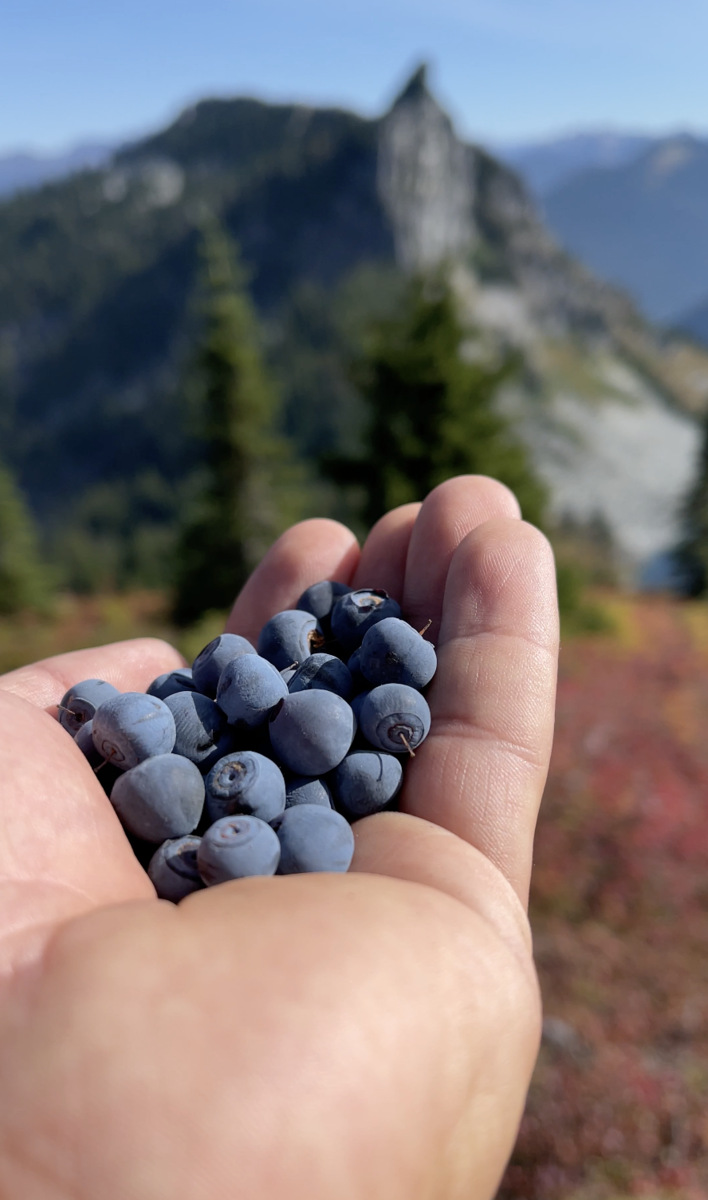
There’s a 62,061-acre wilderness on the south flank of Mount Hood with huckleberries baked right into its name, and you still can’t legally carry a single one out of it. That’s not a loophole — it’s federal wilderness policy, and it applies whether you’re standing in Oregon’s Salmon–Huckleberry Wilderness or Washington’s Indian Heaven Wilderness two hours north.
The real picking happens just outside those boundary lines instead, and the two states hand you completely different rulebooks for it. One asks for three gallons and your honesty. The other wants a printed permit before you touch a single bush.
Psst — we made you a West Coast Adventure Map. Nearly 1,900 of our favorite spots, already pinned, ready to load into Google Maps in two clicks — grab it here.
The wilderness named after the one thing you can’t take home
Congress designated the Salmon–Huckleberry Wilderness in 1984, and huckleberries grow thick across its 62,061 acres — especially on the ridge that gave the wilderness half its name, Huckleberry Mountain. It sits inside Mt. Hood National Forest, on the mountain’s south side.
📍 GET THE ULTIMATE PNW MAP 🗺️
Get our curated list of the best adventures, things to do, and places to grab a brew loaded onto your maps with just two clicks!
✅ Waterfalls ✅ Hikes ✅ Viewpoints
✅ Craft breweries ✅ National Parks ✅ 1400+ Pins

Designated wilderness on both Mt. Hood and Gifford Pinchot National Forests is closed to harvest removal. You can eat what you find standing right there — you just can’t walk out with any of it. That’s the same policy 100 miles north in Washington’s Indian Heaven Wilderness, home to the Cascades’ most talked-about berry fields, the Sawtooth Berry Fields.
Oregon’s actual rule: three gallons, zero paperwork
Step outside the wilderness boundary onto the rest of Mt. Hood National Forest, and the math gets simple. Every picker can take up to three gallons of berries per year under the forest’s incidental-use policy — no permit, no fee, no paperwork. Mt. Hood National Forest doesn’t offer a commercial berry permit at all, so nobody’s filling truck beds either.
Lost Lake, tucked at the mountain’s base, is one of the easier places to actually find them. The Huckleberry Mountain Trail near the lakeshore is short, and the ridge it’s named for isn’t shy about living up to it.

Washington’s actual rule: any amount means a printed permit
Gifford Pinchot National Forest runs it differently. Every single harvester needs a permit here, even for a handful of berries — a free one, printed at home from the forest’s online system, good for up to a gallon a day and three gallons for the season. Rakes and other mechanical tools are banned outright, and the forest isn’t authorizing any commercial harvest permits in 2026.
The permit sounds like busywork, but it’s honestly the fairer system of the two — free, capped, and it keeps commercial operations off the same ground you’re picking on. Oregon’s cap runs on the honor system instead, and somehow that works out just as well.
Part of the Sawtooth Berry Fields carries extra weight, too. A 1932 handshake agreement between Yakama Chief William Yallup and the forest supervisor reserved a section of it for Tribal harvest, and the signage marking those boundaries deserves the same respect as any other closure.
A paved pullout on the Wind River Highway north of Carson, built specifically for pickers and roomy enough for an RV, is the more straightforward alternative — no fee, no lottery, just a view of Mount St. Helens while you fill your gallon.
When to actually go
Both forests peg peak season at roughly mid-August through mid-September, with lower elevations ripening first and the ripe line climbing as the weeks go on. So there’s still time this month — but not forever.
Bears eat huckleberries too, and berry fields are exactly where you’ll find them right now. Make noise on your way in, keep food secured, and give any bear you spot plenty of room. Both forests are also running elevated fire danger this month, so it’s worth checking current restrictions before you commit to the drive.
Same berries, same mountain range, two completely different rulebooks. Which state’s system would you actually want to deal with?
Trip tips: grab a rental car to reach either forest, lock in a hotel nearby, or skip both and book a camper van instead — the Wind River pullout alone has room to park one. Most of this is Forest Service land outside any wilderness boundary, so an NW Forest Pass covers day-use parking at the trailheads along the way.
Rules and fees change — always confirm current requirements before you go.