Where the Night Sky Still Wins: 10 Dark-Sky Spots on the West Coast

Looking for places where the Milky Way actually looks like a spilled galaxy, not a smudge over parking-lot lights? These ten West Coast zones keep the glow low, the horizons wide, and the vibes star-drunk.
General playbook: chase new moon weeks, bring layers (deserts freeze after dark), and let your eyes adjust for 20–30 minutes. Summer shows the Milky Way’s bright core (roughly May–August); winter trades sparkle for long, crisp nights.
Expect little or no cell service at many of these pullouts—download maps, fuel up early, and stargaze from safe, legal turnouts or established areas.
Death Valley National Park — Mesquite Dunes & Badwater Pullouts (CA)
If “light-pollution proof” had a headquarters, it would be in this basin. The sky vaults high, the horizons are clean, and the nearest glow is a rumor.
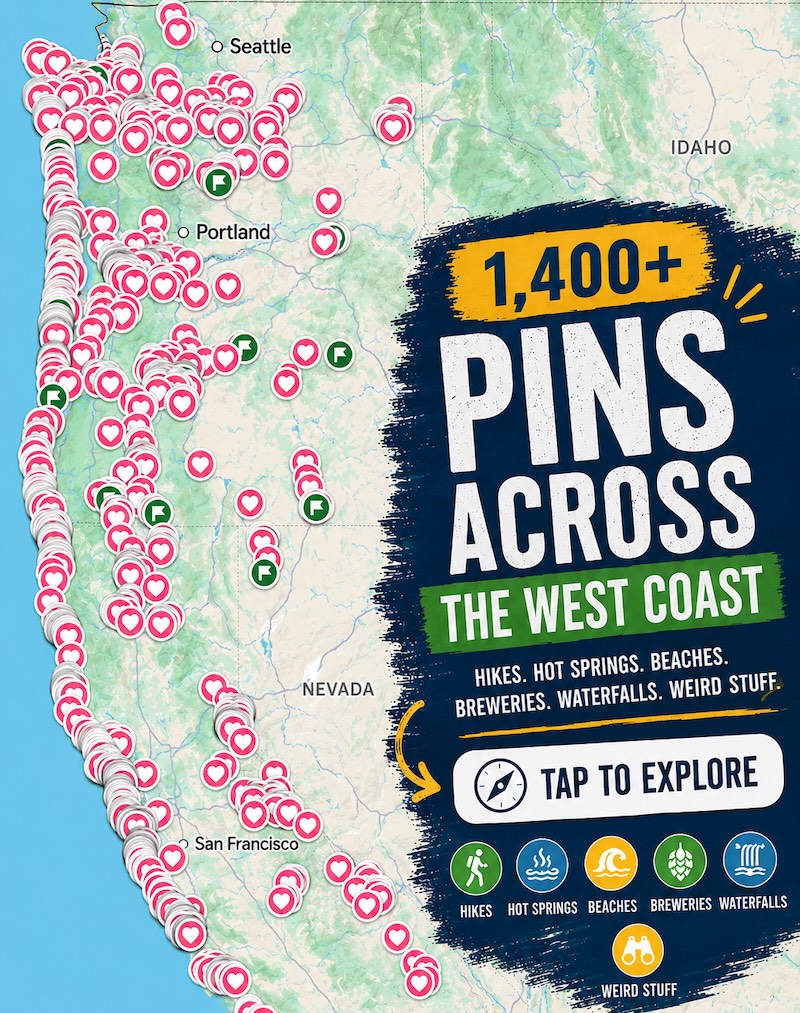
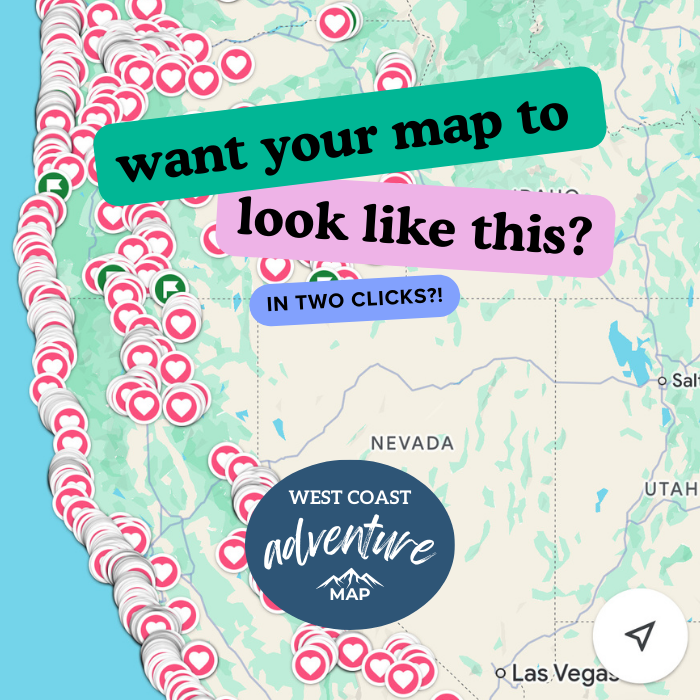
📍 GET THE ULTIMATE PNW MAP 🗺️
Get our curated list of the best adventures, things to do, and places to grab a brew loaded onto your maps with just two clicks!
✅ Waterfalls ✅ Hikes ✅ Viewpoints
✅ Craft breweries ✅ National Parks ✅ 1400+ Pins

Easy wins: park at legal pullouts near Mesquite Flat Sand Dunes or along the Badwater Basin stretch. Walk a short, safe distance from the road to kill headlight glare, then stop—no wandering in unfamiliar dunes after dark.
Best months? Fall through early spring for temps you can tolerate. Summer nights work too, but heat lingers and sunrise sneaks up fast. Expect no service in wide swaths of the park, big day–night temperature swings, and occasional gusty winds that sand-blast your tripod. Bring red-light headlamps, extra water, and a blanket—half the fun is laying back and letting the sky do its thing.

Alabama Hills & Eastern Sierra Pullouts (Lone Pine, CA)
Granite boulders, desert floor, snow-lit Sierra walls—this is “astro with foreground” candy. You can frame the Milky Way through arches or shoot star trails with Mount Whitney lurking like a dark shark fin.
Use signed roads and well-established pullouts; the dirt is usually passenger-car friendly when dry. Walk a few yards to lose headlight splash and keep boots mindful of cryptobiotic soil and small drop-offs.
Best months swing with snow on the high peaks, but spring to fall is the sweet spot for comfortable nights. Winds can howl; stash a simple windbreak in the car and bring gloves even in July. Cell service fades quickly once you leave town—download maps in Lone Pine and top off fuel before sunset.

Lassen Volcanic — Manzanita Lake & Chaos Jumbles Pullouts (CA)
Lassen’s high country delivers dark skies without marathon drives between spots. Manzanita Lake is the classic: calm water for silhouettes, a wide northern horizon, and parking right by the action. The Chaos Jumbles pullouts offer rocky foregrounds with minimal glow.
Summer and early fall are easiest for night access once roads and lots are fully open. Winter can be phenomenal on clear spells but demands snow savvy and extra prep. Wildlife wanders after dark; keep snacks sealed and eyes up.
Cell service varies from “meh” to “nope,” so text your plans earlier in the day. Bonus tip: let your eyes reset after any screen use—phone brightness wrecks your night vision faster than you think.
Mount Shasta — Castle Lake & Bunny Flat (CA)
A stand-alone stratovolcano set in a mostly rural region = excellent night shots when the air is clean. From Castle Lake, you get reflective water and granite shoulders; from Bunny Flat on the Everitt Memorial Highway, you’re practically in the stars with mountain silhouettes for scale.
Nights run cold even in mid-summer. Bring a puffy, a hat, and warm boots; the ground leeches heat. Service is spotty above town, and winter brings gates/chain controls—stick to plowed lots and keep it simple.
Best months? Late spring to early fall for access; shoulder seasons deliver the clearest air after cold fronts—perfect for long-exposure sparkle.

Hart Mountain National Antelope Refuge — Hot Springs Area (OR)
The Oregon Outback doesn’t do light pollution. Up on the refuge, the sky feels enormous and the horizon uncluttered. The hot springs area has nearby parking and an open basin for full-dome viewing—just stay respectful of habitat and keep your setup compact.
Roads can be washboarded or muddy; check conditions and go slow on gravel. Nights are cold and windy, even in summer, and you’ll likely have no service. That’s part of the charm—silence, stars, and maybe pronghorn silhouettes at dusk.
Best months: late spring through early fall for easier roads, autumn for crystal post-front skies. Pack extra layers, extra water, and a paper map like it’s 1997.
Alvord Desert Playa & Steens Mountain Overlooks (OR)
On a moonless night, the Alvord Playa becomes a mirror for the Milky Way. Park at the edge in a safe, legal pullout (stay off saturated playa), walk a little way onto the hardpan, and set up with a 360-degree horizon.
If Steens Mountain’s upper road is open, high overlooks give you a vaulting sky above the desert like a planetarium gone feral. Winds can be fierce—sandbags for tripod legs are not extra, they’re essential.
Expect no service and big temperature swings. Best windows: late summer and early fall for dry playa and pleasant nights; winter stars are razor-sharp but conditions are harsh. Leave no trace—this landscape wears footprints like scars.

John Day Fossil Beds — Painted Hills & Carroll Rim (OR)
By day, the Painted Hills look like a Mars test site; by night, the ridgelines turn into dark teeth under a bright river of stars. Use official lots/trailheads (like Carroll Rim) and stay on built paths—fragile soils here don’t forgive shortcuts.
Regional towns are small and spread out, so top off fuel and snacks well before sunset. Service is limited once you peel away from highways.
Best months? Late spring through fall for open access and warmer nights; winter brings incredible clarity between storm cycles but icy roads. The light dome is minimal—most of what you’ll see is skyglow from your own jaw on the ground.
Crater Lake — Watchman Overlook & Rim Pullouts (OR)
A dark, circular caldera lake with a volcano island in the middle? It’s like the park was designed for astro. Watchman Overlook and adjacent rim pullouts offer easy, legal parking and huge sky with the lake as a silhouette bowl.
Nights are cold year-round at elevation. In winter and spring, snowbanks can limit parking and block some overlooks; in summer the road network opens wide but crowds linger—stay late for the quiet. Cell coverage is thin to nonexistent around the rim.
Best months for comfort are mid-summer to early fall, but winter’s ultra-clear nights after storms are why photographers keep chains in the trunk.

Washington Pass Overlook (North Cascades, WA)
The highway corkscrews to a high overlook where jagged peaks frame a lean, dark sky. You can shoot north for circumpolar trails or go wide to catch the Milky Way sliding over Liberty Bell and Early Winters spires.
This is a high-elevation pullout—bring serious layers and expect wind that tries to steal your beanie. Seasonal closures are a thing; when the pass is open, it’s one of Washington’s most dramatic drive-up night views. Service drops out fast once you leave the Methow; tell someone your plan before you lose bars.
Best months: late spring through early fall while the road is open. After cold fronts, the air goes glassy and the stars pop like LEDs.
Palouse Falls State Park (WA)
East-side skies, agricultural low glow, and a basalt amphitheater—Palouse Falls is a dark-sky surprise. Set up well back from any cliff edge (daylight scouting helps), use rails and signed areas, and keep red lights on for your group’s feet.
Summer nights are warm, but winds can rip down the canyon and bugs will absolutely RSVP. Spring and fall bring the clearest air; winter offers the longest dark, but ice around the rim can be treacherous. Expect minimal service once you’re off the main highways and very limited amenities after dark.
The payoff is huge: the Milky Way keels over the canyon like a slow-motion waterfall, and meteors feel closer than your car keys.

Quick Night-Sky Game Plan
Go during a new moon or when the moon sets early.
Arrive before dark to scout safe footing, then shut down white lights.
Use red-light headlamps, warm layers, and a thermos—comfy stargazers stay longer and see more.
Download maps, tell someone your plan, and respect closures and pullout rules. The stars will still be there tomorrow; you should be too.