Only one of these three West Coast beaches will actually let you take home what you came for
Every beachcomber has the same reflex: see something pretty, pocket it, keep walking. Do that on the wrong stretch of West Coast sand and you’re looking at a $500 fine — while a beach two states away will hand you a free souvenir and wish you luck. Here’s which beach does which, so you know before you start filling your pockets.
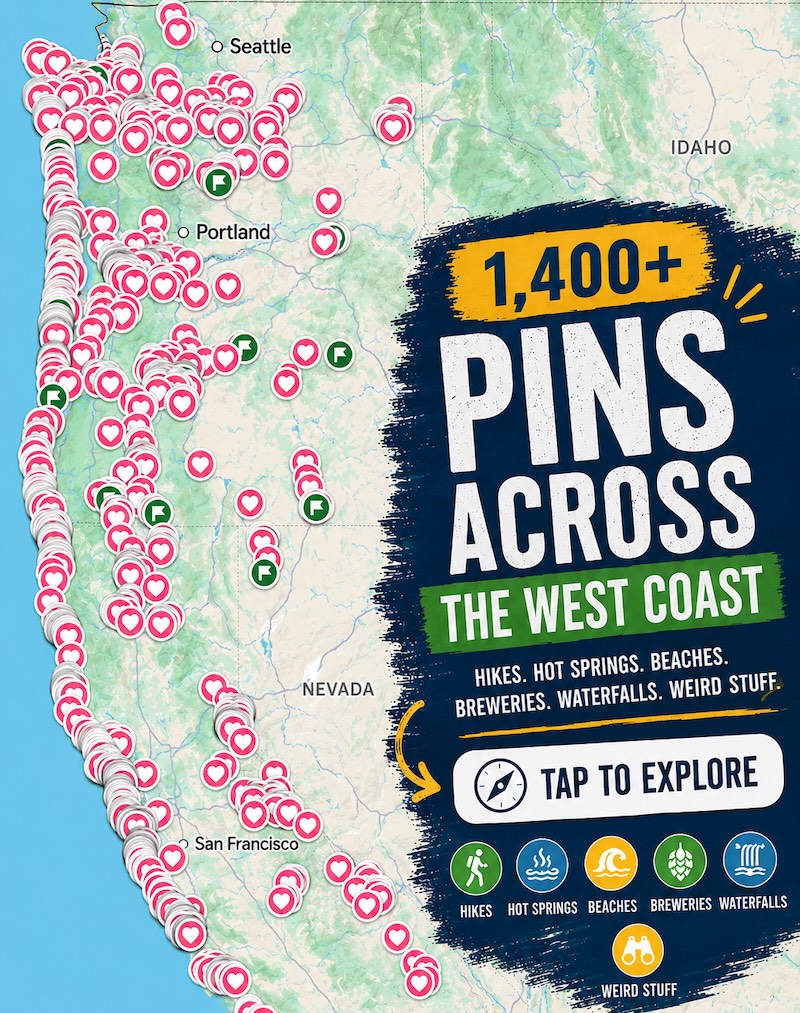
Psst — we made you a West Coast Adventure Map. Nearly 1,900 of our favorite spots, already pinned, ready to load into Google Maps in two clicks — grab it here.
California: Glass Beach doesn’t want your souvenirs
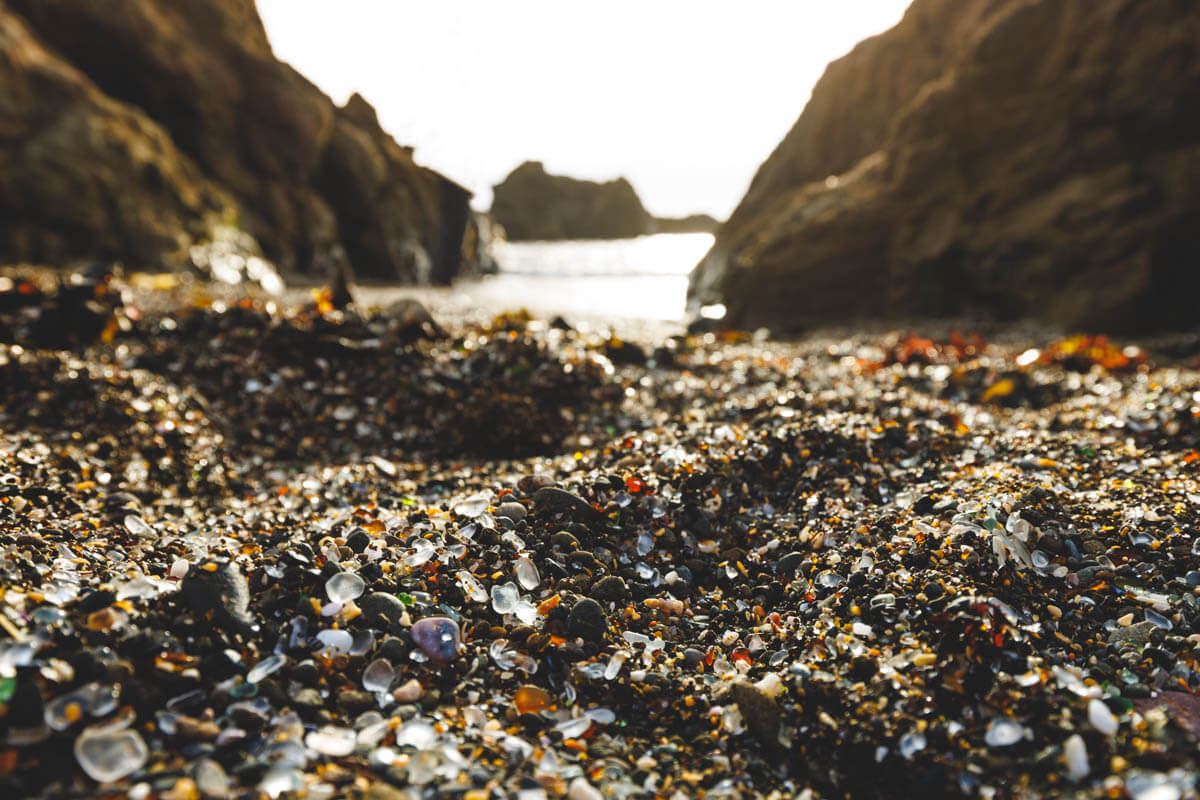
Fort Bragg’s Glass Beach looks like someone scattered a jewelry box across the sand — smooth, sea-tumbled pebbles in green, brown, amber, and the occasional flash of cobalt blue, sitting where three separate town dumps operated between 1906 and 1967. Locals tossed bottles, appliances, even old cars over these bluffs for six decades, and the Pacific spent just as long grinding the glass into something that looks more like gemstones than trash.
The catch: since Glass Beach became part of MacKerricher State Park in 2002, taking any of it home has been illegal, with fines that can reach $500. Enforcement is spotty enough that people still slip pieces into their pockets, which is exactly why the glass carpet is thinner than it was twenty years ago and the rare reds and blues are getting harder to find. Look all you want. Leave it where the ocean put it.
📍 GET THE ULTIMATE PNW MAP 🗺️
Get our curated list of the best adventures, things to do, and places to grab a brew loaded onto your maps with just two clicks!
✅ Waterfalls ✅ Hikes ✅ Viewpoints
✅ Craft breweries ✅ National Parks ✅ 1400+ Pins

Oregon: legal buckets, real limits
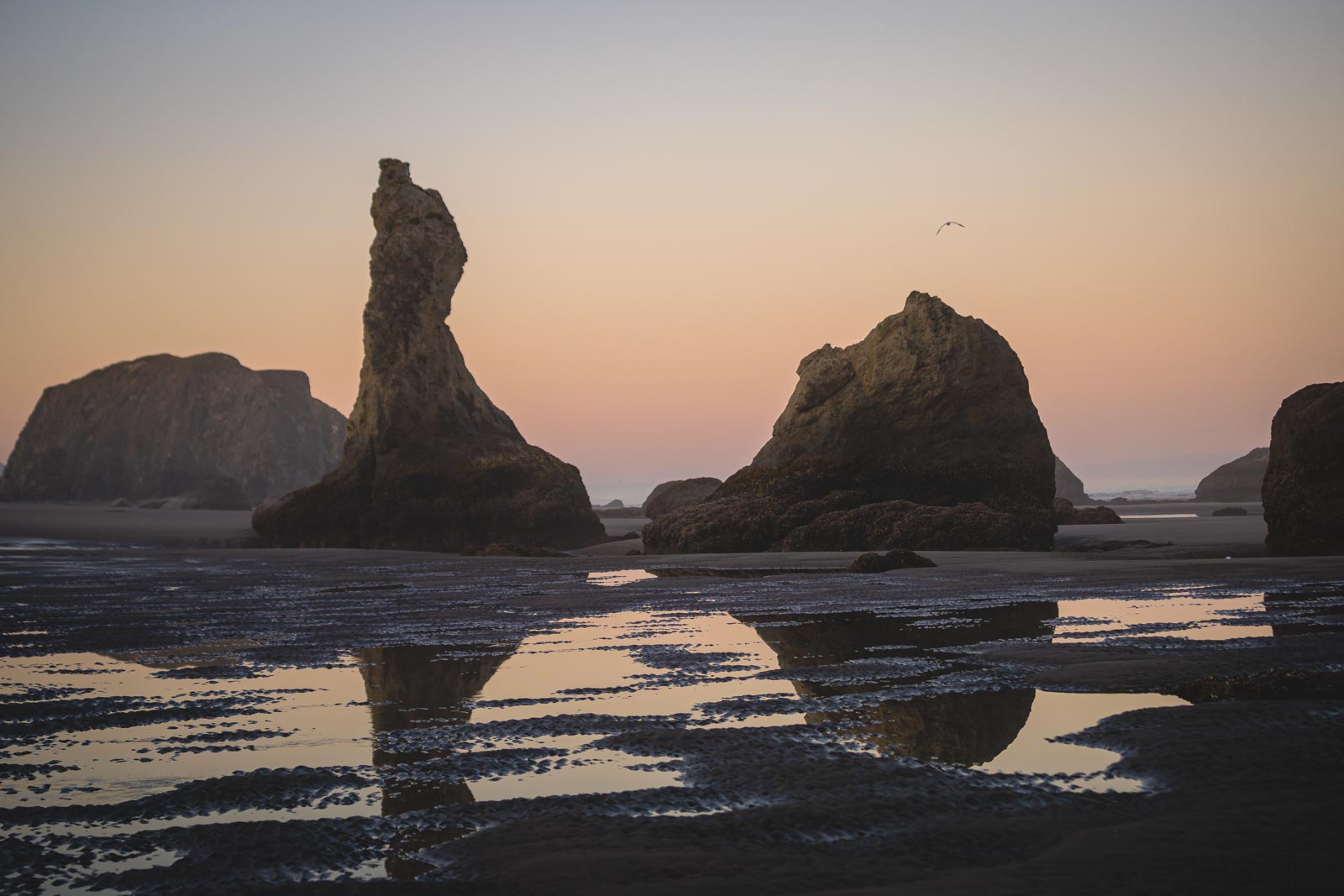
Drive two states north and the rules flip completely. Oregon’s 1967 Beach Bill doesn’t just guarantee public access to the entire 362-mile coastline — it lets you actually take agates, jasper, and petrified wood home, no permit required.
Bullards Beach near Bandon and the stretch around Otter Point and Kissing Rock outside Gold Beach are two of the better-known hunting grounds, both free to walk. The legal limit is one gallon per person per day and three gallons per year, each collector needs their own container, and prying rocks off a cliff face is off-limits — loose stuff on the ground only. Winter storms and king tides between November and April strip away the sand and turn up the best material, but a calm summer walk still turns up finds, just with less digging required.
Washington: Olympic National Park says look, don’t touch
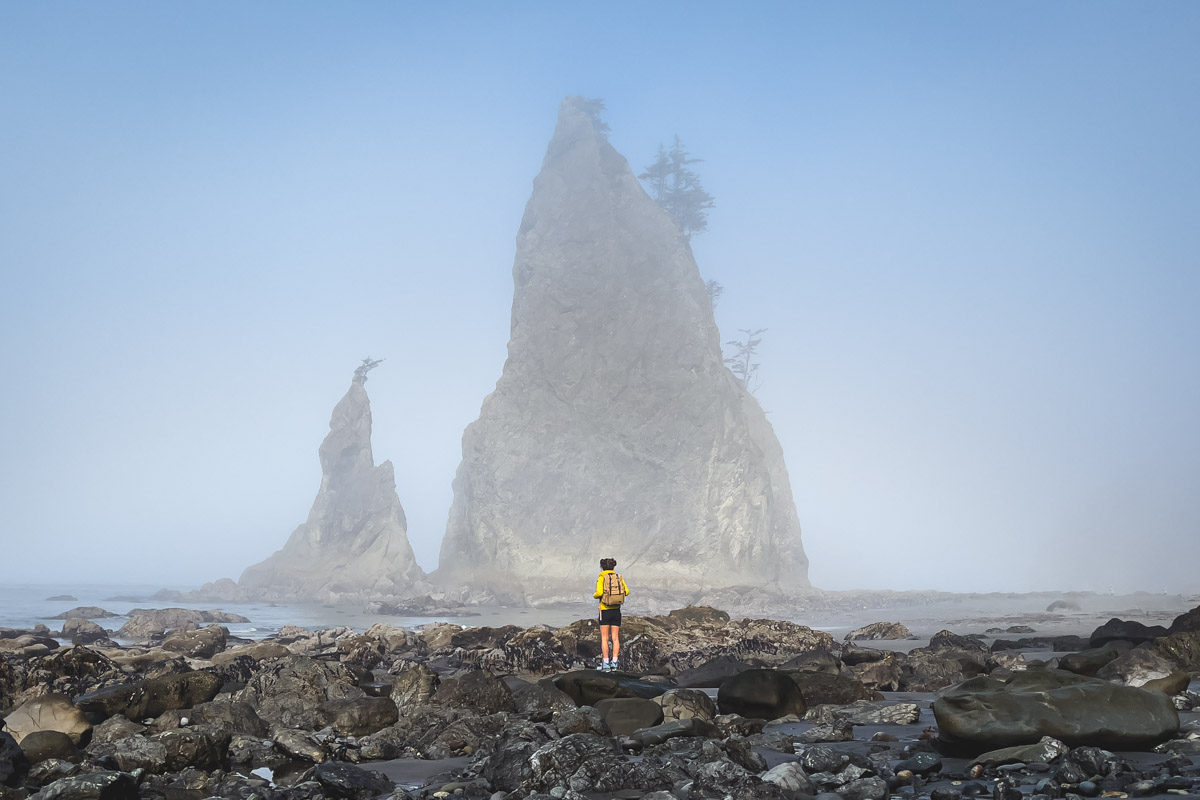
Keep driving and the pendulum swings all the way to no. Every beach inside Olympic National Park — Rialto, Ruby, Kalaloch, Second Beach — bans taking home rocks, shells, or driftwood as souvenirs, full stop. The one exception is driftwood gathered for a campfire if you’re actually camping on the beach that night, and even then it stays there when you leave.
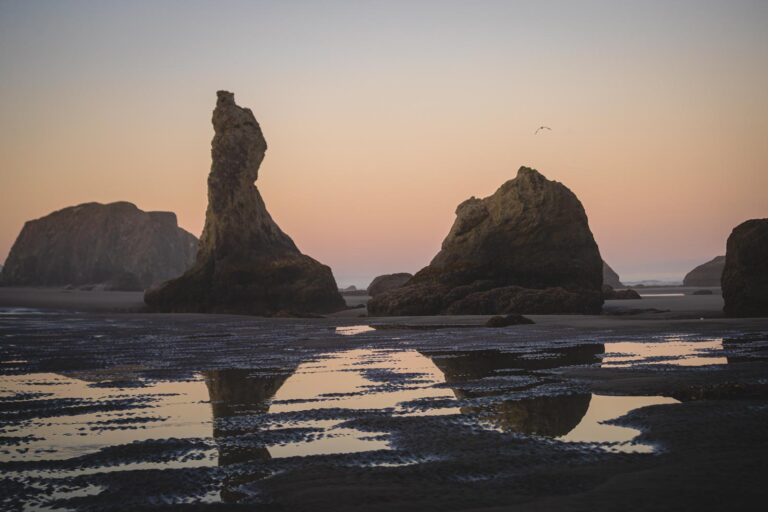
What you get instead is scenery that doesn’t need a souvenir to prove it happened — sea stacks marching into the fog, a genuine sea arch at Rialto’s Hole-in-the-Wall, and tide pools thick with starfish and anemones. Entrance runs $30 per vehicle for seven days, or it’s covered by an America the Beautiful Pass if you’re hitting more than one national park this year, and the full lineup of Olympic National Park’s beaches is worth a look before you pick one.
If you forced me to pick one bucket to be born into, take Oregon’s — a legal souvenir beats a great memory every time. But all three make the same point: check what a beach will actually let you do before you start filling your pockets, because the rules change every hundred miles or so out here.
Which one would you rather be standing on this summer?
Trip tips: grab a rental car to get between all three coastlines, lock in a hotel before the good rooms are gone, or skip both and book a camper van instead.
Rules and fees change — always confirm current requirements before you go.