Think Liberal Cities Are Dangerous? These Stats Might Surprise You…

If you spend any time on cable news or scrolling certain corners of social media, you might get the impression that liberal cities are falling apart. Crime! Chaos! Total collapse! But here’s the thing—when you dig into the actual crime statistics and quality-of-life data, the narrative doesn’t really hold up.
In fact, many of the cities that get labeled as “unsafe” because of their progressive politics actually have lower rates of violent crime than cities in red states. From police response times to pedestrian safety to public transit security, the stats show that perception and reality aren’t always aligned.
Here’s what the numbers really say about safety in “blue” cities.
Violent Crime Rates Are Often Higher in Red-State Cities

Let’s start with the big one: violent crime. The FBI’s 2023 Crime Data Explorer shows that cities like St. Louis, Memphis, and Birmingham—all in red or purple states—consistently report higher rates of violent crime per capita than places like Seattle, Portland, or San Diego.
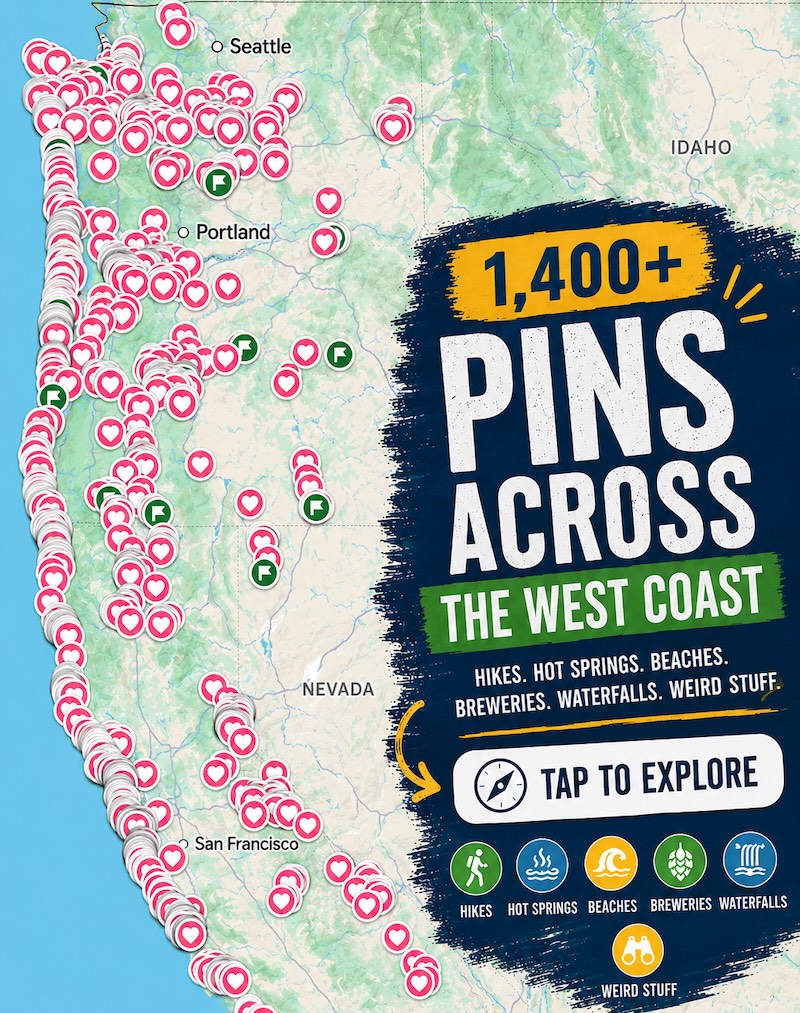
📍 GET THE ULTIMATE PNW MAP 🗺️
Get our curated list of the best adventures, things to do, and places to grab a brew loaded onto your maps with just two clicks!
✅ Waterfalls ✅ Hikes ✅ Viewpoints
✅ Craft breweries ✅ National Parks ✅ 1400+ Pins


Even San Francisco, often painted as dangerous in headlines, doesn’t crack the top 10 for violent crime. Meanwhile, some red-state cities with “law and order” reputations report homicide and assault rates that are multiple times higher.
Bottom line: crime exists everywhere—but the idea that liberal cities are uniquely unsafe isn’t backed by national data.
Walkability and Transit Safety Are Major Factors

Cities like Portland, San Francisco, and Seattle rank among the most walkable in the U.S. and have heavily invested in transit safety. That includes pedestrian-friendly street design, public lighting, surveillance in transit hubs, and policies that prioritize cyclists and walkers (source: Walk Score + Urban Institute, 2023).
These efforts translate to lower traffic fatality rates and safer travel experiences for visitors and residents alike. By contrast, many car-centric cities in red states report higher rates of pedestrian deaths and traffic-related injuries, particularly in low-income areas.
So while some might complain about e-scooters and bike lanes—they’re part of why liberal cities tend to feel safer for people on foot.
Public Services Help Prevent and Respond to Crime

Many blue cities allocate more funding toward community safety beyond policing: things like mental health response teams, housing support, youth programs, and public sanitation. These don’t always make headlines, but they help prevent the kinds of conditions that lead to crime spikes in the first place.
For example, Portland’s Portland Street Response program diverts nonviolent 911 calls to trained mental health professionals instead of armed officers. Programs like these reduce strain on emergency systems and provide a safer, more humane experience—especially for travelers navigating unfamiliar city streets.
Red-state cities often lack this safety net, and it shows in how crises escalate.
Travelers Still Flock to “Dangerous” Cities—and Feel Fine

If liberal cities were truly as unsafe as claimed, you’d expect tourism to drop. But that’s not what’s happening. San Francisco, Portland, and Seattle each welcomed millions of overnight visitors in 2023, with multi-billion dollar impacts on their local economies (sources: respective tourism boards).
People walk the streets, eat at food carts, hop on light rail, and visit museums without issue. The “dangerous” label doesn’t match the lived experience of most travelers—and repeat visitors prove it. Safety isn’t about slogans—it’s about how a place actually feels.
Crime Is Complex—But Fear Sells

It’s true that all cities face challenges, and no place is perfect. But the idea that liberal policies automatically lead to danger doesn’t hold water when you look at the full picture. Context matters. So does scale. So do actual numbers.
So the next time someone claims they’d “never step foot in Seattle,” maybe ask when they were there last—and if they’ve got the crime stats to back that up.