The West Coast’s Most At-Risk Towns for Wildfires

As wildfire seasons grow longer, hotter, and more destructive, certain West Coast towns are under constant threat. Some have already burned. Others sit at the edge of dry forests, downwind of trouble. With climate change fueling more extreme weather and the wildland-urban interface expanding, here are the towns experts and residents agree are most vulnerable to wildfire destruction.
1. Paradise, California

The Camp Fire in 2018 turned Paradise into the deadliest wildfire disaster in California history, killing 85 people and destroying over 18,000 structures in just a few hours. Rebuilding efforts continue, but the terrain, wind patterns, and fire-prone vegetation remain unchanged. Many returning residents still face fire insurance issues or choose to self-insure due to lack of coverage. Paradise is the textbook example of what happens when a town on the edge of the forest doesn’t have time to evacuate.
(Source: Cal Fire)
2. Santa Rosa, California

Santa Rosa has been hit repeatedly—first by the Tubbs Fire in 2017, then the Glass Fire in 2020. The Tubbs Fire alone destroyed entire neighborhoods like Coffey Park and claimed 22 lives. With fast suburban growth into previously undeveloped areas, this North Bay city sits in a high-risk zone with dense vegetation and limited escape routes. The scars of rapid, wind-driven fires are still visible—and the city continues to sit on edge each summer.
(Source: NPR)
3. South Lake Tahoe, California

Surrounded by thick forests and steep mountain roads, South Lake Tahoe saw how close it could come to catastrophe during the 2021 Caldor Fire. Flames came within a few miles of the city, prompting massive evacuations. Fire experts say the region’s pine-heavy ecosystem, combined with drought and tourism congestion, makes it one of the riskiest communities in the Sierra Nevada.
(Source: The Guardian)
📍 GET THE ULTIMATE PNW MAP 🗺️
Get our curated list of the best adventures, things to do, and places to grab a brew loaded onto your maps with just two clicks!
✅ Waterfalls ✅ Hikes ✅ Viewpoints
✅ Craft breweries ✅ National Parks ✅ 1400+ Pins


4. Malibu, California
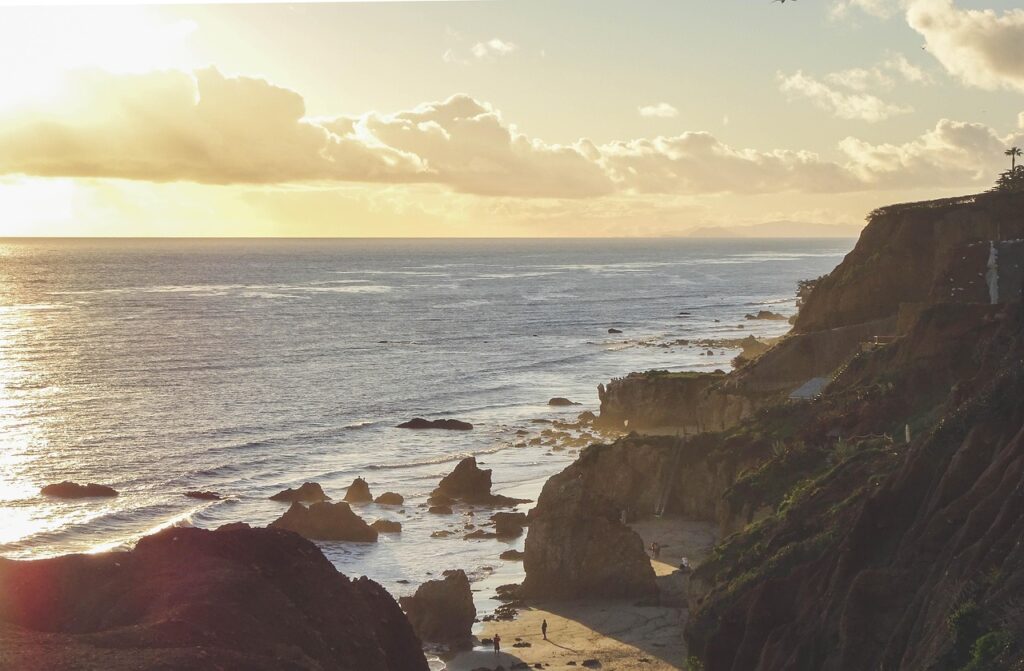
Every few years, Malibu is back in the headlines for wildfires, including the devastating Woolsey Fire in 2018, which destroyed more than 1,600 structures. The canyons here funnel wind and fire straight toward oceanfront homes. Many residents now spend thousands annually on private firefighting services, and homeowners’ insurance policies are increasingly being canceled across the area.
(Source: Los Angeles Times)
5. Redding, California

Redding was forever changed by the Carr Fire in 2018, which killed eight people and destroyed over 1,000 homes. The fire generated a fire tornado and devastated west Redding neighborhoods. Since then, the city has grown—but fire risk remains severe, with nearby forests acting as a tinderbox during dry months. The area continues to rank high in wildfire risk models.
(Source: CNN)
6. Ashland, Oregon

The 2020 Almeda Fire tore through the Rogue Valley, destroying over 2,500 homes between Ashland and nearby towns like Talent and Phoenix. Though the fire didn’t originate in a remote forest, it showed how fast urban fires can spread through dry, wind-whipped valleys. With high fire danger and limited emergency infrastructure, Ashland is on every wildfire watchlist.
(Source: OPB)
7. Boulder Creek (Santa Cruz Mountains), California

During the 2020 CZU Lightning Complex fires, Boulder Creek saw hundreds of homes lost and entire mountain communities evacuated. Residents here now live with the constant threat of another spark. Despite widespread defensible space efforts and replanting, the dense redwoods and steep terrain make firefighting difficult and dangerous.
(Source: Mercury News)
8. Wenatchee, Washington

Known for its orchards and foothill beauty, Wenatchee has also become known for frequent wildfire evacuations. Fires like the Sleepy Hollow Fire in 2015 and multiple fires in 2021 came dangerously close to town, destroying homes on the edge of the hills. Its geography—surrounded by slopes and brush—makes it hard to defend when wind picks up.
(Source: KING5 News)
9. Shasta Lake, California

This small Northern California town is surrounded by dry brush, pine forest, and steep hills—prime fire conditions. The Fawn Fire in 2021 came alarmingly close to homes and burned more than 8,500 acres. With limited access roads and growing fire seasons, Shasta Lake’s risk profile is climbing fast.
(Source: Cal Fire)
Feature photo “Fire truck near wildland fire” by blmcalifornia is licensed under CC PDM 1.0