Best Wildlife Encounters on the West Coast (And When to See Them)
The West Coast isn’t just scenery. It’s one of the great wildlife corridors on Earth — orcas hunting in the San Juan Islands, gray whales migrating past headlands, Roosevelt elk wandering through rainforest fog, elephant seals bellowing on California beaches, and bald eagles fishing rivers you’re standing in.
The best part: most of it is free, predictable if you know the season, and genuinely jaw-dropping every single time.
Here’s where to go and when.
Orcas — San Juan Islands, Washington
When: Year-round, peak May through September
📍 GET THE ULTIMATE PNW MAP 🗺️
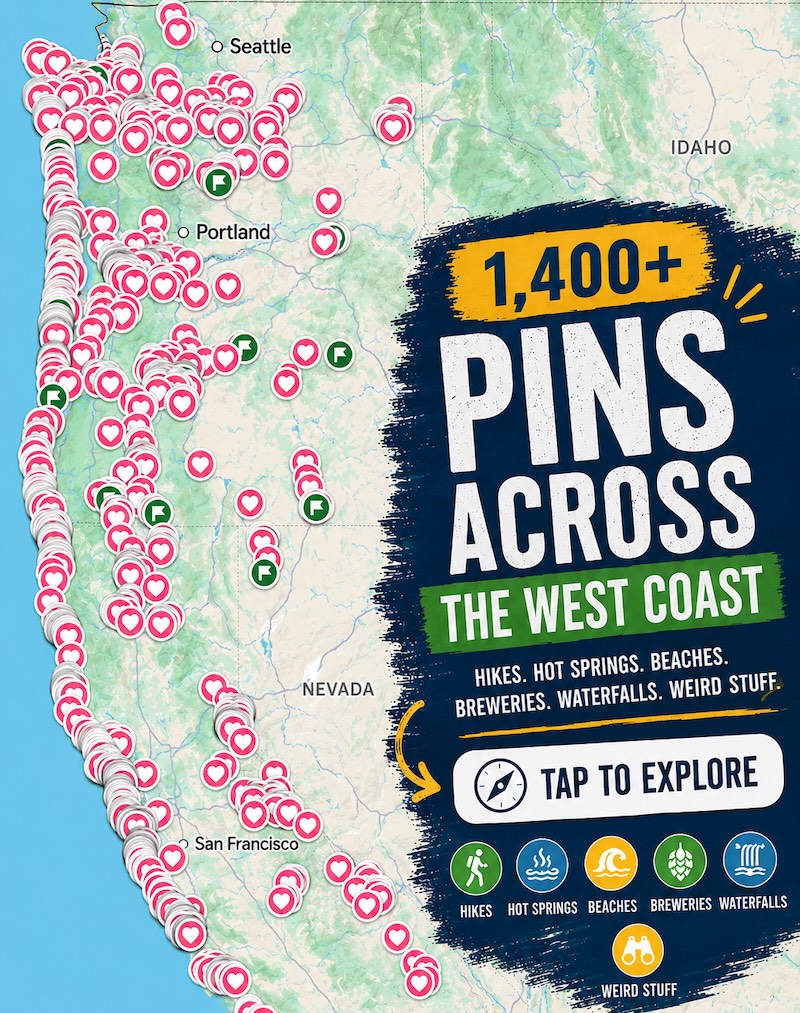
Get our curated list of the best adventures, things to do, and places to grab a brew loaded onto your maps with just two clicks!
✅ Waterfalls ✅ Hikes ✅ Viewpoints
✅ Craft breweries ✅ National Parks ✅ 1400+ Pins

The Southern Resident orca pods have been hunting Chinook salmon in the waters around the San Juan Islands for centuries. From May through September, multiple pods regularly pass through Haro Strait and San Juan Channel — close enough to shore that kayakers and whale watch boats get within a few hundred feet.
Lime Kiln Point State Park on San Juan Island is literally called “Whale Watch Park” — a rocky shoreline where orcas regularly pass so close you can hear them breathe. It’s one of the only places in the world where you can reliably see wild orcas from land, completely free.
Whale watching boats run from Anacortes, Bellingham, Friday Harbor, and Seattle. Sightings are extremely common in peak season.
Also watch for: Minke whales, Dall’s porpoises, harbor seals, bald eagles.

Roosevelt Elk — Hoh Rain Forest, Olympic National Park
When: Year-round, most active dawn and dusk
The Hoh Rain Forest has the largest Roosevelt elk herd in the United States — massive animals, bulls weighing up to 1,000 pounds, wandering through ancient Sitka spruce and bigleaf maple draped in club moss. They’re genuinely everywhere. You might drive in and find a herd blocking the road before you’ve even parked.
Dawn and dusk on the Hoh River Trail are the best viewing times. Fall rut in September and October is extraordinary — bulls bugling across the river valley in the early morning is one of the great sounds of the Pacific Northwest.
Olympic National Park pass required ($30/7-day).
Gray Whales — The Oregon & California Coast
When: Southbound December–January, northbound March–June
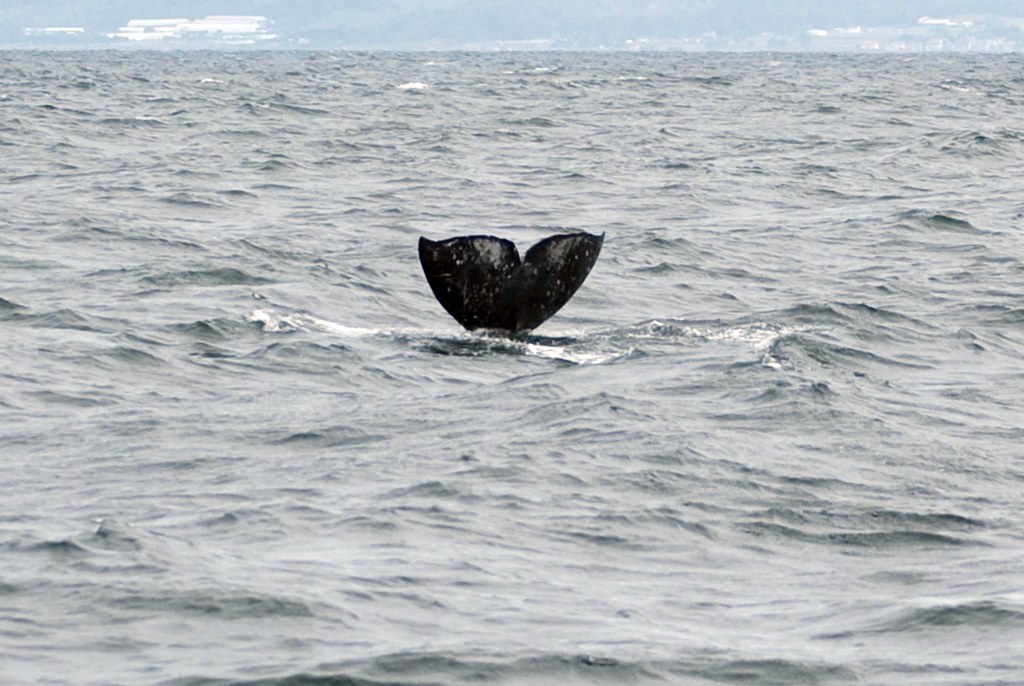
Gray whales make one of the longest migrations of any mammal on Earth — from Arctic feeding grounds to Baja California breeding lagoons and back, passing the entire length of the West Coast twice a year. An estimated 20,000 gray whales make this journey annually.
The Oregon Coast is one of the best places in the world to watch from land. Cape Perpetua, Depoe Bay (claims to be the “Whale Watching Capital of the World”), and Cape Disappointment are all excellent viewing points. Point Reyes in California is outstanding during the northbound migration — Chimney Rock Trail puts you directly above the migration route.
Oregon’s Whale Watching Spoken Here program stations volunteers at coastal viewpoints during peak weeks in December and March — free binoculars, expert spotters, genuinely helpful.
Elephant Seals — Año Nuevo State Park, California
When: December through March for birthing season
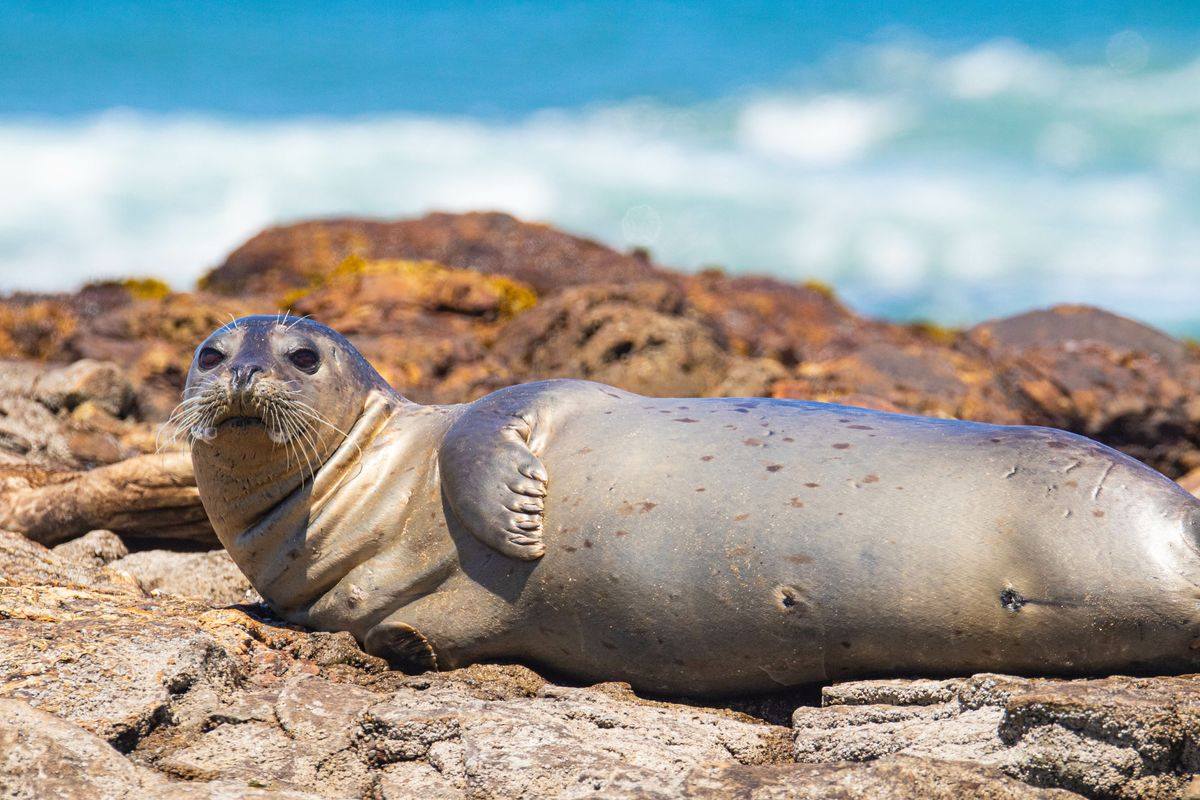
Año Nuevo State Park south of San Francisco hosts the largest mainland breeding colony of northern elephant seals in the world. During December through March, thousands of seals haul out on the beach — bulls fighting for dominance, mothers nursing pups, and the whole chaotic, loud, magnificent spectacle happening 50 feet from guided tour groups.
The biggest bulls weigh 5,000 pounds. The noise is extraordinary. The smell is equally extraordinary. It’s one of the most dramatic wildlife experiences available on the West Coast and it requires nothing more than a guided walk reservation and sensible shoes.
Reservations required for peak season tours at parks.ca.gov. Book well ahead — December and January dates sell out fast.
Bald Eagles — Skagit River, Washington
When: December through February
Every winter, bald eagles gather along the Skagit River north of Seattle to feed on spawned-out chum and coho salmon — sometimes 300–400 eagles in a single stretch of river. The Skagit Bald Eagle Natural Area near Rockport and Concrete is the epicenter.
Pull off at any river access point and scan the cottonwoods along the bank. Eagles are perched everywhere, fighting over fish in the shallows, and soaring overhead in numbers that make the whole thing feel slightly unreal. One of the most accessible wildlife spectacles in the Pacific Northwest.
Free. Just show up.
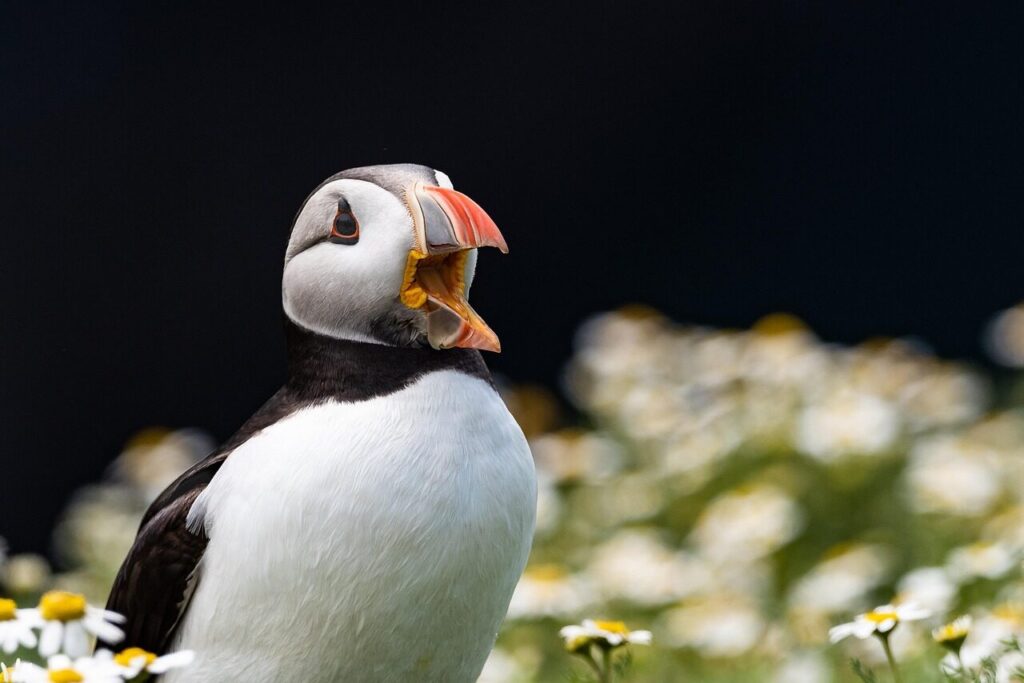
Puffins & Seabirds — Haystack Rock, Cannon Beach, Oregon
When: April through August
Haystack Rock in Cannon Beach is a Marine Garden and designated seabird nesting site — tufted puffins nest in burrows near the summit from April through August, and you can watch them return to the rock at dusk from the beach below with binoculars. Common murres, pigeon guillemots, cormorants, and oystercatchers all nest here too.
Haystack Rock Awareness Program volunteers are on the beach during low tides with scopes and expertise — genuinely one of the best free wildlife experiences on the Oregon Coast.
Sea Otters — Morro Bay & Monterey, California
When: Year-round
Southern sea otters were nearly hunted to extinction by the early 1900s — today around 3,000 remain along the California coast, and Morro Bay and Monterey Bay are the best places to see them. They float on their backs in the kelp, cracking urchins and clams on their chests, wrapping themselves in kelp to stay anchored while they sleep.
Morro Bay from the Embarcadero is outstanding — rent a kayak and paddle out into the estuary where otters are almost always present. Monterey’s Fisherman’s Wharf and Cannery Row offer easy land-based viewing from the waterfront.
Black Bears — North Cascades & Olympic, Washington
When: May through October
Both the North Cascades and Olympic National Park have healthy black bear populations, and bear sightings on hikes and along park roads are genuinely common from May through October when bears are active and feeding.
The Hoh River valley, the meadows around Hurricane Ridge, and the North Cascades Highway corridor are all reliable bear habitat. Dawn and dusk driving along park roads in summer frequently produces sightings. Keep distance, make noise on trail, store food properly — standard bear country protocol.
The Season Guide
| Wildlife | Best Season | Best Spot |
|---|---|---|
| Orcas | May–September | San Juan Islands, WA |
| Roosevelt Elk | Year-round (fall rut Sept–Oct) | Hoh Rain Forest, WA |
| Gray Whales (south) | December–January | Depoe Bay, OR |
| Gray Whales (north) | March–June | Point Reyes, CA |
| Elephant Seals | December–March | Año Nuevo, CA |
| Bald Eagles | December–February | Skagit River, WA |
| Tufted Puffins | April–August | Haystack Rock, OR |
| Sea Otters | Year-round | Morro Bay, CA |
| Black Bears | May–October | North Cascades, WA |
For more on where to find wildlife across the West Coast, check out our where to see whales, elephant seals, and sea otters guide and winter wildlife watchlist.
Happy wildlife watching, friend!